The Science Behind the Blood Moon
A striking astronomical event is set to unfold as the Earth, moon, and sun align, producing a total lunar eclipse. During this event, the moon will take on a deep red hue, earning it the eerie nickname “blood moon.”
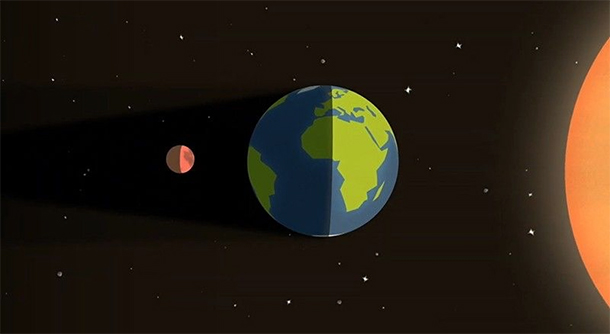
Alignment of the Moon, Earth, and Sun during a lunar eclipse (not to scale). (NASA’s Scientific Visualization Studio)
This phenomenon occurs because, even though Earth’s shadow blocks direct sunlight from reaching the moon, some light still bends through our atmosphere. The shorter blue wavelengths scatter, while the longer red wavelengths pass through, illuminating the moon’s surface with a reddish glow. Essentially, all the sunrises and sunsets happening on Earth at that moment are projected onto the moon.
NASA describes it as “the world’s sunrises and sunsets painted across the lunar surface.”
When and How to See the Blood Moon
The total lunar eclipse will occur overnight between March 13 and March 14, depending on your location.
- Partial Eclipse Begins: 1:09 a.m. ET – The Earth’s shadow will slowly start covering the moon, creating the appearance of a “bite” taken out of its surface.
- Total Eclipse Begins: 2:26 a.m. ET – The entire moon will be engulfed in Earth’s shadow, turning a deep red.
- Totality Duration: Over an hour, ending at 3:31 a.m. ET.
- Eclipse Ends: By 6 a.m. ET, the moon will return to its usual bright form.
For the best view, use binoculars or a telescope to admire the moon’s reddish surface in more detail. If you want to capture the event on camera, NASA suggests using a tripod and setting your phone to long exposure mode for clearer shots.
More Eclipses Are Coming
If you miss this blood moon, don’t worry—there will be two more total lunar eclipses within the next year. The next one will happen in September, followed by another in March.