Physical Characteristics of the Common Spotted Cuscus
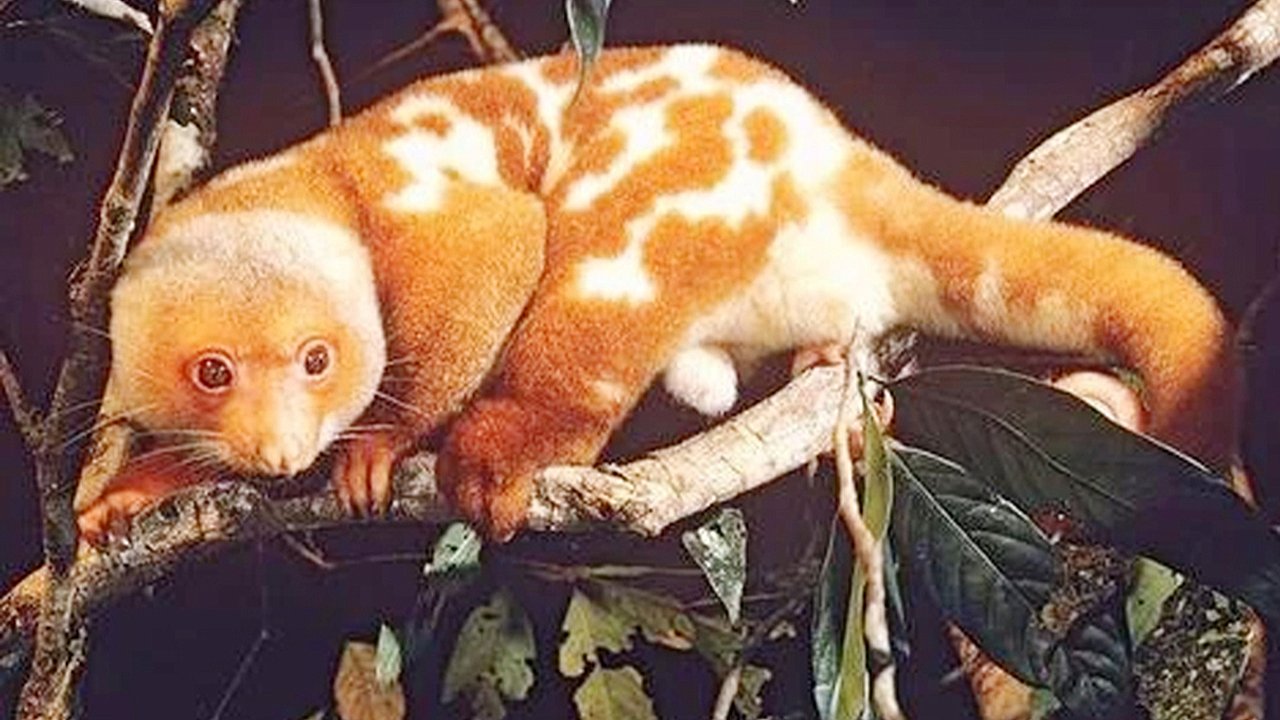
The common spotted cuscus (Spilocuscus maculatus) is a medium-sized marsupial roughly the size of a domestic cat. Adults typically weigh between 1.5 and 6 kilograms, with body lengths ranging from 35 to 65 centimeters and tails measuring 32 to 60 centimeters. Its round head, small concealed ears, and large, slit-like eyes—which can appear yellow, orange, or red—give it a distinctive look.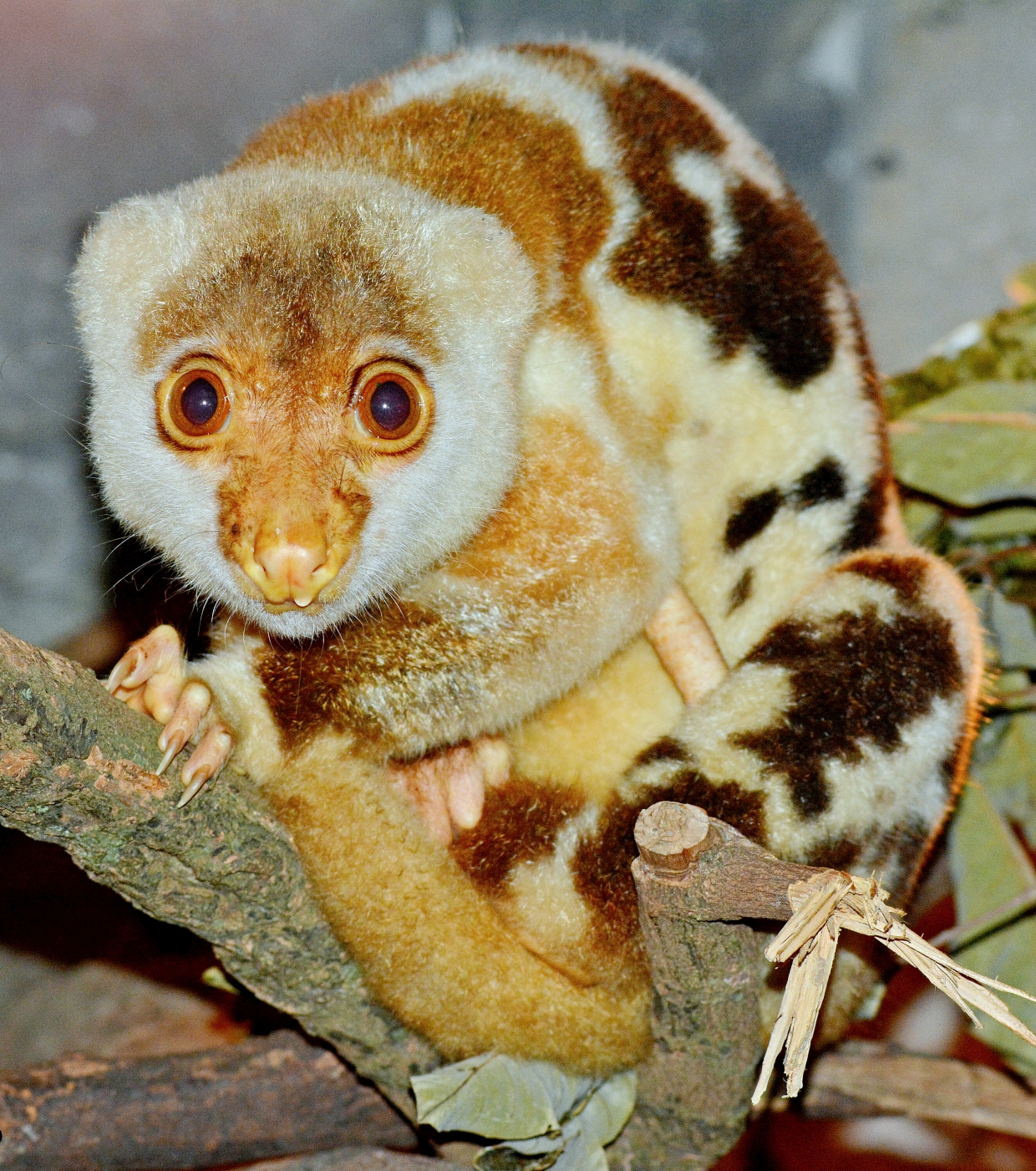 Adapted for life in the treetops, the cuscus has strong, curved claws on all limbs except the first digit of each foot. The second and third digits on the hind feet are partially fused, forming natural grooming combs, while the first digit is clawless and opposable, perfect for gripping branches. Its bare, ridged paw pads enhance its climbing ability.The species’ thick, woolly coat varies greatly depending on age, sex, and region. Males are typically gray or brown with distinctive white spotting along their backs and a pale underside. Females are usually white or gray without spots, though both sexes can occasionally be completely white. Juveniles undergo several color changes before reaching maturity at about one year old. Coloration can include reddish, buff, brown, light gray, or black tones. Unlike some related species, this cuscus lacks a dorsal stripe.One of its defining features is its strong, curled prehensile tail. The base of the tail is covered in fur, while the underside of the lower half is scaly and rough, allowing the cuscus to grip tree branches securely.Behavior and Social Interactions
The common spotted cuscus is a shy and secretive animal, making sightings rare, particularly in northern Australia. Nocturnal by nature, it emerges at night to forage and retreats during daylight hours to rest in tree hollows, root shelters, or makeshift platforms high in the canopy. Despite its slow, deliberate movements—sometimes drawing comparisons to sloths—it is an agile climber well-suited to arboreal life.This marsupial is largely solitary, with males fiercely defending their territories. To mark boundaries, males produce a strong musky odor and use saliva to scent-mark branches. When encountering rivals, males communicate through barking, snarling, and hissing sounds, often standing upright in defensive postures. Territorial disputes can become aggressive, involving biting, scratching, and kicking. The cuscus is also capable of defending itself against predators using its sharp claws and strong limbs.Habitat and Geographic Range
Preferring dense forested environments, the common spotted cuscus inhabits tropical rainforests, mangroves, hardwood forests, and eucalyptus woodlands at elevations below 1,200 meters. Its elusive nature and choice of thick vegetation make it challenging to observe in the wild.The species is native to northeastern Australia, particularly Cape York, as well as New Guinea and surrounding islands. Its range extends westward to Sulawesi and eastward to the Solomon Islands. Scientists believe its distribution was shaped by historical migrations across exposed land bridges during low sea levels over the past million years.Diet and Predators
With a versatile set of teeth, the common spotted cuscus is an opportunistic feeder. Its diet primarily consists of leaves from ficus, alstonia, and slonea plants, along with nectar and fruits from ficus, lithocarpus, aglaia, mischocarpus, and pometia species. Additionally, it may consume flowers, small animals, and bird eggs when available.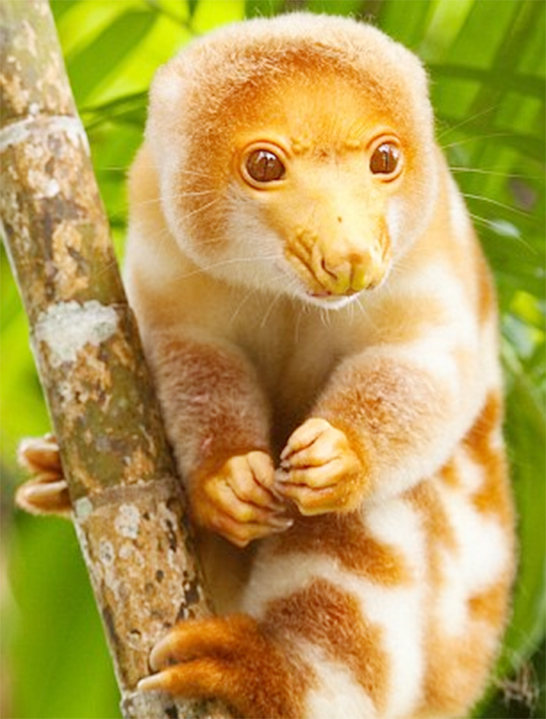 Natural predators of the cuscus include large snakes such as pythons, as well as birds of prey like hawks and owls. Its nocturnal habits, camouflaged fur, and treetop lifestyle offer some protection from these threats.A Unique Marsupial of the Forest Canopy
With its woolly spotted coat, powerful climbing adaptations, and solitary, nocturnal behavior, the common spotted cuscus stands out as one of the most intriguing marsupials of Australasia. Despite its wide distribution, its secretive nature and dense habitat make it a rarely seen yet ecologically important species in the tropical forests it inhabits.
The common spotted cuscus (Spilocuscus maculatus) is a medium-sized marsupial roughly the size of a domestic cat. Adults typically weigh between 1.5 and 6 kilograms, with body lengths ranging from 35 to 65 centimeters and tails measuring 32 to 60 centimeters. Its round head, small concealed ears, and large, slit-like eyes—which can appear yellow, orange, or red—give it a distinctive look.
Adapted for life in the treetops, the cuscus has strong, curved claws on all limbs except the first digit of each foot. The second and third digits on the hind feet are partially fused, forming natural grooming combs, while the first digit is clawless and opposable, perfect for gripping branches. Its bare, ridged paw pads enhance its climbing ability.The species’ thick, woolly coat varies greatly depending on age, sex, and region. Males are typically gray or brown with distinctive white spotting along their backs and a pale underside. Females are usually white or gray without spots, though both sexes can occasionally be completely white. Juveniles undergo several color changes before reaching maturity at about one year old. Coloration can include reddish, buff, brown, light gray, or black tones. Unlike some related species, this cuscus lacks a dorsal stripe.One of its defining features is its strong, curled prehensile tail. The base of the tail is covered in fur, while the underside of the lower half is scaly and rough, allowing the cuscus to grip tree branches securely.Behavior and Social InteractionsThe common spotted cuscus is a shy and secretive animal, making sightings rare, particularly in northern Australia. Nocturnal by nature, it emerges at night to forage and retreats during daylight hours to rest in tree hollows, root shelters, or makeshift platforms high in the canopy. Despite its slow, deliberate movements—sometimes drawing comparisons to sloths—it is an agile climber well-suited to arboreal life.This marsupial is largely solitary, with males fiercely defending their territories. To mark boundaries, males produce a strong musky odor and use saliva to scent-mark branches. When encountering rivals, males communicate through barking, snarling, and hissing sounds, often standing upright in defensive postures. Territorial disputes can become aggressive, involving biting, scratching, and kicking. The cuscus is also capable of defending itself against predators using its sharp claws and strong limbs.Habitat and Geographic Range
Preferring dense forested environments, the common spotted cuscus inhabits tropical rainforests, mangroves, hardwood forests, and eucalyptus woodlands at elevations below 1,200 meters. Its elusive nature and choice of thick vegetation make it challenging to observe in the wild.The species is native to northeastern Australia, particularly Cape York, as well as New Guinea and surrounding islands. Its range extends westward to Sulawesi and eastward to the Solomon Islands. Scientists believe its distribution was shaped by historical migrations across exposed land bridges during low sea levels over the past million years.Diet and Predators
With a versatile set of teeth, the common spotted cuscus is an opportunistic feeder. Its diet primarily consists of leaves from ficus, alstonia, and slonea plants, along with nectar and fruits from ficus, lithocarpus, aglaia, mischocarpus, and pometia species. Additionally, it may consume flowers, small animals, and bird eggs when available.
Natural predators of the cuscus include large snakes such as pythons, as well as birds of prey like hawks and owls. Its nocturnal habits, camouflaged fur, and treetop lifestyle offer some protection from these threats.A Unique Marsupial of the Forest CanopyWith its woolly spotted coat, powerful climbing adaptations, and solitary, nocturnal behavior, the common spotted cuscus stands out as one of the most intriguing marsupials of Australasia. Despite its wide distribution, its secretive nature and dense habitat make it a rarely seen yet ecologically important species in the tropical forests it inhabits.