Psilocybin May Unlock New anti-aging Benefits
A new study conducted by researchers at Emory University and Baylor College of Medicine has provided the first experimental evidence that the psychedelic compound can dramatically increase cell lifespan and improve survival rates in animal models.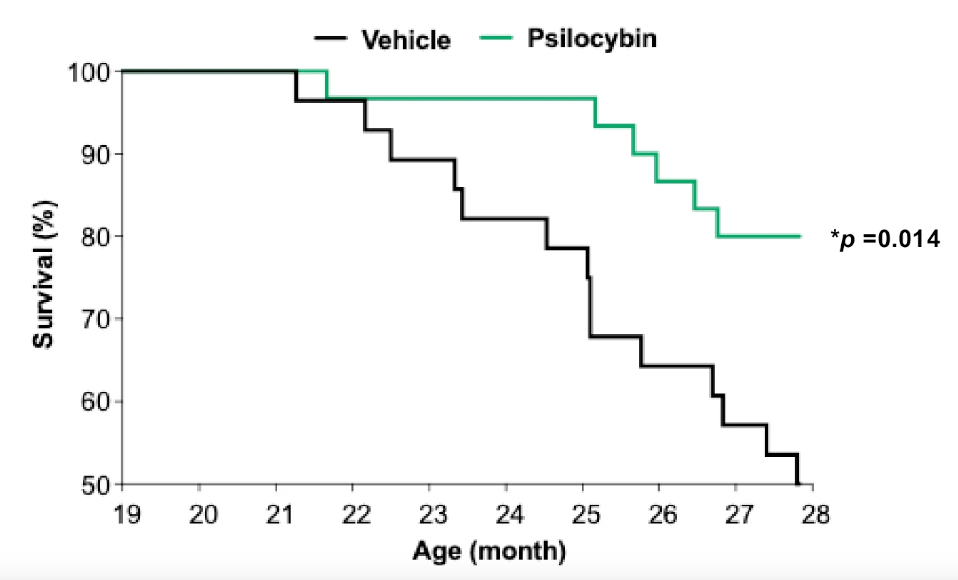 Traditionally, psilocybin has been studied for its effectiveness in treating depression, anxiety, and neurological disorders. However, its impact on aging and longevity has remained largely unexplored—until now.Study Finds 50% Longer Lifespan in Human Cells
In the study, researchers tested psilocybin on cultures of human cells, specifically adult skin fibroblasts and fetal lung fibroblasts. The cells were treated with psilocin, a metabolite that the body naturally converts into psilocybin. Scientists monitored these cells until they reached senescence—a biological stage where cells stop dividing and enter a dormant state.Results were striking:
To test whether these effects extended beyond isolated cells, the team conducted experiments on live mice. Female mice aged 19 months—comparable to 60–65 years in humans—were administered a monthly dose of psilocybin.After 10 months of treatment:
“This study provides strong preclinical evidence that psilocybin may contribute to healthier aging—not just extending lifespan but also improving quality of life in later years,” explains Dr. Ali John Zarrabi, a palliative care physician at Emory University.The findings suggest that psilocybin could one day be used as part of anti-aging therapies. However, researchers caution that more studies are needed to optimize dosage, treatment timing, and frequency to understand its full potential and effects on maximum lifespan.Future Research Directions
While this research offers promising results, scientists emphasize the importance of further investigation before psilocybin can be safely applied in human aging treatments. Future studies aim to:
A new study conducted by researchers at Emory University and Baylor College of Medicine has provided the first experimental evidence that the psychedelic compound can dramatically increase cell lifespan and improve survival rates in animal models.
Traditionally, psilocybin has been studied for its effectiveness in treating depression, anxiety, and neurological disorders. However, its impact on aging and longevity has remained largely unexplored—until now.Study Finds 50% Longer Lifespan in Human CellsIn the study, researchers tested psilocybin on cultures of human cells, specifically adult skin fibroblasts and fetal lung fibroblasts. The cells were treated with psilocin, a metabolite that the body naturally converts into psilocybin. Scientists monitored these cells until they reached senescence—a biological stage where cells stop dividing and enter a dormant state.Results were striking:
- Lung fibroblast cells treated with 100 micromoles of psilocybin took 57% longer to reach senescence than untreated cells.
- Skin fibroblasts showed a 51% increase in longevity under the same treatment conditions.
To test whether these effects extended beyond isolated cells, the team conducted experiments on live mice. Female mice aged 19 months—comparable to 60–65 years in humans—were administered a monthly dose of psilocybin.After 10 months of treatment:
- 80% of psilocybin-treated mice survived the entire period,
- Compared to only 50% of the untreated control group.
“This study provides strong preclinical evidence that psilocybin may contribute to healthier aging—not just extending lifespan but also improving quality of life in later years,” explains Dr. Ali John Zarrabi, a palliative care physician at Emory University.The findings suggest that psilocybin could one day be used as part of anti-aging therapies. However, researchers caution that more studies are needed to optimize dosage, treatment timing, and frequency to understand its full potential and effects on maximum lifespan.Future Research Directions
While this research offers promising results, scientists emphasize the importance of further investigation before psilocybin can be safely applied in human aging treatments. Future studies aim to:
- Determine ideal dosing protocols for therapeutic effects,
- Identify the best age to start treatment,
- Assess long-term impacts on maximal lifespan and healthspan.