The Mystery of the Ocean Floor
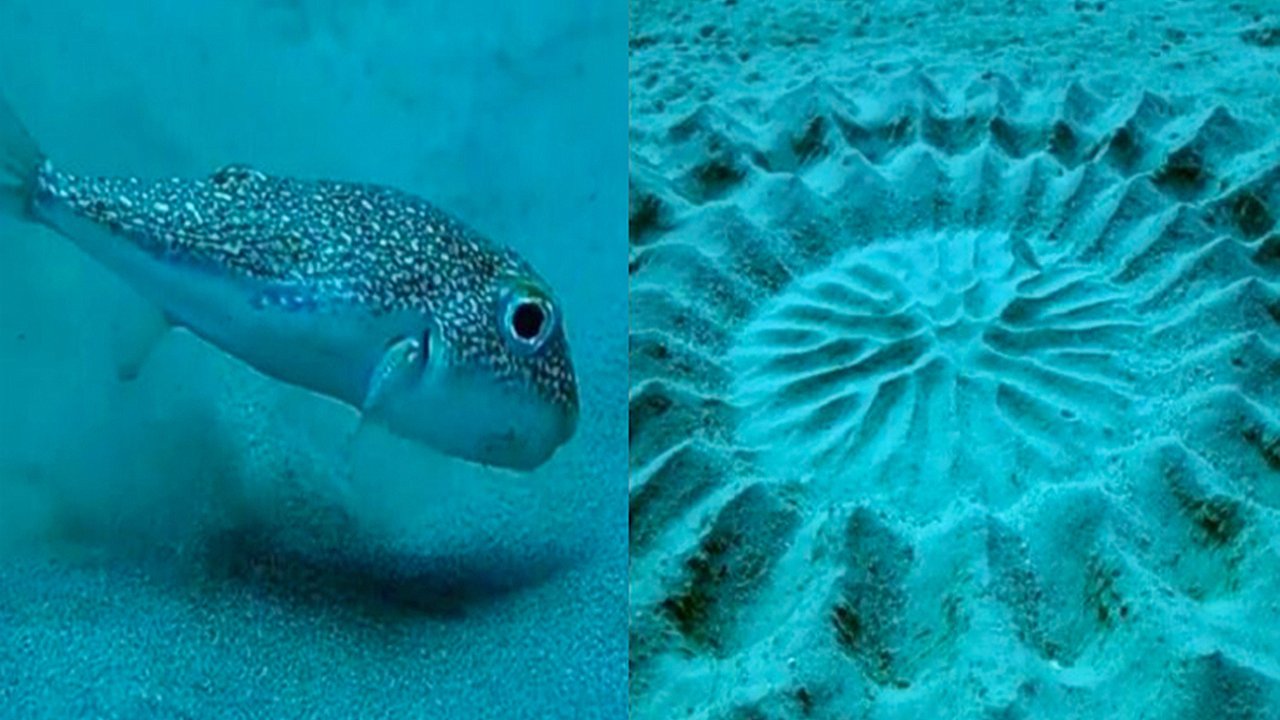
For years, divers exploring the seabed near Japan were captivated by strange, geometric patterns carved into the sand. These symmetrical, circular designs—often measuring over six feet across—bore a striking resemblance to crop circles, yet no one could explain their origin. Now, researchers have solved the mystery, and the answer lies in the mating habits of one very determined little fish.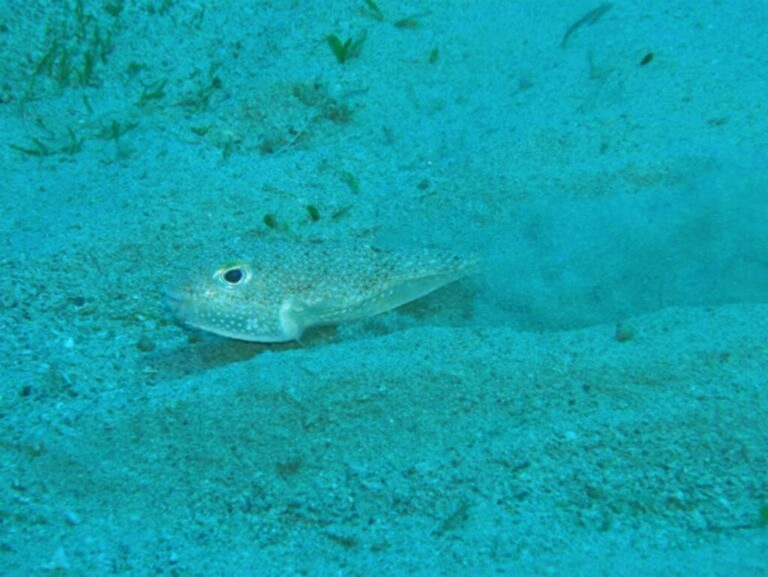 A Tiny Artist with a Big Heart
The creator of these astonishing underwater patterns is none other than the male pufferfish, a modest creature barely five inches long. Despite its small size, this fish possesses a unique talent: creating elaborate sand art with nothing but its fins and unyielding dedication. These mesmerizing structures are far from random—they’re precise, detailed, and serve a single purpose: to win a mate.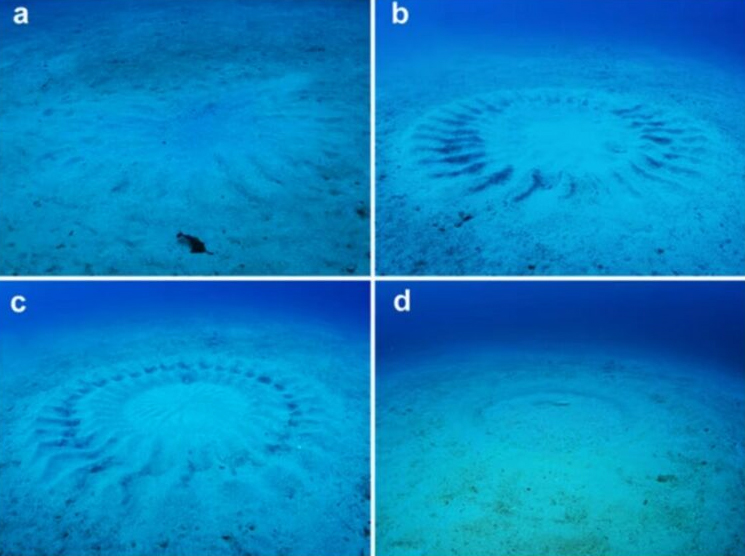 Crafting the Perfect Courtship Display
The male pufferfish devotes days or even weeks to building his sandy masterpiece. Using his body to sweep the seafloor, he sculpts valleys and ridges into concentric circles, meticulously arranging fine grains of sand and embellishing the central zone with bits of shell. The final product resembles a delicate flower etched into the seabed, an unmistakable signal to nearby females that he is a worthy partner.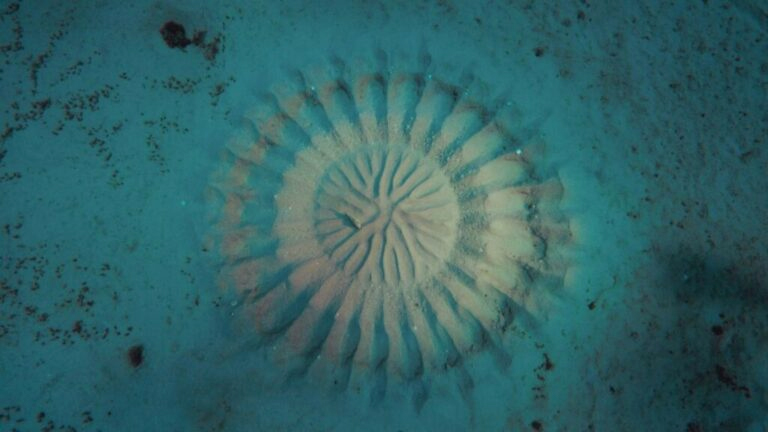 Nature’s Gamble on Love
After completing his ornate arena, the male waits patiently for a female to inspect his work. If she is impressed, she will enter the circle and the pair will mate. But if she finds the display lacking, she swims away—leaving the circle to be destroyed by shifting tides and currents. The male’s painstaking efforts could be all for nothing, making this a high-stakes courtship game dictated by beauty and precision.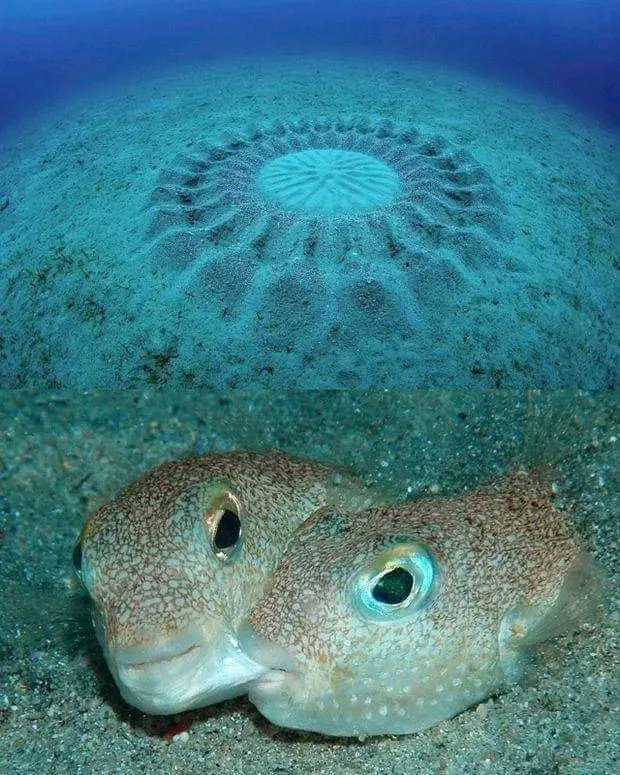 Science Unlocks the Secrets of Seabed Art
Marine biologists have studied these astonishing mating rituals to uncover their biological significance. They theorize that the symmetry and design of the circles may not only attract females but also serve practical functions—such as protecting eggs from predators or stabilizing currents to enhance fertilization. What once seemed a bizarre underwater curiosity is now celebrated as one of nature’s most fascinating examples of romantic expression.
For years, divers exploring the seabed near Japan were captivated by strange, geometric patterns carved into the sand. These symmetrical, circular designs—often measuring over six feet across—bore a striking resemblance to crop circles, yet no one could explain their origin. Now, researchers have solved the mystery, and the answer lies in the mating habits of one very determined little fish.
A Tiny Artist with a Big HeartThe creator of these astonishing underwater patterns is none other than the male pufferfish, a modest creature barely five inches long. Despite its small size, this fish possesses a unique talent: creating elaborate sand art with nothing but its fins and unyielding dedication. These mesmerizing structures are far from random—they’re precise, detailed, and serve a single purpose: to win a mate.
Crafting the Perfect Courtship DisplayThe male pufferfish devotes days or even weeks to building his sandy masterpiece. Using his body to sweep the seafloor, he sculpts valleys and ridges into concentric circles, meticulously arranging fine grains of sand and embellishing the central zone with bits of shell. The final product resembles a delicate flower etched into the seabed, an unmistakable signal to nearby females that he is a worthy partner.
Nature’s Gamble on LoveAfter completing his ornate arena, the male waits patiently for a female to inspect his work. If she is impressed, she will enter the circle and the pair will mate. But if she finds the display lacking, she swims away—leaving the circle to be destroyed by shifting tides and currents. The male’s painstaking efforts could be all for nothing, making this a high-stakes courtship game dictated by beauty and precision.
Science Unlocks the Secrets of Seabed ArtMarine biologists have studied these astonishing mating rituals to uncover their biological significance. They theorize that the symmetry and design of the circles may not only attract females but also serve practical functions—such as protecting eggs from predators or stabilizing currents to enhance fertilization. What once seemed a bizarre underwater curiosity is now celebrated as one of nature’s most fascinating examples of romantic expression.