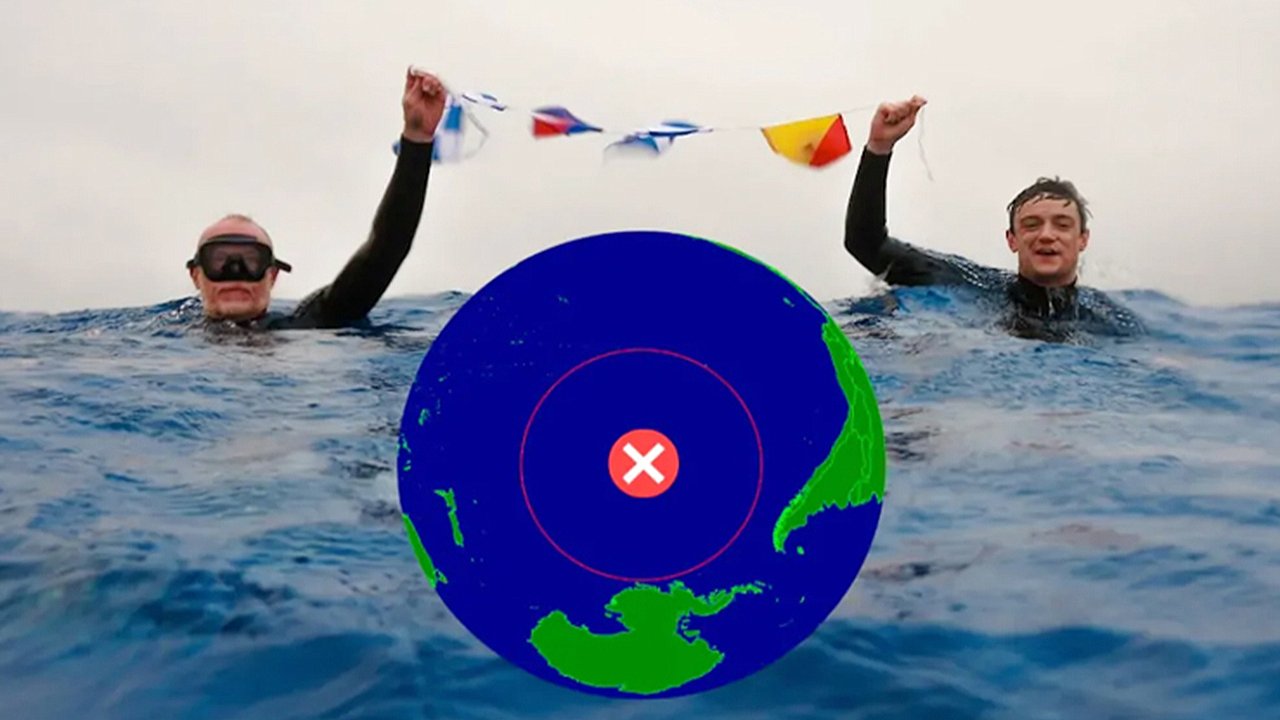
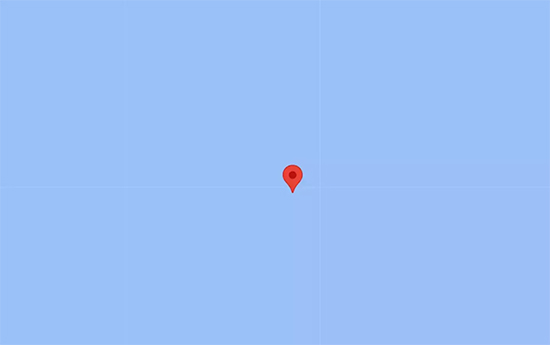
British adventurers take on Earth’s most remote ocean pointFor most people, a quiet getaway means a secluded beach or a countryside retreat. But for British explorers Chris Brown and his son Mika, peace and quiet meant heading to the most isolated place on the planet—Point Nemo, the Oceanic Pole of Inaccessibility. Located deep in the South Pacific Ocean, Point Nemo is the spot farthest from any landmass on Earth. It’s so remote that, at times, the closest humans are aboard the International Space Station, orbiting hundreds of kilometers above.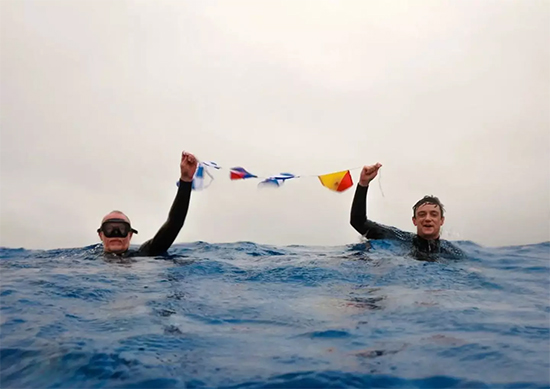 After five years of planning, 62-year-old Chris Brown and his 32-year-old son Mika achieved what no one else had ever done before: they became the first people to swim in the waters of Point Nemo. Their extraordinary journey combined endurance, adventure, and the spirit of human exploration, reminding the world that there are still frontiers left to conquer—even in the age of satellites and global travel.What is Point Nemo and why is it so special?Point Nemo, officially known as the Oceanic Pole of Inaccessibility, lies roughly 2,688 kilometers (1,670 miles) from the nearest land. It sits in the middle of the Pacific Ocean, equidistant from the coasts of Chile, Easter Island, and the Antarctic continent. Because of its extreme remoteness, reaching Point Nemo is a logistical challenge that few vessels ever attempt.
 The name “Nemo” comes from the Latin word for “no one” and pays tribute to Captain Nemo, the fictional submarine commander from Jules Verne’s Twenty Thousand Leagues Under the Sea. The point’s desolate location means it’s virtually devoid of life, earning it a reputation as one of Earth’s last untouched frontiers. It’s also where space agencies direct defunct satellites and spacecraft to crash safely—earning it the eerie nickname “the spacecraft cemetery.”A five-year dream and a daring voyageChris and Mika Brown, from Harrogate, Yorkshire, spent five years carefully preparing for their expedition. On March 12, 2024, they set sail from Puerto Montt, Chile, aboard the Hanse Explorer, a chartered yacht modified for their journey. Their mission: to reach Point Nemo and become the first humans to swim in its frigid, isolated waters.The journey to the coordinates took eight days, involving unpredictable weather, vast stretches of open ocean, and an ever-present sense of isolation. For safety reasons, the Browns traveled with an experienced crew who provided navigational and technical support. However, once at Point Nemo, the swim itself was entirely their own challenge to face.The first swim at Point NemoOn March 20, 2024, the Browns arrived at the Oceanic Pole of Inaccessibility. The water temperature was around 9 to 10 degrees Celsius—cold enough to test even the most seasoned swimmers. Undeterred, Chris and Mika leapt into the deep blue waters from a small dinghy, staying afloat for around 20 minutes.Chris later shared the moment on Instagram, posting a photo of himself and Mika holding maritime bunting spelling out “NEMO.” He proudly wrote: “Point Nemo – the Oceanic Pole of Inaccessibility – bagged on Wednesday 20th March 2024. Having stood with a flag at the other Poles, I thought it would be a good idea to get in the water and become the first people to ever swim at Point Nemo.”The pair’s daring dip marked a new milestone in oceanic exploration. Their successful swim confirmed that humans could indeed reach—and swim in—the most isolated point on Earth.Astronauts were the closest humans to themAt the time of their swim, the nearest humans to the Browns were not on land but orbiting above in the International Space Station, approximately 408 kilometers overhead. This bizarre fact underscores just how distant Point Nemo is from civilization. In case of any emergency, contacting anyone for help would have been nearly impossible.Despite the risks, the Browns’ preparation and teamwork ensured the expedition went smoothly. They also had to remain mindful of debris from old spacecraft that often falls into the area—though fortunately, none was spotted during their swim.A modern symbol of adventure and enduranceThe Browns’ feat goes beyond just a swim—it symbolizes the enduring human drive to explore the unknown. Their accomplishment at Point Nemo joins the ranks of other extreme achievements like climbing Everest or reaching the North and South Poles.In an age where satellites have mapped nearly every corner of the planet, the Browns have proven that exploration still has a place in modern adventure. Their determination and courage remind us that there are still challenges out there—places where no human has stood, or in this case, swum—waiting for someone bold enough to take the plunge.
After five years of planning, 62-year-old Chris Brown and his 32-year-old son Mika achieved what no one else had ever done before: they became the first people to swim in the waters of Point Nemo. Their extraordinary journey combined endurance, adventure, and the spirit of human exploration, reminding the world that there are still frontiers left to conquer—even in the age of satellites and global travel.What is Point Nemo and why is it so special?Point Nemo, officially known as the Oceanic Pole of Inaccessibility, lies roughly 2,688 kilometers (1,670 miles) from the nearest land. It sits in the middle of the Pacific Ocean, equidistant from the coasts of Chile, Easter Island, and the Antarctic continent. Because of its extreme remoteness, reaching Point Nemo is a logistical challenge that few vessels ever attempt.The name “Nemo” comes from the Latin word for “no one” and pays tribute to Captain Nemo, the fictional submarine commander from Jules Verne’s Twenty Thousand Leagues Under the Sea. The point’s desolate location means it’s virtually devoid of life, earning it a reputation as one of Earth’s last untouched frontiers. It’s also where space agencies direct defunct satellites and spacecraft to crash safely—earning it the eerie nickname “the spacecraft cemetery.”A five-year dream and a daring voyageChris and Mika Brown, from Harrogate, Yorkshire, spent five years carefully preparing for their expedition. On March 12, 2024, they set sail from Puerto Montt, Chile, aboard the Hanse Explorer, a chartered yacht modified for their journey. Their mission: to reach Point Nemo and become the first humans to swim in its frigid, isolated waters.The journey to the coordinates took eight days, involving unpredictable weather, vast stretches of open ocean, and an ever-present sense of isolation. For safety reasons, the Browns traveled with an experienced crew who provided navigational and technical support. However, once at Point Nemo, the swim itself was entirely their own challenge to face.The first swim at Point NemoOn March 20, 2024, the Browns arrived at the Oceanic Pole of Inaccessibility. The water temperature was around 9 to 10 degrees Celsius—cold enough to test even the most seasoned swimmers. Undeterred, Chris and Mika leapt into the deep blue waters from a small dinghy, staying afloat for around 20 minutes.Chris later shared the moment on Instagram, posting a photo of himself and Mika holding maritime bunting spelling out “NEMO.” He proudly wrote: “Point Nemo – the Oceanic Pole of Inaccessibility – bagged on Wednesday 20th March 2024. Having stood with a flag at the other Poles, I thought it would be a good idea to get in the water and become the first people to ever swim at Point Nemo.”The pair’s daring dip marked a new milestone in oceanic exploration. Their successful swim confirmed that humans could indeed reach—and swim in—the most isolated point on Earth.Astronauts were the closest humans to themAt the time of their swim, the nearest humans to the Browns were not on land but orbiting above in the International Space Station, approximately 408 kilometers overhead. This bizarre fact underscores just how distant Point Nemo is from civilization. In case of any emergency, contacting anyone for help would have been nearly impossible.Despite the risks, the Browns’ preparation and teamwork ensured the expedition went smoothly. They also had to remain mindful of debris from old spacecraft that often falls into the area—though fortunately, none was spotted during their swim.A modern symbol of adventure and enduranceThe Browns’ feat goes beyond just a swim—it symbolizes the enduring human drive to explore the unknown. Their accomplishment at Point Nemo joins the ranks of other extreme achievements like climbing Everest or reaching the North and South Poles.In an age where satellites have mapped nearly every corner of the planet, the Browns have proven that exploration still has a place in modern adventure. Their determination and courage remind us that there are still challenges out there—places where no human has stood, or in this case, swum—waiting for someone bold enough to take the plunge.