Massive Ice Deposits Discovered Beneath Mars' Equator
A groundbreaking discovery by the European Space Agency (ESA) has revealed a vast reservoir of water ice buried deep beneath Mars' equator. Detected by the long-operating Mars Express orbiter, the dusty ice deposits could, if melted, create a global ocean ranging from 4.9 to 8.9 feet (1.5 to 2.7 meters) deep across the entire planet.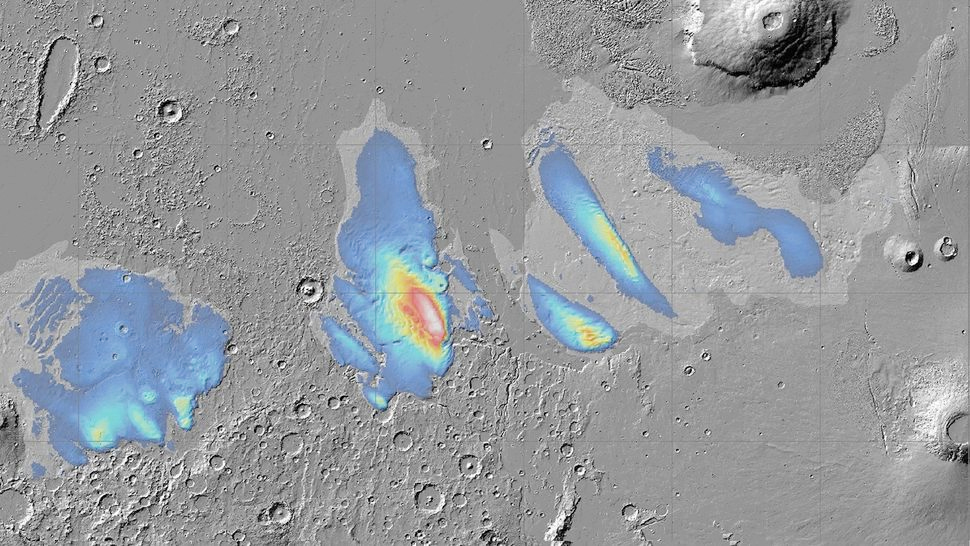 This buried ice is located within the Medusae Fossae Formation (MFF)—a wind-sculpted geological feature stretching thousands of kilometers across and standing several kilometers high. Using the radar instrument MARSIS onboard the orbiter, scientists have estimated that the ice-rich layers extend to depths of up to 3,000 meters (approximately 2.3 miles). The deposits are hidden beneath hundreds of meters of hardened volcanic ash and dust.A Layered Legacy: MFF’s Dusty Yet Icy Composition
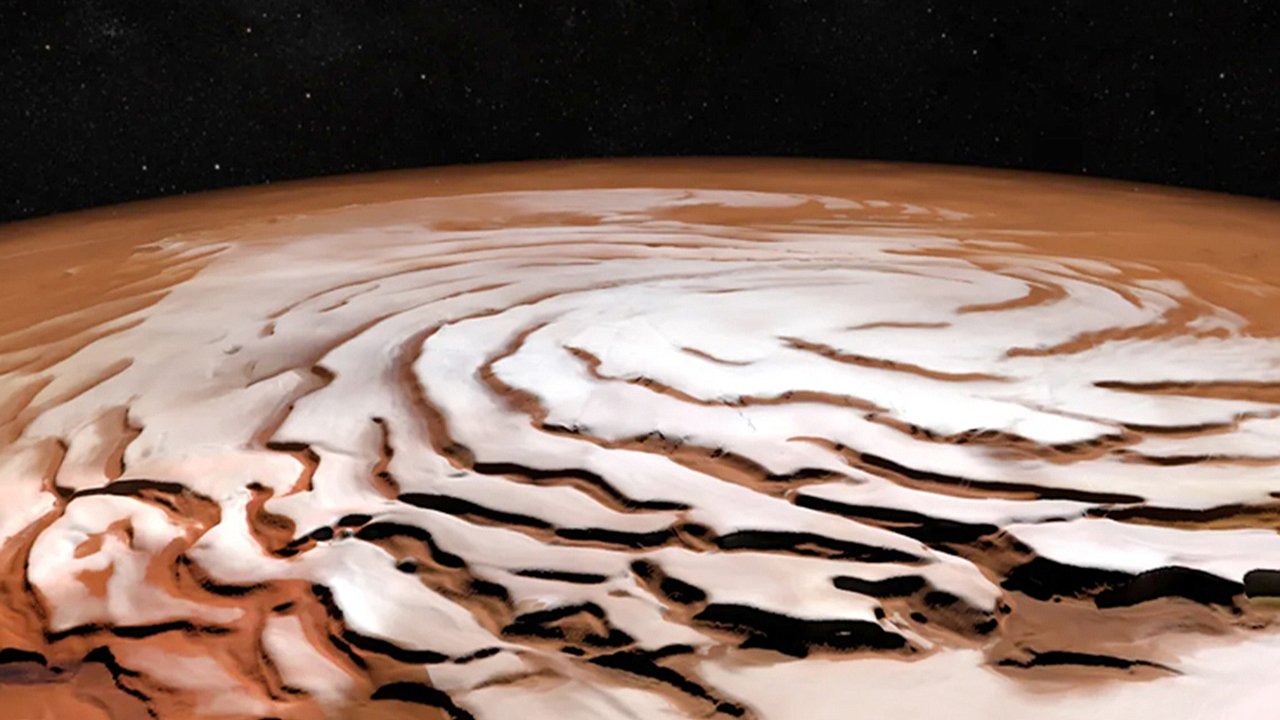
While Mars Express had previously detected material beneath the MFF some 15 years ago, the nature of those deposits remained uncertain. The new radar data conclusively reveals that the subsurface material is not merely dust. The low-density, radar-transparent signature is consistent with layered ice—closely resembling that seen at Mars' polar ice caps.“If this was just a massive pile of dust, gravity would’ve compacted it over time into something denser,” said Andrea Cicchetti from Italy’s National Institute for Astrophysics. “Instead, what we see matches the behavior of dusty ice.”The implications are significant. While polar ice on Mars is well known, the discovery of such an enormous body of ice near the equator—where surface conditions are more moderate—could be vital for future crewed missions. However, the ice’s depth would pose a technological challenge for extraction.Clues to Mars' Climatic Past
The presence of water ice at equatorial latitudes raises new questions about Mars’ past climate. One leading theory suggests the ice accumulated during a time of high axial tilt, or obliquity. Mars’ tilt has fluctuated dramatically over time—from as little as 10° to as much as 60°—causing massive climate shifts. During periods of high tilt, the planet’s poles receive more sunlight, allowing ice to migrate toward the equator.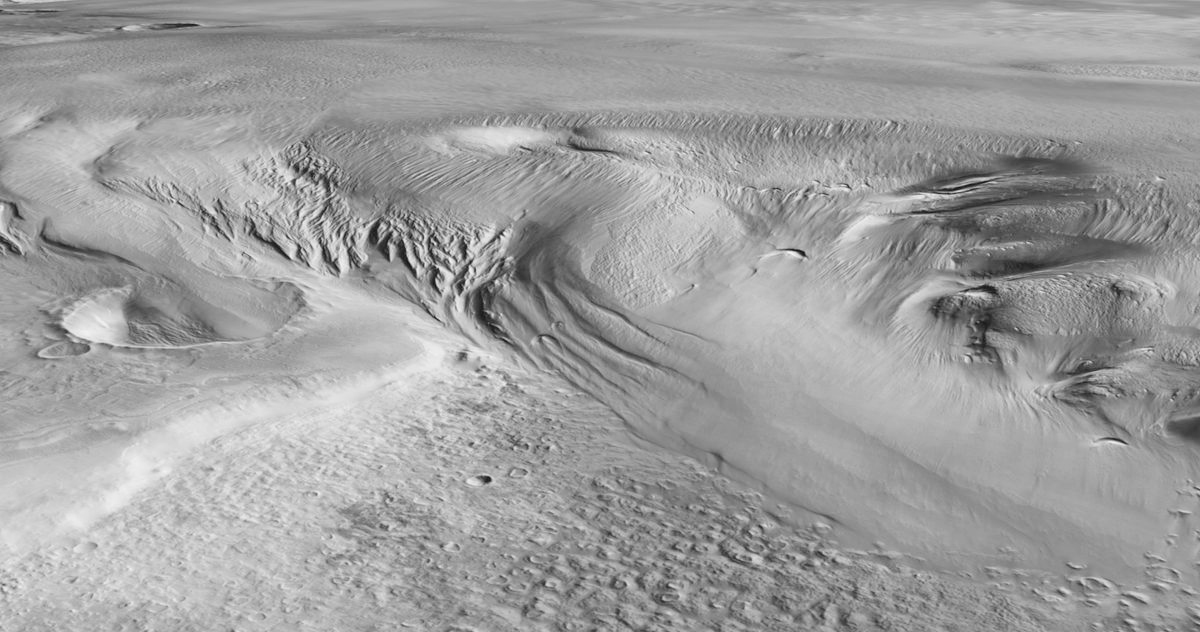 Over time, these ice layers were likely buried beneath volcanic ash and dust, preserving them under a natural insulating crust. This theory also helps explain other unusual Martian surface features, including ancient glacial remnants near the equator and water-formed gullies in unexpected regions.“This latest analysis changes how we view the Medusae Fossae Formation,” said Colin Wilson, ESA project scientist. “It forces us to rethink not just what’s under the surface, but what Mars was like billions of years ago when these layers were formed.”Connecting the Dots: Past Discoveries Now Make Sense
While this new find is the most substantial yet, it complements earlier missions. NASA’s Phoenix lander uncovered near-surface ice in the polar regions in 2008, and both ESA’s Trace Gas Orbiter and NASA’s Mars Odyssey previously identified signs of subsurface water across various mid-latitude zones, including the MFF.More recently, water ice was detected near the Candor Chaos region in Valles Marineris, and remains of ancient glaciers have been discovered in Noctis Labyrinthus, located just a few degrees south of the equator.Together, these discoveries suggest Mars may once have harbored a dynamic hydrological system, with water flowing or freezing across broad regions—even in areas once believed to be too warm or dry.What This Means for Future Mars Missions
For future Mars missions—particularly those involving human exploration—the equator is a prime target due to its relatively stable conditions and moderate temperatures. The new findings offer hope that significant water resources may be available, albeit buried deep beneath the surface.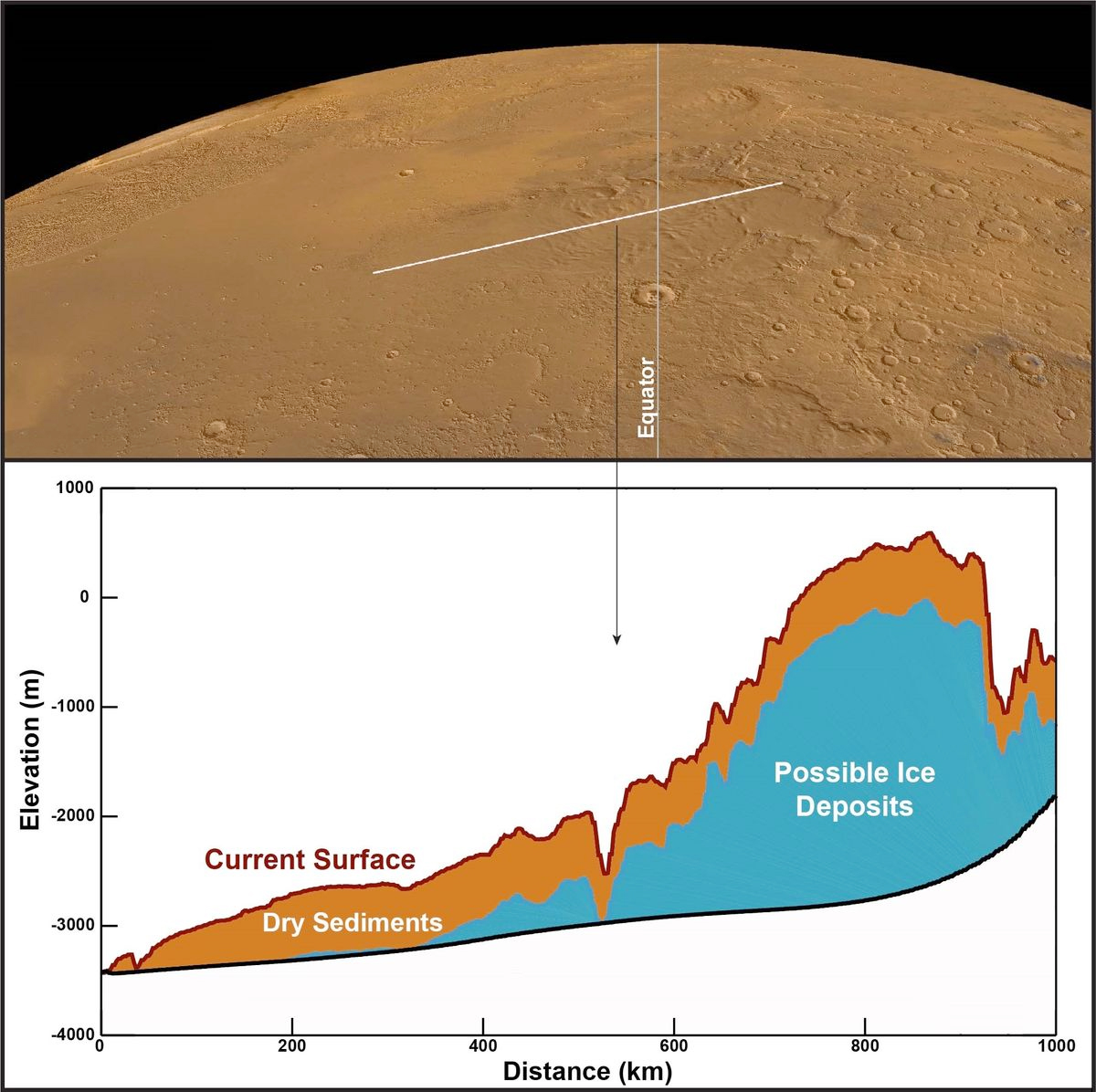 Still, this raises engineering challenges. Accessing ice more than 2 miles underground is no small feat. Technologies for deep drilling and melting through Martian regolith and volcanic deposits would be essential for any effort to utilize this water.As scientists continue to analyze the data, one thing is certain: the Red Planet still holds many secrets beneath its dusty surface. And those secrets could be the key to unlocking not only its past—but humanity’s future on Mars.
A groundbreaking discovery by the European Space Agency (ESA) has revealed a vast reservoir of water ice buried deep beneath Mars' equator. Detected by the long-operating Mars Express orbiter, the dusty ice deposits could, if melted, create a global ocean ranging from 4.9 to 8.9 feet (1.5 to 2.7 meters) deep across the entire planet.
This buried ice is located within the Medusae Fossae Formation (MFF)—a wind-sculpted geological feature stretching thousands of kilometers across and standing several kilometers high. Using the radar instrument MARSIS onboard the orbiter, scientists have estimated that the ice-rich layers extend to depths of up to 3,000 meters (approximately 2.3 miles). The deposits are hidden beneath hundreds of meters of hardened volcanic ash and dust.A Layered Legacy: MFF’s Dusty Yet Icy CompositionWhile Mars Express had previously detected material beneath the MFF some 15 years ago, the nature of those deposits remained uncertain. The new radar data conclusively reveals that the subsurface material is not merely dust. The low-density, radar-transparent signature is consistent with layered ice—closely resembling that seen at Mars' polar ice caps.“If this was just a massive pile of dust, gravity would’ve compacted it over time into something denser,” said Andrea Cicchetti from Italy’s National Institute for Astrophysics. “Instead, what we see matches the behavior of dusty ice.”The implications are significant. While polar ice on Mars is well known, the discovery of such an enormous body of ice near the equator—where surface conditions are more moderate—could be vital for future crewed missions. However, the ice’s depth would pose a technological challenge for extraction.Clues to Mars' Climatic Past
The presence of water ice at equatorial latitudes raises new questions about Mars’ past climate. One leading theory suggests the ice accumulated during a time of high axial tilt, or obliquity. Mars’ tilt has fluctuated dramatically over time—from as little as 10° to as much as 60°—causing massive climate shifts. During periods of high tilt, the planet’s poles receive more sunlight, allowing ice to migrate toward the equator.
Over time, these ice layers were likely buried beneath volcanic ash and dust, preserving them under a natural insulating crust. This theory also helps explain other unusual Martian surface features, including ancient glacial remnants near the equator and water-formed gullies in unexpected regions.“This latest analysis changes how we view the Medusae Fossae Formation,” said Colin Wilson, ESA project scientist. “It forces us to rethink not just what’s under the surface, but what Mars was like billions of years ago when these layers were formed.”Connecting the Dots: Past Discoveries Now Make SenseWhile this new find is the most substantial yet, it complements earlier missions. NASA’s Phoenix lander uncovered near-surface ice in the polar regions in 2008, and both ESA’s Trace Gas Orbiter and NASA’s Mars Odyssey previously identified signs of subsurface water across various mid-latitude zones, including the MFF.More recently, water ice was detected near the Candor Chaos region in Valles Marineris, and remains of ancient glaciers have been discovered in Noctis Labyrinthus, located just a few degrees south of the equator.Together, these discoveries suggest Mars may once have harbored a dynamic hydrological system, with water flowing or freezing across broad regions—even in areas once believed to be too warm or dry.What This Means for Future Mars Missions
For future Mars missions—particularly those involving human exploration—the equator is a prime target due to its relatively stable conditions and moderate temperatures. The new findings offer hope that significant water resources may be available, albeit buried deep beneath the surface.
Still, this raises engineering challenges. Accessing ice more than 2 miles underground is no small feat. Technologies for deep drilling and melting through Martian regolith and volcanic deposits would be essential for any effort to utilize this water.As scientists continue to analyze the data, one thing is certain: the Red Planet still holds many secrets beneath its dusty surface. And those secrets could be the key to unlocking not only its past—but humanity’s future on Mars.