A Tragic Loss on the Farm
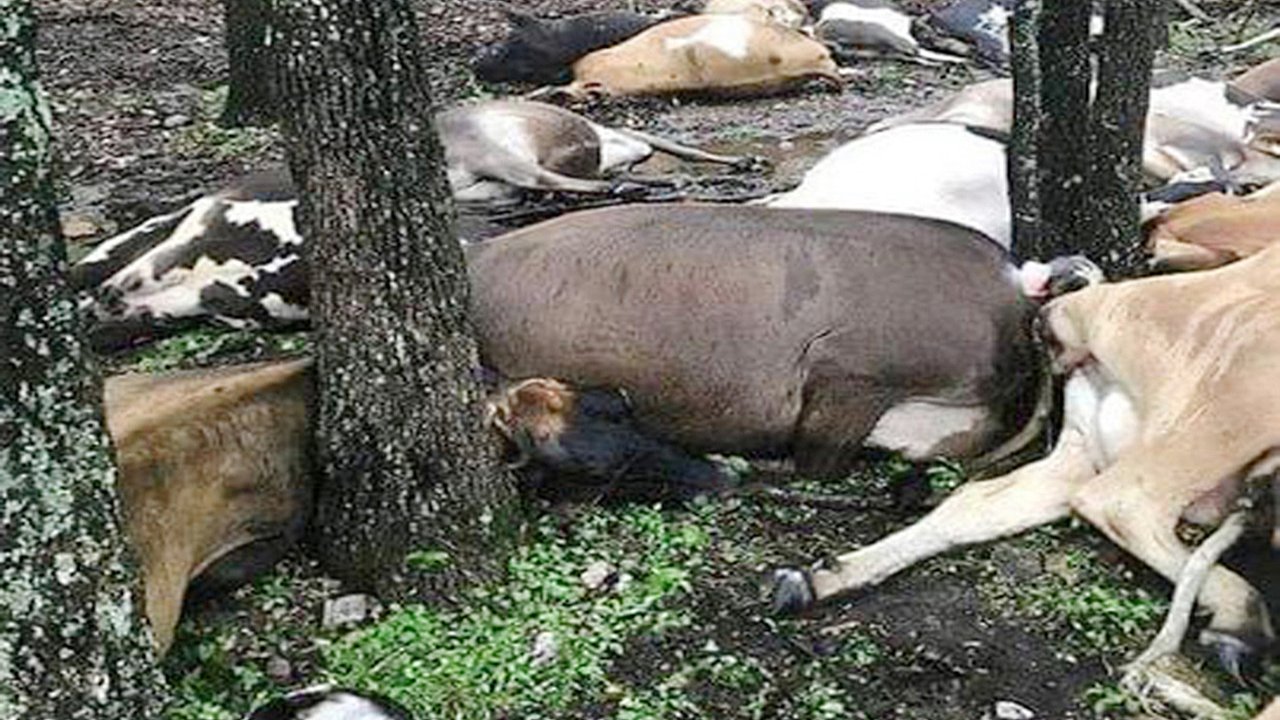
Jared Blackwelder, a dairy farmer from Springfield, Missouri, experienced an unthinkable tragedy when he went out to his pasture for the evening milking routine. Instead of his usual herd waiting to be led back, he was met with a horrific scene: all 32 of his dairy cows lay dead, stacked atop one another. At first, Blackwelder struggled to comprehend what had happened. The sight of his entire herd lifeless and unnaturally positioned left him stunned. However, as he regained his composure, he realized that lightning had likely struck the animals, killing them instantly.A Rare but Not Unheard-of Event
Stan Coday, president of the Wright County Missouri Farm Bureau, confirmed to CBS News that the cause of death was indeed a lightning strike. “It’s something that does happen occasionally,” Coday stated. “The difference in this case is the sheer number of cows that were killed at once.”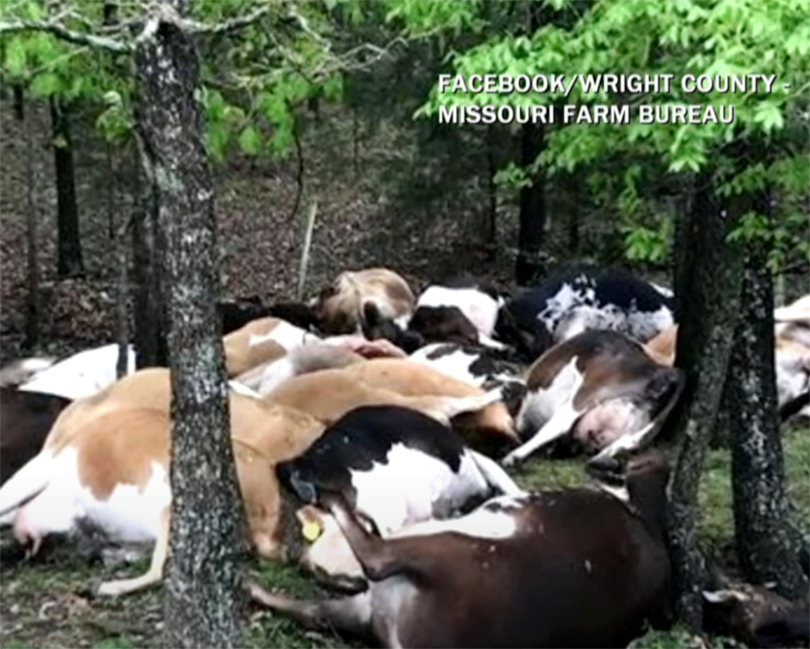
Veterinarians examining the carcasses determined that the cows had huddled under a tree for shelter from a severe thunderstorm when tragedy struck. A single lightning bolt was enough to take the lives of the entire group.Emotional and Financial Devastation
Losing livestock is always difficult, but for Blackwelder, the loss was especially devastating. “It’s not like they were just farm animals,” he told the Springfield News-Leader. “Dairy cows are different. I’ve raised every single one of them and worked with them twice a day. It’s a tough blow.”
The emotional pain was compounded by the severe financial hit. Blackwelder estimated his loss at over $60,000. While he had insurance, it was uncertain whether it would be sufficient to cover the full extent of his losses. “Most farmers don’t carry insurance on their livestock,” Coday explained. “Losing a cow means losing a significant investment, sometimes everything.”No Salvageable Meat
Due to the circumstances of their deaths, the cows could not be processed for meat. “By the time the farmer discovered them, the animals had been there for hours,” Coday said. “Meat processing requires certain conditions, and in this case, they wouldn’t have been fit for consumption.”
One of the factors contributing to this unfortunate event is the lack of dedicated cow barns in Missouri. Many farmers rely on the state’s relatively mild climate, leaving their livestock more exposed to the elements. In this case, Blackwelder’s cows had nowhere else to take shelter when the storm hit.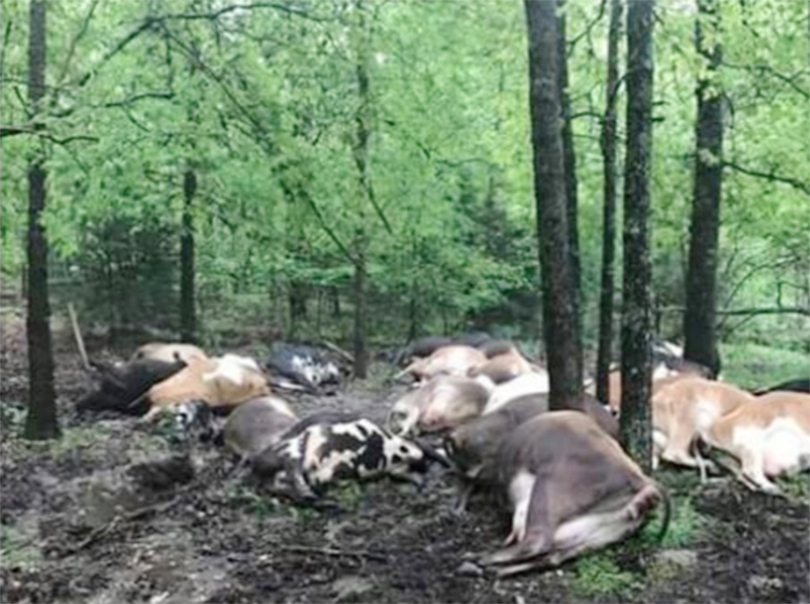 The Unpredictability of Nature
As heartbreaking as the loss is, it serves as a stark reminder of the unpredictability of nature. “You’re at the mercy of the weather,” Coday remarked. While Blackwelder’s loss is significant, he hopes his story will bring awareness to the challenges that farmers face daily.
Jared Blackwelder, a dairy farmer from Springfield, Missouri, experienced an unthinkable tragedy when he went out to his pasture for the evening milking routine. Instead of his usual herd waiting to be led back, he was met with a horrific scene: all 32 of his dairy cows lay dead, stacked atop one another. At first, Blackwelder struggled to comprehend what had happened. The sight of his entire herd lifeless and unnaturally positioned left him stunned. However, as he regained his composure, he realized that lightning had likely struck the animals, killing them instantly.A Rare but Not Unheard-of Event
Stan Coday, president of the Wright County Missouri Farm Bureau, confirmed to CBS News that the cause of death was indeed a lightning strike. “It’s something that does happen occasionally,” Coday stated. “The difference in this case is the sheer number of cows that were killed at once.”
Veterinarians examining the carcasses determined that the cows had huddled under a tree for shelter from a severe thunderstorm when tragedy struck. A single lightning bolt was enough to take the lives of the entire group.Emotional and Financial Devastation
Losing livestock is always difficult, but for Blackwelder, the loss was especially devastating. “It’s not like they were just farm animals,” he told the Springfield News-Leader. “Dairy cows are different. I’ve raised every single one of them and worked with them twice a day. It’s a tough blow.”
The emotional pain was compounded by the severe financial hit. Blackwelder estimated his loss at over $60,000. While he had insurance, it was uncertain whether it would be sufficient to cover the full extent of his losses. “Most farmers don’t carry insurance on their livestock,” Coday explained. “Losing a cow means losing a significant investment, sometimes everything.”No Salvageable Meat
Due to the circumstances of their deaths, the cows could not be processed for meat. “By the time the farmer discovered them, the animals had been there for hours,” Coday said. “Meat processing requires certain conditions, and in this case, they wouldn’t have been fit for consumption.”
One of the factors contributing to this unfortunate event is the lack of dedicated cow barns in Missouri. Many farmers rely on the state’s relatively mild climate, leaving their livestock more exposed to the elements. In this case, Blackwelder’s cows had nowhere else to take shelter when the storm hit.
The Unpredictability of NatureAs heartbreaking as the loss is, it serves as a stark reminder of the unpredictability of nature. “You’re at the mercy of the weather,” Coday remarked. While Blackwelder’s loss is significant, he hopes his story will bring awareness to the challenges that farmers face daily.