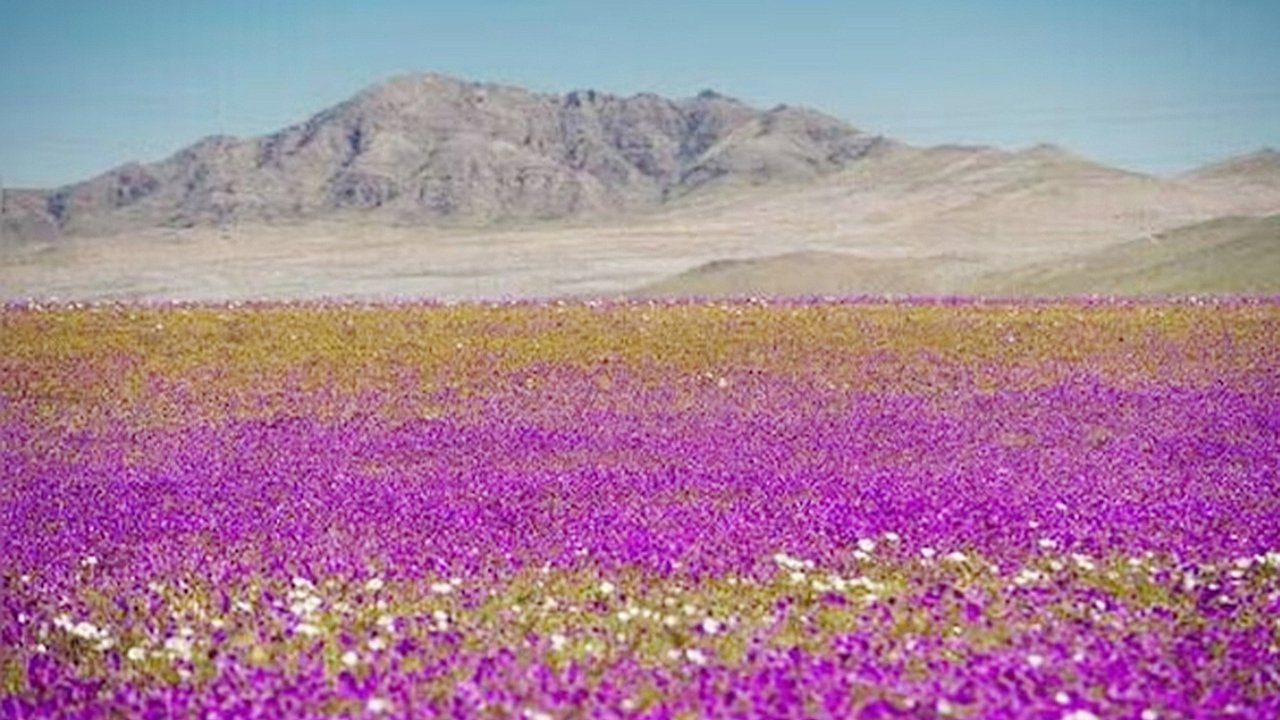
When the desert awakensIn northern Chile lies the Atacama Desert, one of the driest places on Earth, where rain can be absent for decades. Yet, in rare years when rainfall and warm temperatures align, the barren landscape bursts into life with a spectacular blanket of wildflowers.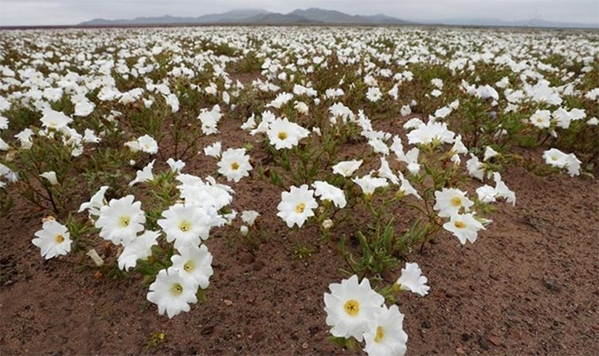 Known as the “desert bloom” or desierto florido, this natural wonder draws scientists, photographers, and travelers from around the world. Hidden beneath the sand, countless seeds wait for the perfect conditions to awaken. Once they do, the desert becomes a temporary ecosystem of flowers, insects, reptiles, and birds, creating a breathtaking yet fragile spectacle.What triggers the desert bloomThe desert bloom is closely linked to rainfall events, especially during El Niño years, when warmer ocean currents bring more evaporation and precipitation to the Atacama. A minimum of 15 millimeters of rainfall is usually needed to trigger the blooming, though larger events, such as the 50 millimeters recorded in 2017, lead to spectacular and widespread flower carpets. The most common regions where the bloom occurs include Copiapó, Huasco, and Caldera in the Atacama Region, but it can also appear in parts of Antofagasta and near Iquique, areas rich in endemic species.Flowers that paint the desertOnce the seeds awaken, the landscape transforms into a living canvas. Fields of rock purslane (Cistanthe grandiflora) blanket the plains in bright fuchsia, while yellow and orange añañucas (Zephyranthes bagnoldi) add warm tones.
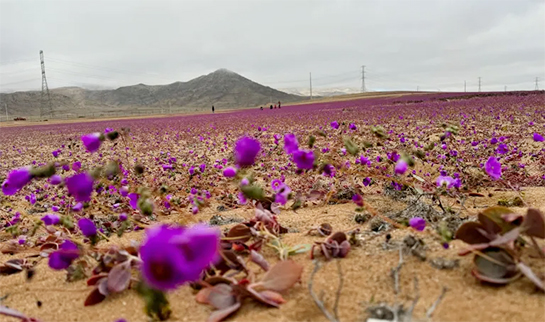 Other species, like nolanas, malvillas, and coronilla del fraile, enrich the view with blues, whites, and golds. Each of these flowers is adapted to survive in extreme conditions, completing their life cycle in just a few months before leaving behind seeds that may remain dormant for up to ten years.The science of sleeping seedsAccording to experts, the plants of the Atacama bloom share one important trait: survival through dormancy. Their seeds are protected by a tough outer shell, allowing them to remain latent underground for years, waiting for just the right combination of water, light, and warmth. Many of these plants are annuals, completing their life cycle in a single season, while others, like bulbs and cacti, rely on underground storage systems to endure long droughts. This evolutionary adaptation ensures that biodiversity persists, even in the harshest of climates.Cacti and hidden treasuresBeyond the flowers, the Atacama is also home to unique cactus species such as the Copiapoa, which grows along the desert coast. These spherical cacti, often covered in a protective waxy layer, can live for decades and bloom with bright yellow flowers.
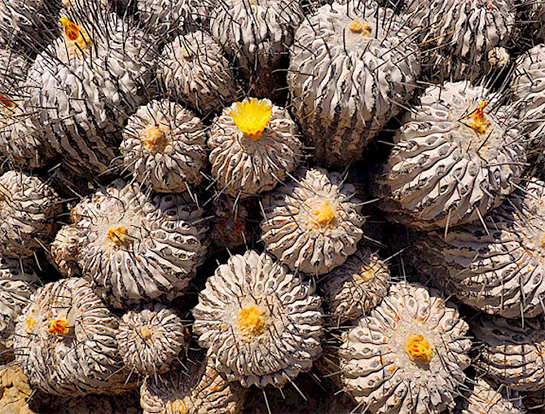 Copiapoa is a type of endemic cactus, very attractive for its particular cylindrical shape, which unfortunately is in a vulnerable state of conservation. (Photo: Nicole Saffie) Sadly, Copiapoa populations face threats from illegal trafficking, as collectors in Europe and Asia pay high prices for them. Conservation areas like Llanos de Challe National Park are critical to protecting these vulnerable plants and the ecosystems they support.A fragile ecosystem in need of protectionThe flowering desert is more than just a visual marvel; it is a delicate ecosystem that supports insects, birds, and reptiles. Pollinators play an essential role in ensuring genetic diversity, while rodents and insects help disperse seeds across the desert. However, this fragile cycle is under constant threat. Off-road vehicles, mining, livestock grazing, and climate change put the bloom at risk. Scientists stress the importance of education and conservation, warning that pulling up flowers or collecting seeds could cause species to vanish forever.Why conservation mattersResearchers emphasize that preserving the Atacama’s biodiversity is crucial. With nearly 1,900 plant species recorded—32% of which are endemic to South America and 58% to Chile—the desert bloom reveals the immense richness hidden in this seemingly barren land. Many species may still be undiscovered, making conservation efforts even more urgent. Protecting seeds in laboratories, raising awareness among visitors, and enforcing stricter regulations against illegal plant trade are essential steps to safeguard this natural treasure.A miracle of water and lifeAll it takes is a little water to awaken the Atacama. In just weeks, a barren desert transforms into a vibrant garden, reminding us of nature’s resilience and fragility.
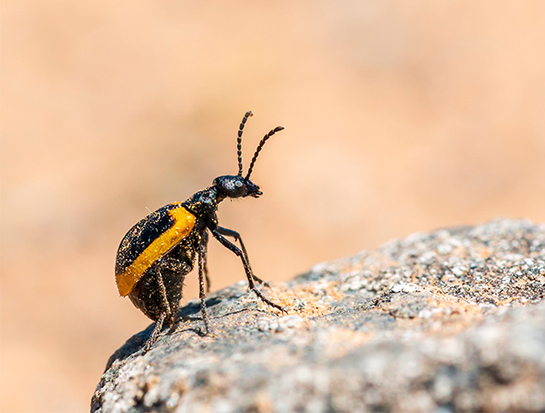 As María Fernanda Pérez stated, “The diversity of insects is spectacular; there are some species that only appear in the flowering desert.” (Photo: Beetle of the family Melyridae / Francisco Gamboa) The desert bloom is not only a spectacle for the eyes but also a powerful lesson about the interconnectedness of ecosystems and the urgent need to protect them. For scientists, travelers, and locals alike, the desierto florido remains one of Earth’s most extraordinary natural miracles.
Known as the “desert bloom” or desierto florido, this natural wonder draws scientists, photographers, and travelers from around the world. Hidden beneath the sand, countless seeds wait for the perfect conditions to awaken. Once they do, the desert becomes a temporary ecosystem of flowers, insects, reptiles, and birds, creating a breathtaking yet fragile spectacle.What triggers the desert bloomThe desert bloom is closely linked to rainfall events, especially during El Niño years, when warmer ocean currents bring more evaporation and precipitation to the Atacama. A minimum of 15 millimeters of rainfall is usually needed to trigger the blooming, though larger events, such as the 50 millimeters recorded in 2017, lead to spectacular and widespread flower carpets. The most common regions where the bloom occurs include Copiapó, Huasco, and Caldera in the Atacama Region, but it can also appear in parts of Antofagasta and near Iquique, areas rich in endemic species.Flowers that paint the desertOnce the seeds awaken, the landscape transforms into a living canvas. Fields of rock purslane (Cistanthe grandiflora) blanket the plains in bright fuchsia, while yellow and orange añañucas (Zephyranthes bagnoldi) add warm tones.Other species, like nolanas, malvillas, and coronilla del fraile, enrich the view with blues, whites, and golds. Each of these flowers is adapted to survive in extreme conditions, completing their life cycle in just a few months before leaving behind seeds that may remain dormant for up to ten years.The science of sleeping seedsAccording to experts, the plants of the Atacama bloom share one important trait: survival through dormancy. Their seeds are protected by a tough outer shell, allowing them to remain latent underground for years, waiting for just the right combination of water, light, and warmth. Many of these plants are annuals, completing their life cycle in a single season, while others, like bulbs and cacti, rely on underground storage systems to endure long droughts. This evolutionary adaptation ensures that biodiversity persists, even in the harshest of climates.Cacti and hidden treasuresBeyond the flowers, the Atacama is also home to unique cactus species such as the Copiapoa, which grows along the desert coast. These spherical cacti, often covered in a protective waxy layer, can live for decades and bloom with bright yellow flowers.Copiapoa is a type of endemic cactus, very attractive for its particular cylindrical shape, which unfortunately is in a vulnerable state of conservation. (Photo: Nicole Saffie) Sadly, Copiapoa populations face threats from illegal trafficking, as collectors in Europe and Asia pay high prices for them. Conservation areas like Llanos de Challe National Park are critical to protecting these vulnerable plants and the ecosystems they support.A fragile ecosystem in need of protectionThe flowering desert is more than just a visual marvel; it is a delicate ecosystem that supports insects, birds, and reptiles. Pollinators play an essential role in ensuring genetic diversity, while rodents and insects help disperse seeds across the desert. However, this fragile cycle is under constant threat. Off-road vehicles, mining, livestock grazing, and climate change put the bloom at risk. Scientists stress the importance of education and conservation, warning that pulling up flowers or collecting seeds could cause species to vanish forever.Why conservation mattersResearchers emphasize that preserving the Atacama’s biodiversity is crucial. With nearly 1,900 plant species recorded—32% of which are endemic to South America and 58% to Chile—the desert bloom reveals the immense richness hidden in this seemingly barren land. Many species may still be undiscovered, making conservation efforts even more urgent. Protecting seeds in laboratories, raising awareness among visitors, and enforcing stricter regulations against illegal plant trade are essential steps to safeguard this natural treasure.A miracle of water and lifeAll it takes is a little water to awaken the Atacama. In just weeks, a barren desert transforms into a vibrant garden, reminding us of nature’s resilience and fragility.As María Fernanda Pérez stated, “The diversity of insects is spectacular; there are some species that only appear in the flowering desert.” (Photo: Beetle of the family Melyridae / Francisco Gamboa) The desert bloom is not only a spectacle for the eyes but also a powerful lesson about the interconnectedness of ecosystems and the urgent need to protect them. For scientists, travelers, and locals alike, the desierto florido remains one of Earth’s most extraordinary natural miracles.