Homebush Bay, located on the southern bank of the Parramatta River, played a crucial role in Sydney’s industrial growth during the 20th century. It functioned as a hub for ship-breaking yards, where decommissioned vessels were dismantled for scrap and resale. Over the years, however, industrial activities left the area heavily polluted, with chemical waste, including dioxins from the production of Agent Orange, contaminating the waters. The pollution levels became so severe that a fishing ban had to be implemented across most of Sydney Harbour.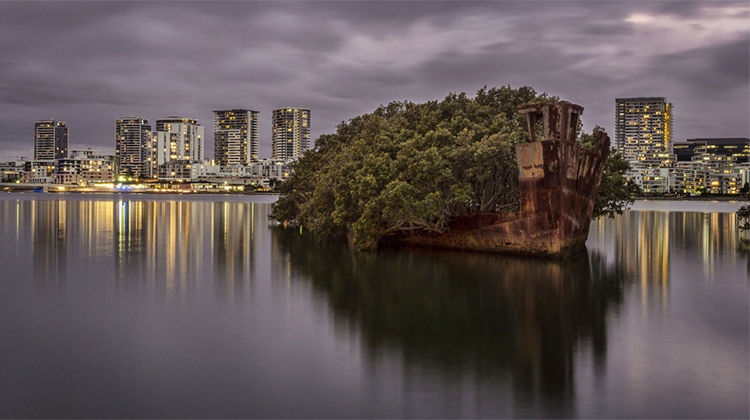
Despite its dark past, Homebush Bay underwent a significant transformation starting in the 1980s, driven by environmental restoration efforts. The 2000 Sydney Olympics further accelerated these initiatives, revitalizing the bay into a modern commercial and residential area. Wetlands and mangroves, once displaced by industry, were reintroduced, and nature slowly began reclaiming the land—and the abandoned ships left behind.Among the scattered shipwrecks of Homebush Bay, the SS Ayrfield stands out as a unique marvel. Originally named the Corrimal, the vessel was constructed by Greenock and Grangemouth Dockyard Co. to transport cargo between Newcastle and Sydney. During World War II, it was repurposed to support Allied forces in the Pacific, ferrying crucial supplies across treacherous waters.
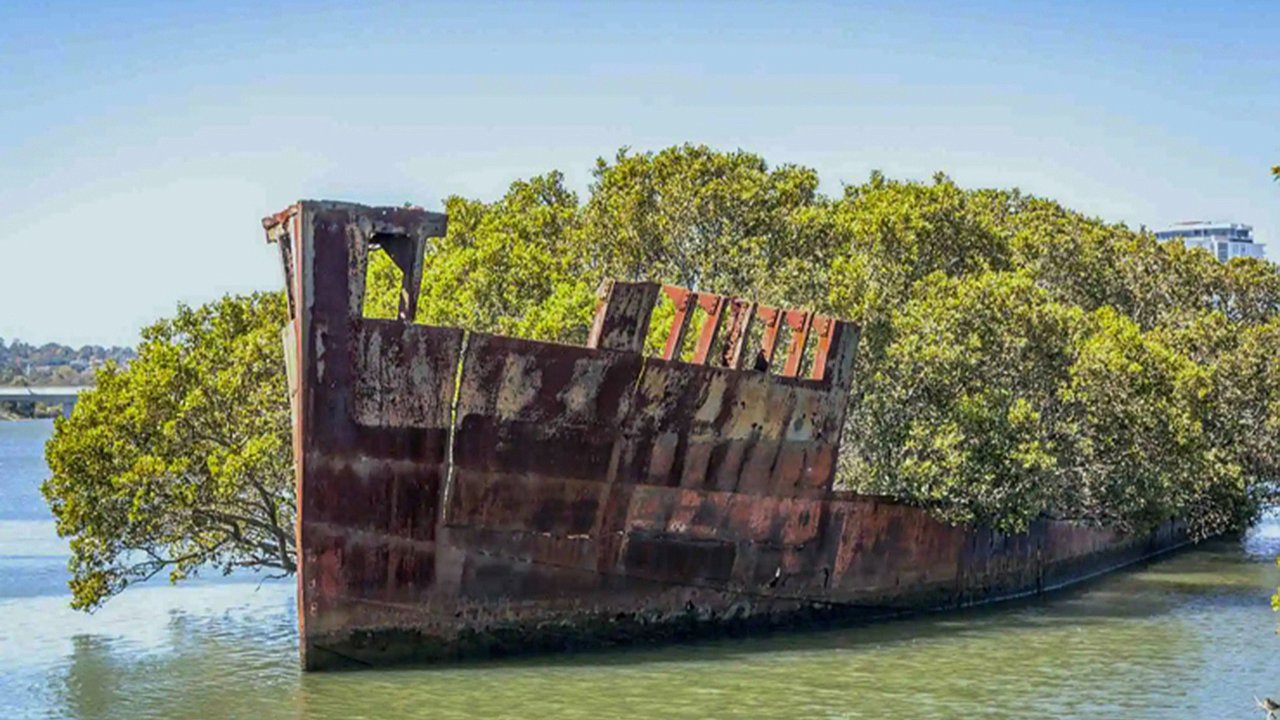
Following the war, the ship was acquired by R.W. Miller in 1951, converted into a collier, and renamed Ayrfield. It faithfully transported coal between Newcastle and Blackwattle Bay for 21 years before being decommissioned in 1972. Plans to dismantle the ship at Homebush Bay were abandoned, leaving its skeletal remains to rust in the waters alongside other vessels. But unlike the rest, the Ayrfield was destined for a different kind of second life.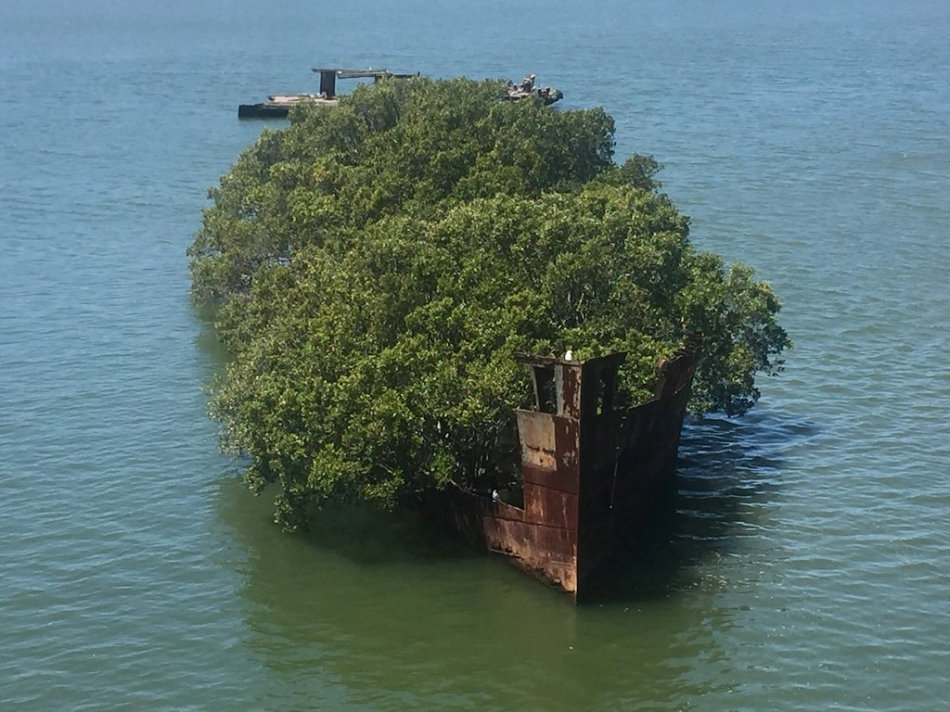 Over time, resilient mangrove trees took root in the ship’s hollowed remains, their vibrant green canopy contrasting with the corroding steel hull. This surreal transformation turned the SS Ayrfield into what is now fondly known as the ‘Floating Forest’—one of Homebush Bay’s most iconic landmarks. The shipwreck, once a forgotten relic, has become a stunning blend of history and nature, drawing tourists, photographers, and history enthusiasts alike. The rust-covered wreckage, now a part of the bay’s ecosystem, symbolizes nature’s ability to reclaim and repurpose. A designated Shipwreck Lookout allows visitors to witness this extraordinary sight, where the past meets the present in a breathtaking display of resilience.
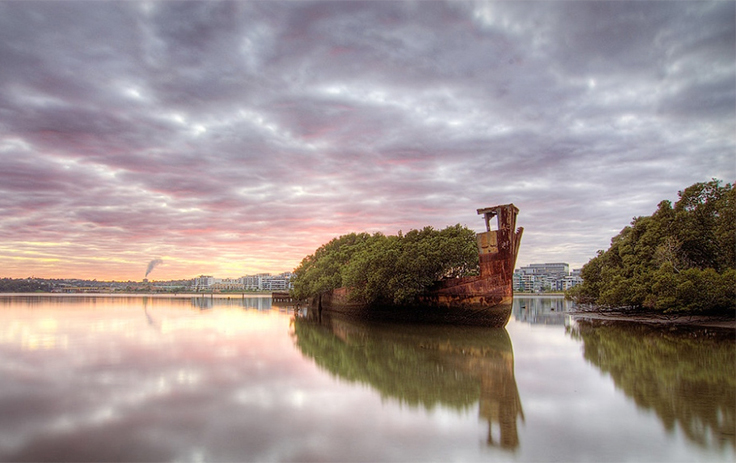 More than a century old, the SS Ayrfield continues to tell a silent story of its adventurous past—of war, trade, industry, and environmental revival. As it stands partially submerged in its watery grave, overtaken by lush foliage, it remains a testament to the balance between human history and the enduring power of nature. Whether viewed as a historical relic or a work of natural artistry, the Floating Forest remains one of Australia’s most mesmerizing hidden gems.
Despite its dark past, Homebush Bay underwent a significant transformation starting in the 1980s, driven by environmental restoration efforts. The 2000 Sydney Olympics further accelerated these initiatives, revitalizing the bay into a modern commercial and residential area. Wetlands and mangroves, once displaced by industry, were reintroduced, and nature slowly began reclaiming the land—and the abandoned ships left behind.Among the scattered shipwrecks of Homebush Bay, the SS Ayrfield stands out as a unique marvel. Originally named the Corrimal, the vessel was constructed by Greenock and Grangemouth Dockyard Co. to transport cargo between Newcastle and Sydney. During World War II, it was repurposed to support Allied forces in the Pacific, ferrying crucial supplies across treacherous waters.
Following the war, the ship was acquired by R.W. Miller in 1951, converted into a collier, and renamed Ayrfield. It faithfully transported coal between Newcastle and Blackwattle Bay for 21 years before being decommissioned in 1972. Plans to dismantle the ship at Homebush Bay were abandoned, leaving its skeletal remains to rust in the waters alongside other vessels. But unlike the rest, the Ayrfield was destined for a different kind of second life.
Over time, resilient mangrove trees took root in the ship’s hollowed remains, their vibrant green canopy contrasting with the corroding steel hull. This surreal transformation turned the SS Ayrfield into what is now fondly known as the ‘Floating Forest’—one of Homebush Bay’s most iconic landmarks. The shipwreck, once a forgotten relic, has become a stunning blend of history and nature, drawing tourists, photographers, and history enthusiasts alike. The rust-covered wreckage, now a part of the bay’s ecosystem, symbolizes nature’s ability to reclaim and repurpose. A designated Shipwreck Lookout allows visitors to witness this extraordinary sight, where the past meets the present in a breathtaking display of resilience.More than a century old, the SS Ayrfield continues to tell a silent story of its adventurous past—of war, trade, industry, and environmental revival. As it stands partially submerged in its watery grave, overtaken by lush foliage, it remains a testament to the balance between human history and the enduring power of nature. Whether viewed as a historical relic or a work of natural artistry, the Floating Forest remains one of Australia’s most mesmerizing hidden gems.