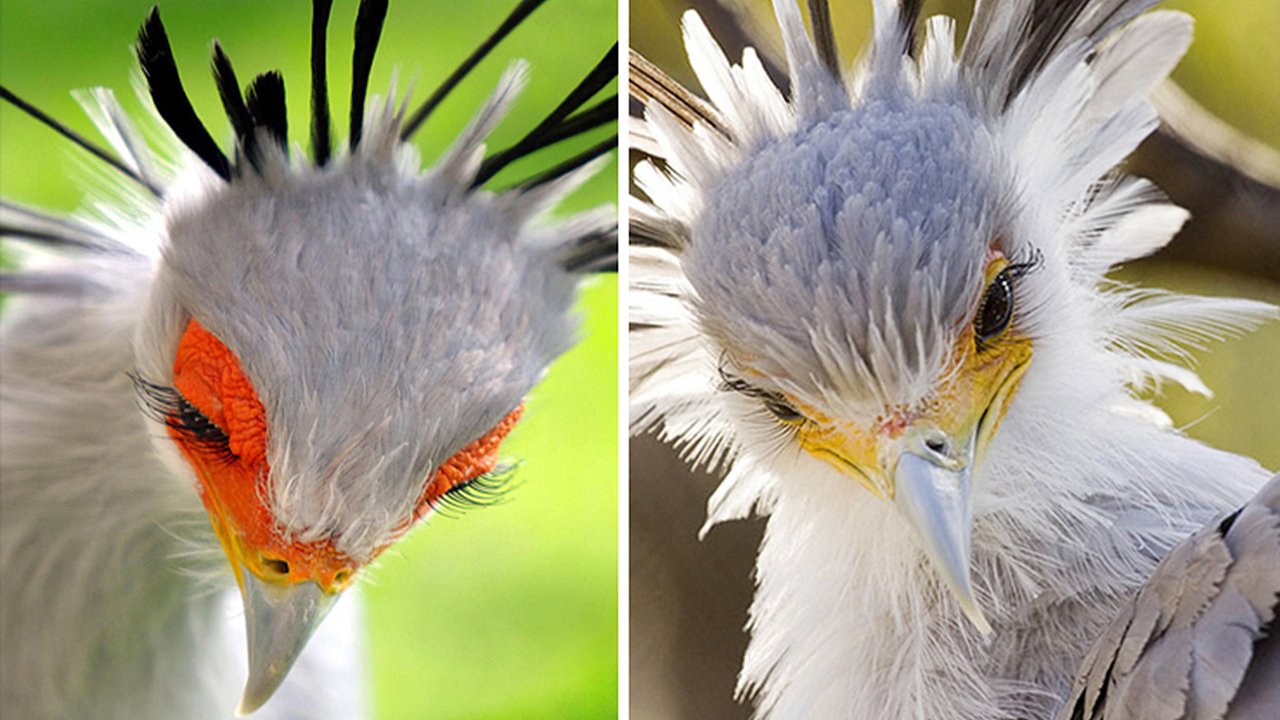
These striking raptors, standing at nearly four feet tall, possess long, luxurious eyelashes that rival those of human beauty trends. The name "secretary bird" is thought to have originated in the 18th century, first described in 1769. Dutch settlers in Africa initially referred to it as "Sagittarius," but due to linguistic barriers, local farmers began calling it "Secretarius," which eventually evolved into "secretary."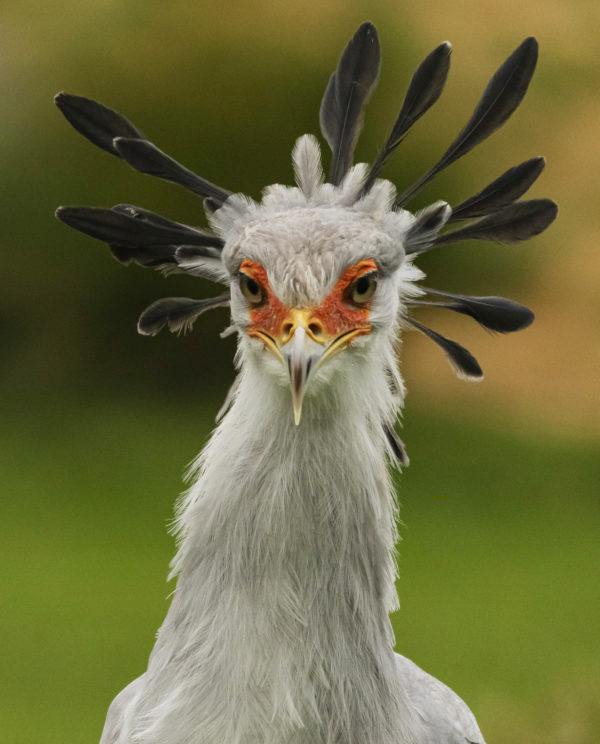 What Are Secretary Birds?
Secretary birds are unique raptors native to the savannas, grasslands, and shrublands of sub-Saharan Africa. Unlike most birds of prey, these majestic creatures primarily move around on foot rather than flying. They take to the air only when necessary, such as when reaching their nests high in trees or performing courtship displays.
Distinguished by their long legs and striking black crest of feathers, secretary birds have a distinctive appearance. Their bodies are adorned with whitish-gray plumage, while their faces display bare skin in shades of yellow, orange, or red. Two long, black-tipped tail feathers extend from their bodies, and the black feathers covering the upper legs give them the appearance of wearing bicycle shorts. The lower legs are covered in protective scales with barely visible feathers.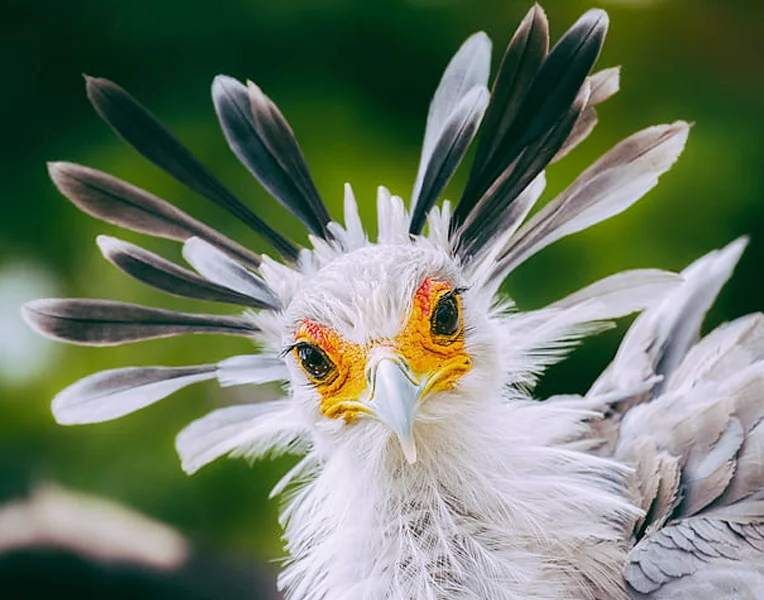
The exact origin of the name "secretary bird" is debated. One theory suggests it comes from 19th-century legal clerks or secretaries, who wore gray coats and knee-length black pants, resembling the bird’s coloring. Additionally, clerks would often tuck quill pens behind their ears, much like the bird’s prominent head feathers. Another hypothesis posits that the name is a corruption of the Arabic phrase "saqr et-tair," meaning "hunter bird," as described by an early traveler in Sudan. However, this theory has been disputed by some experts.Hunting and Diet
Secretary birds are one of only two birds of prey—the other being the caracara—that primarily hunt on the ground rather than from the air. Their diet consists of small rodents, amphibians, and reptiles. They usually hunt in pairs or small groups, actively searching for prey from dawn until evening, pausing only during the intense midday heat.
Although they sometimes capture prey using their short, hooked beaks, secretary birds are best known for their unique hunting technique: they use their long legs and powerful feet to stomp their prey to death. This method is especially effective against snakes, a favorite part of their diet. Their scientific name, Sagittarius serpentarius, translates to "archer of snakes." When confronted by a snake, the secretary bird skillfully spreads its almost seven-foot wingspan to distract the serpent. The tough scales on their lower legs also provide protection against venomous bites.Conservation Concerns
Despite their impressive survival skills, secretary birds face growing threats due to human activity. The destruction of their natural habitat, primarily through land clearing and uncontrolled fires for livestock grazing, has made food sources scarcer. Open landscapes offer little cover for prey animals, forcing secretary birds to adapt by scavenging in human-altered areas.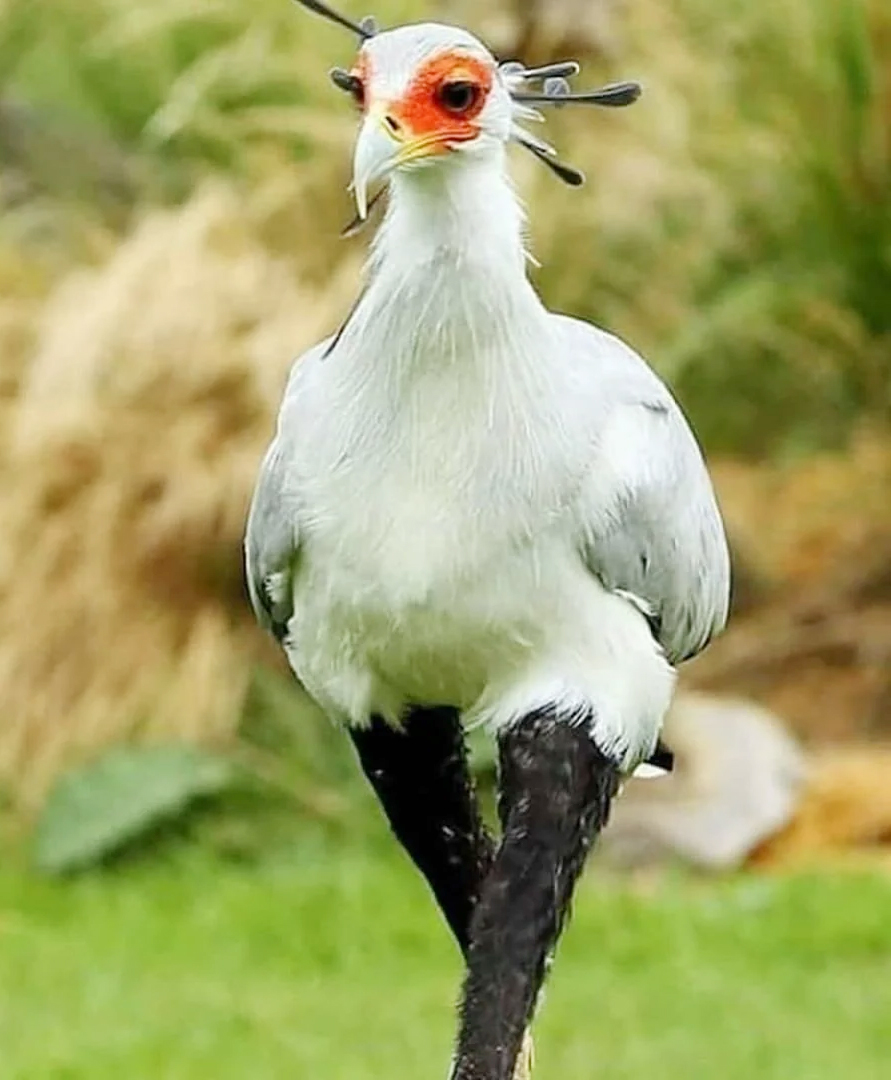
Human presence, particularly that of herders, disrupts secretary bird breeding patterns. While these birds are found in numerous protected regions across their vast range, conservationists stress the need for better monitoring to assess their population trends and safeguard their future. Secretary birds, with their towering stature, striking features, and unique hunting prowess, remain one of Africa’s most fascinating raptors. As conservation efforts continue, it is crucial to preserve their habitats and ensure that future generations can admire these remarkable birds in the wild.
What Are Secretary Birds?Secretary birds are unique raptors native to the savannas, grasslands, and shrublands of sub-Saharan Africa. Unlike most birds of prey, these majestic creatures primarily move around on foot rather than flying. They take to the air only when necessary, such as when reaching their nests high in trees or performing courtship displays.
Distinguished by their long legs and striking black crest of feathers, secretary birds have a distinctive appearance. Their bodies are adorned with whitish-gray plumage, while their faces display bare skin in shades of yellow, orange, or red. Two long, black-tipped tail feathers extend from their bodies, and the black feathers covering the upper legs give them the appearance of wearing bicycle shorts. The lower legs are covered in protective scales with barely visible feathers.
The exact origin of the name "secretary bird" is debated. One theory suggests it comes from 19th-century legal clerks or secretaries, who wore gray coats and knee-length black pants, resembling the bird’s coloring. Additionally, clerks would often tuck quill pens behind their ears, much like the bird’s prominent head feathers. Another hypothesis posits that the name is a corruption of the Arabic phrase "saqr et-tair," meaning "hunter bird," as described by an early traveler in Sudan. However, this theory has been disputed by some experts.Hunting and Diet
Secretary birds are one of only two birds of prey—the other being the caracara—that primarily hunt on the ground rather than from the air. Their diet consists of small rodents, amphibians, and reptiles. They usually hunt in pairs or small groups, actively searching for prey from dawn until evening, pausing only during the intense midday heat.
Although they sometimes capture prey using their short, hooked beaks, secretary birds are best known for their unique hunting technique: they use their long legs and powerful feet to stomp their prey to death. This method is especially effective against snakes, a favorite part of their diet. Their scientific name, Sagittarius serpentarius, translates to "archer of snakes." When confronted by a snake, the secretary bird skillfully spreads its almost seven-foot wingspan to distract the serpent. The tough scales on their lower legs also provide protection against venomous bites.Conservation Concerns
Despite their impressive survival skills, secretary birds face growing threats due to human activity. The destruction of their natural habitat, primarily through land clearing and uncontrolled fires for livestock grazing, has made food sources scarcer. Open landscapes offer little cover for prey animals, forcing secretary birds to adapt by scavenging in human-altered areas.
Human presence, particularly that of herders, disrupts secretary bird breeding patterns. While these birds are found in numerous protected regions across their vast range, conservationists stress the need for better monitoring to assess their population trends and safeguard their future. Secretary birds, with their towering stature, striking features, and unique hunting prowess, remain one of Africa’s most fascinating raptors. As conservation efforts continue, it is crucial to preserve their habitats and ensure that future generations can admire these remarkable birds in the wild.