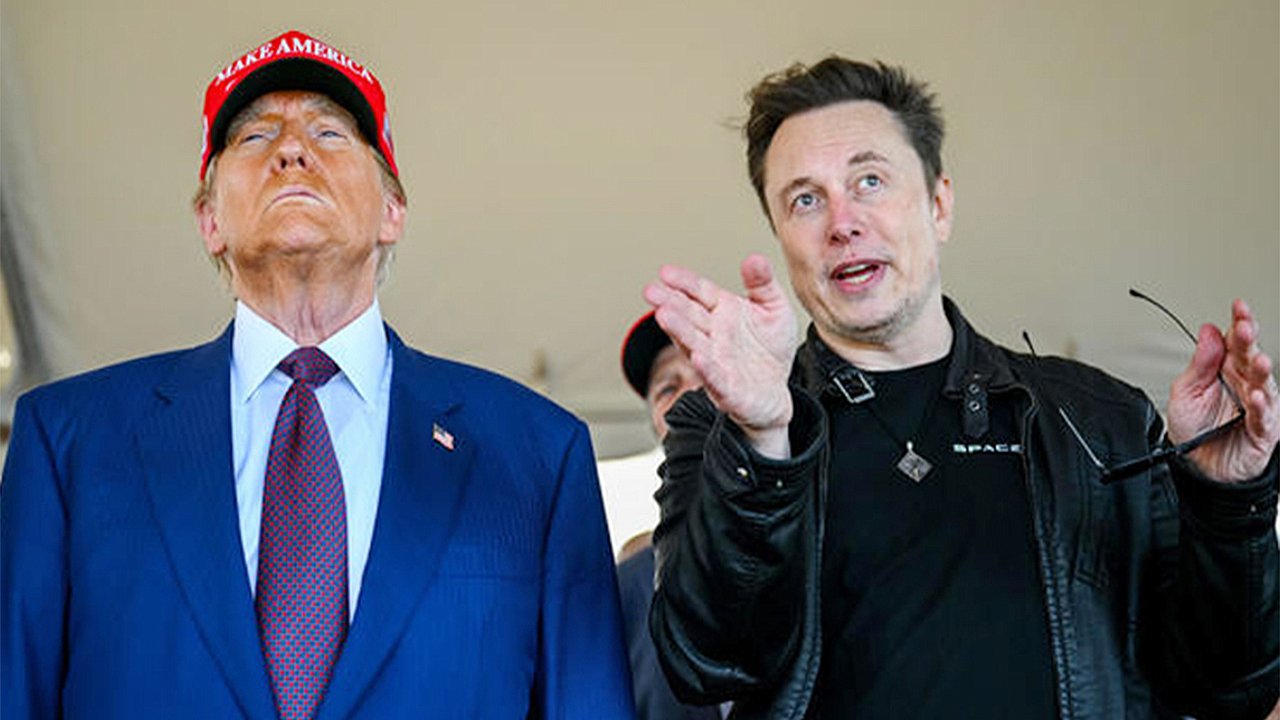
Musk and Ramaswamy Push DOGE Plan for Overhauling Federal BureaucracyTrump previously announced Musk and Ramaswamy’s roles in the initiative, stating they would "dismantle bureaucracy, eliminate wasteful expenditures, and set a new standard for efficiency in federal operations."A Bipartisan Effort Emerges
The effort has already gained traction among Republicans, with Representatives Aaron Bean (FL) and Pete Sessions (TX) forming a DOGE caucus in the House, while Senator Joni Ernst (IA) launched a Senate counterpart. Ernst, known for her focus on government waste, has championed the initiative as a way to promote accountability."We’re excited to ensure that DOGE achieves its goals," Ernst said in a recent Fox News interview.Interest in the initiative isn’t limited to Republicans. Representative Jared Moskowitz (D-FL) became the first Democrat to join the caucus, emphasizing that government efficiency doesn’t equate to cutting vital services. "We need to have these conversations," Moskowitz said, calling for bipartisan participation.Bold Cost-Cutting Targets
Musk and Ramaswamy have set an ambitious goal to cut $500 billion in annual federal spending. Their plan focuses on discretionary spending, which includes potential cuts to programs like the Corporation for Public Broadcasting, international grant-funded organizations, and entities such as Planned Parenthood. They also propose reducing the federal workforce as part of the efficiency push.However, challenges remain. Over two-thirds of federal spending is mandatory, covering programs like Social Security and Medicare. Critics have questioned DOGE’s authority to implement cuts, given Congress controls appropriations.Key Figures Behind DOGE
Ramaswamy, who joined Trump’s circle after his own presidential campaign, has emerged as a leading voice for administrative overhaul. Musk, meanwhile, has strengthened his relationship with Trump, backing his campaign and appearing at rallies, including one in Pennsylvania.Both figures bring high-profile leadership to DOGE, but their plans will face scrutiny as they seek to align cost-cutting measures with political realities and public expectations.The Department of Government Efficiency (DOGE), led by Elon Musk and Vivek Ramaswamy, is gaining momentum with bipartisan support, aiming to cut $500 billion in federal spending. While the initiative promises to streamline government, questions remain about its feasibility and impact on essential services.
The effort has already gained traction among Republicans, with Representatives Aaron Bean (FL) and Pete Sessions (TX) forming a DOGE caucus in the House, while Senator Joni Ernst (IA) launched a Senate counterpart. Ernst, known for her focus on government waste, has championed the initiative as a way to promote accountability."We’re excited to ensure that DOGE achieves its goals," Ernst said in a recent Fox News interview.Interest in the initiative isn’t limited to Republicans. Representative Jared Moskowitz (D-FL) became the first Democrat to join the caucus, emphasizing that government efficiency doesn’t equate to cutting vital services. "We need to have these conversations," Moskowitz said, calling for bipartisan participation.Bold Cost-Cutting Targets
Musk and Ramaswamy have set an ambitious goal to cut $500 billion in annual federal spending. Their plan focuses on discretionary spending, which includes potential cuts to programs like the Corporation for Public Broadcasting, international grant-funded organizations, and entities such as Planned Parenthood. They also propose reducing the federal workforce as part of the efficiency push.However, challenges remain. Over two-thirds of federal spending is mandatory, covering programs like Social Security and Medicare. Critics have questioned DOGE’s authority to implement cuts, given Congress controls appropriations.Key Figures Behind DOGE
Ramaswamy, who joined Trump’s circle after his own presidential campaign, has emerged as a leading voice for administrative overhaul. Musk, meanwhile, has strengthened his relationship with Trump, backing his campaign and appearing at rallies, including one in Pennsylvania.Both figures bring high-profile leadership to DOGE, but their plans will face scrutiny as they seek to align cost-cutting measures with political realities and public expectations.The Department of Government Efficiency (DOGE), led by Elon Musk and Vivek Ramaswamy, is gaining momentum with bipartisan support, aiming to cut $500 billion in federal spending. While the initiative promises to streamline government, questions remain about its feasibility and impact on essential services.