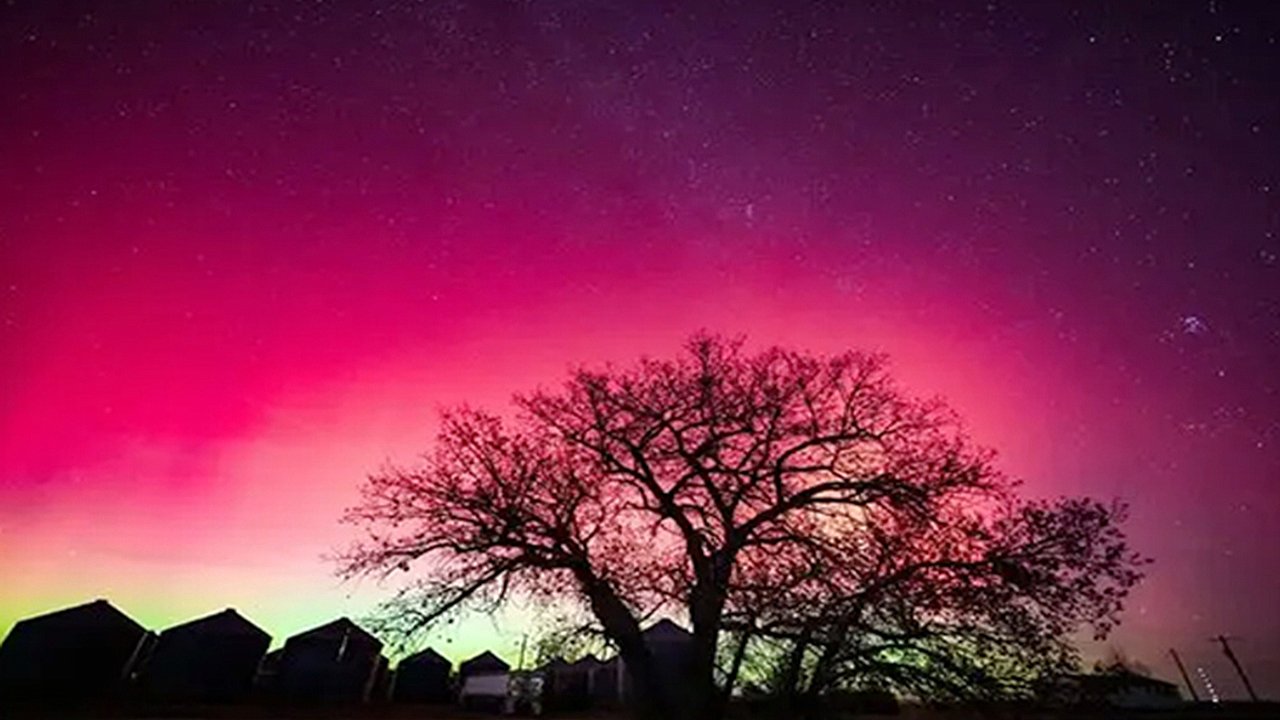
Dazzling auroras illuminate the night sky
A breathtaking display of color lit up the skies across much of North America on the night of November 11, as a powerful geomagnetic storm unleashed waves of vibrant auroras visible from Canada to the southern United States. Social media exploded with images of pink, purple, green, and red hues shimmering across the horizon — an awe-inspiring event that drew attention even in areas unaccustomed to northern lights, such as Florida and Texas.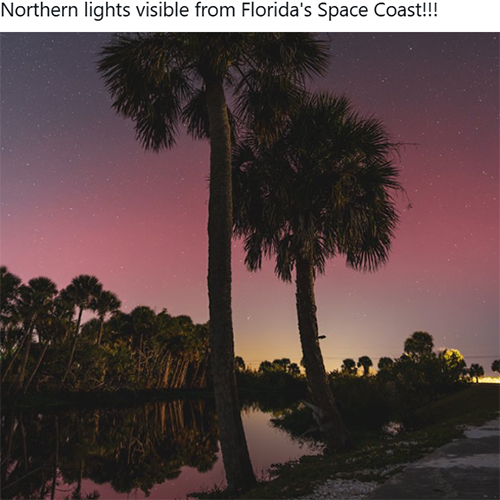 According to the Space Weather Prediction Center (SWPC) in Boulder, Colorado, this stunning phenomenon was the result of multiple coronal mass ejections (CMEs) from the Sun — massive bursts of solar plasma and magnetic fields. The storm reached a G4 (severe) level at 8:20 p.m. EST on November 11, marking one of the most intense geomagnetic events of the year. As scientists monitor the situation, the possibility of continued activity into November 12 means more opportunities to witness the spectacular auroras dancing across the night sky.What causes the northern lights
The aurora borealis, or northern lights, occur when charged solar particles collide with gases in Earth’s atmosphere, releasing energy in the form of vivid light displays. These interactions happen about 60 to 250 miles above the Earth’s surface, where the type of gas involved determines the color: oxygen produces green and red glows, while nitrogen contributes blue and violet tones.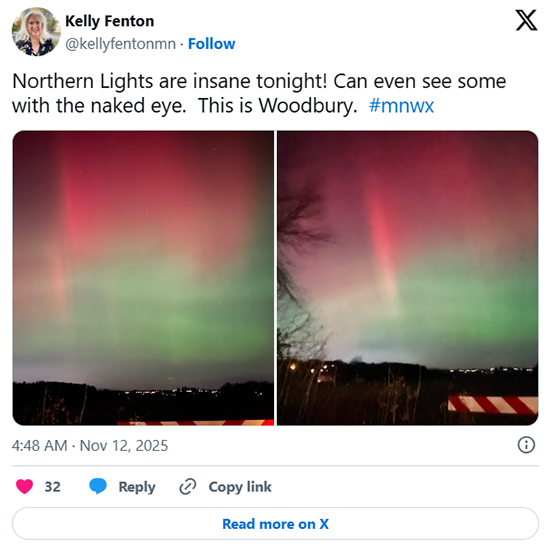 On November 9 and 10, the Sun released a series of CMEs — massive ejections of plasma and magnetic fields — followed by a solar flare on November 11. When these energetic particles reached Earth’s magnetic field, they triggered a geomagnetic storm strong enough to push auroras far beyond their usual Arctic boundaries. The SWPC confirmed that at least two of the CMEs were significantly stronger than expected, with a third expected to arrive by midday November 12.This alignment between the Sun’s magnetic field and Earth’s — specifically when they oppose each other — is key to creating powerful auroral activity. When the fields connect, they allow solar energy to pour into Earth’s magnetosphere, setting the stage for a breathtaking light show.How geomagnetic storms impact technology
While auroras are visually stunning, geomagnetic storms can cause real-world disruptions. The same energy that creates brilliant colors in the sky can interfere with satellites, power grids, and communication systems. Shawn Dahl, a space weather forecaster at the SWPC, warned that precision GPS users may notice significant signal degradation, with positional errors exceeding several inches.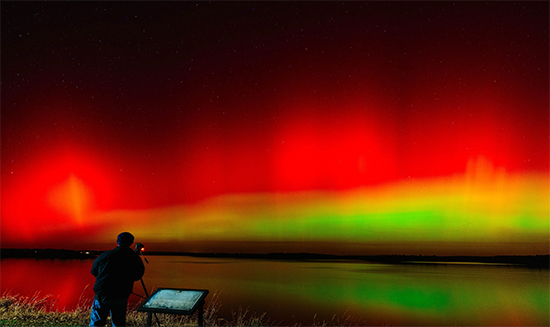 Electric utilities have also been advised to monitor grid stability, as strong geomagnetic currents can overload transformers or cause voltage irregularities. Space launch operations and government agencies, including the White House, have been briefed on potential impacts. Though most systems are designed to handle such disturbances, heightened solar activity serves as a reminder of our planet’s vulnerability to space weather.Where the auroras were seen
Reports of auroral sightings came flooding in from across the United States, with residents in Alabama, Arkansas, Florida, Illinois, Maryland, Massachusetts, Minnesota, Oklahoma, South Carolina, and Texas all sharing images of the phenomenon. Many described the experience as surreal — the kind of natural wonder rarely seen outside of northern latitudes.Photographers and skywatchers captured stunning long-exposure shots showing the sky painted in curtains of pink, purple, and emerald. In rural areas with minimal light pollution, the display was particularly striking, with some regions witnessing waves of color rippling from horizon to zenith. Even in cities, faint glows were visible, sparking widespread curiosity and excitement.The science behind the colors
Each hue in the aurora tells a story about the interaction between solar energy and Earth’s atmosphere. When high-energy particles from the Sun collide with oxygen molecules at high altitudes (above 150 miles), they produce rare red auroras. At lower altitudes, around 60 miles, oxygen creates the familiar green light that dominates most displays. Nitrogen interactions, on the other hand, yield purples, blues, and pinks.The brightness and intensity of the aurora depend on both the strength of the geomagnetic storm and the composition of the atmosphere. Stronger solar winds lead to more energetic collisions, resulting in vivid, rapidly changing colors. Scientists use specialized instruments, such as magnetometers and all-sky cameras, to measure these variations and forecast auroral visibility.What to expect in the coming days
As solar activity continues to rise during the current solar cycle, events like the November 11 storm may become more frequent. The SWPC predicts that solar flares and CMEs will likely increase in the next few years as the Sun approaches its peak in the 11-year solar cycle, expected around 2025.For skywatchers, that means more chances to see the aurora borealis even in regions where it’s typically invisible. Experts recommend checking aurora forecast websites and apps, minimizing light pollution, and heading to areas with clear northern horizons for the best viewing experience.While geomagnetic storms can cause temporary technological challenges, they also offer a reminder of the Sun’s immense power and beauty — a cosmic connection that continues to inspire wonder across the world.
A breathtaking display of color lit up the skies across much of North America on the night of November 11, as a powerful geomagnetic storm unleashed waves of vibrant auroras visible from Canada to the southern United States. Social media exploded with images of pink, purple, green, and red hues shimmering across the horizon — an awe-inspiring event that drew attention even in areas unaccustomed to northern lights, such as Florida and Texas.
According to the Space Weather Prediction Center (SWPC) in Boulder, Colorado, this stunning phenomenon was the result of multiple coronal mass ejections (CMEs) from the Sun — massive bursts of solar plasma and magnetic fields. The storm reached a G4 (severe) level at 8:20 p.m. EST on November 11, marking one of the most intense geomagnetic events of the year. As scientists monitor the situation, the possibility of continued activity into November 12 means more opportunities to witness the spectacular auroras dancing across the night sky.What causes the northern lightsThe aurora borealis, or northern lights, occur when charged solar particles collide with gases in Earth’s atmosphere, releasing energy in the form of vivid light displays. These interactions happen about 60 to 250 miles above the Earth’s surface, where the type of gas involved determines the color: oxygen produces green and red glows, while nitrogen contributes blue and violet tones.
On November 9 and 10, the Sun released a series of CMEs — massive ejections of plasma and magnetic fields — followed by a solar flare on November 11. When these energetic particles reached Earth’s magnetic field, they triggered a geomagnetic storm strong enough to push auroras far beyond their usual Arctic boundaries. The SWPC confirmed that at least two of the CMEs were significantly stronger than expected, with a third expected to arrive by midday November 12.This alignment between the Sun’s magnetic field and Earth’s — specifically when they oppose each other — is key to creating powerful auroral activity. When the fields connect, they allow solar energy to pour into Earth’s magnetosphere, setting the stage for a breathtaking light show.How geomagnetic storms impact technologyWhile auroras are visually stunning, geomagnetic storms can cause real-world disruptions. The same energy that creates brilliant colors in the sky can interfere with satellites, power grids, and communication systems. Shawn Dahl, a space weather forecaster at the SWPC, warned that precision GPS users may notice significant signal degradation, with positional errors exceeding several inches.
Electric utilities have also been advised to monitor grid stability, as strong geomagnetic currents can overload transformers or cause voltage irregularities. Space launch operations and government agencies, including the White House, have been briefed on potential impacts. Though most systems are designed to handle such disturbances, heightened solar activity serves as a reminder of our planet’s vulnerability to space weather.Where the auroras were seenReports of auroral sightings came flooding in from across the United States, with residents in Alabama, Arkansas, Florida, Illinois, Maryland, Massachusetts, Minnesota, Oklahoma, South Carolina, and Texas all sharing images of the phenomenon. Many described the experience as surreal — the kind of natural wonder rarely seen outside of northern latitudes.Photographers and skywatchers captured stunning long-exposure shots showing the sky painted in curtains of pink, purple, and emerald. In rural areas with minimal light pollution, the display was particularly striking, with some regions witnessing waves of color rippling from horizon to zenith. Even in cities, faint glows were visible, sparking widespread curiosity and excitement.The science behind the colors
Each hue in the aurora tells a story about the interaction between solar energy and Earth’s atmosphere. When high-energy particles from the Sun collide with oxygen molecules at high altitudes (above 150 miles), they produce rare red auroras. At lower altitudes, around 60 miles, oxygen creates the familiar green light that dominates most displays. Nitrogen interactions, on the other hand, yield purples, blues, and pinks.The brightness and intensity of the aurora depend on both the strength of the geomagnetic storm and the composition of the atmosphere. Stronger solar winds lead to more energetic collisions, resulting in vivid, rapidly changing colors. Scientists use specialized instruments, such as magnetometers and all-sky cameras, to measure these variations and forecast auroral visibility.What to expect in the coming days
As solar activity continues to rise during the current solar cycle, events like the November 11 storm may become more frequent. The SWPC predicts that solar flares and CMEs will likely increase in the next few years as the Sun approaches its peak in the 11-year solar cycle, expected around 2025.For skywatchers, that means more chances to see the aurora borealis even in regions where it’s typically invisible. Experts recommend checking aurora forecast websites and apps, minimizing light pollution, and heading to areas with clear northern horizons for the best viewing experience.While geomagnetic storms can cause temporary technological challenges, they also offer a reminder of the Sun’s immense power and beauty — a cosmic connection that continues to inspire wonder across the world.