The discovery of a 1-million-year-old skull in China may forever change how we understand human evolution. Known as Yunxian 2, this fossil has long been a puzzle for anthropologists. Initially classified as Homo erectus, new technology and analysis now suggest it may actually belong to a species more closely related to Denisovans — or even a previously unknown branch of the human family tree. If confirmed, this could mean that modern humans, Homo sapiens, did not evolve solely in Africa, but may have ancient roots in Asia as well. This revelation has the potential to rewrite one of the most fundamental chapters in the story of humanity.Ancient Skull Discovery and reanalysis in China
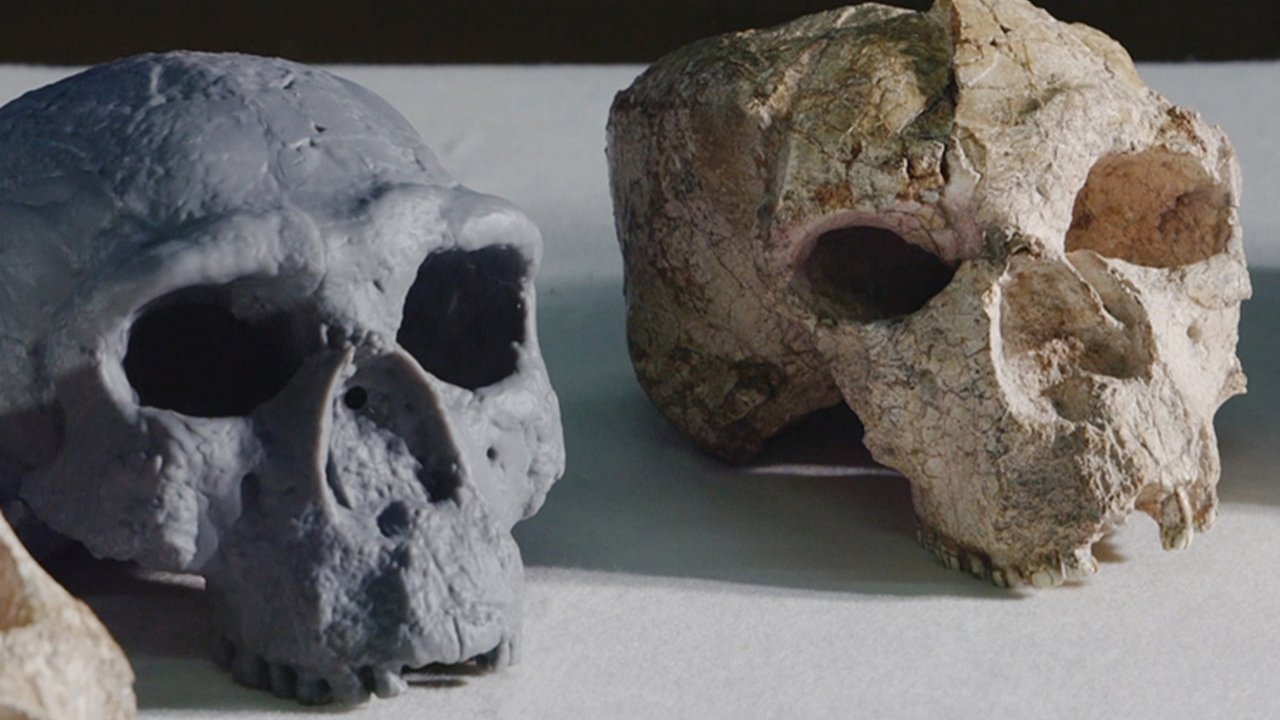
The Yunxian 2 skull was discovered in 1990 in China’s Hubei Province, in the Yunxian region. For decades, scientists believed it represented Homo erectus, an early human ancestor known for its upright posture and large brain. However, thanks to modern tools such as CT scans and 3D reconstruction technology, researchers have been able to reexamine the fossil in incredible detail.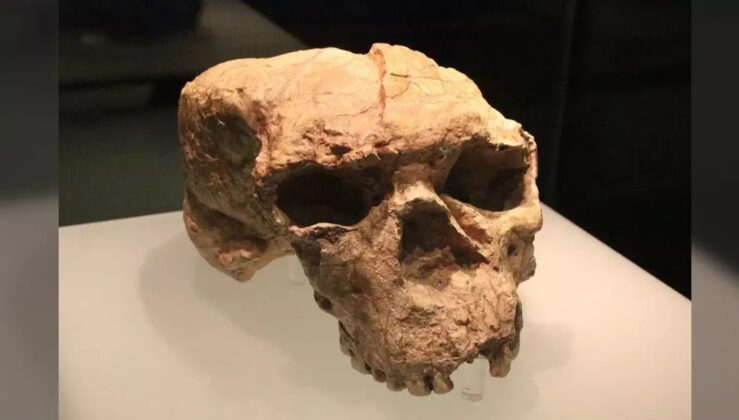 Their findings are nothing short of revolutionary. The skull’s cranial shape, jawline, and internal bone structure suggest it might not fit neatly within the Homo erectus category. Instead, scientists believe it could represent a transitional species — possibly Homo longi, a relative of Denisovans. This would mean the fossil is part of a lineage that split from the common ancestor of modern humans, Neanderthals, and Denisovans far earlier than previously thought.If proven true, this could mean that distinct human lineages existed in Asia more than one million years ago, reshaping the conventional “Out of Africa” model that has dominated evolutionary theory for decades.A pivotal moment in human evolution research
The study, published in Science, positions Yunxian 2 as one of the most significant fossils ever discovered in Asia. Researchers argue that this skull could represent one of the earliest known divergences among major human species. The findings push back the timeline for the evolutionary split between Homo sapiens, Neanderthals, and Denisovans by roughly 400,000 years.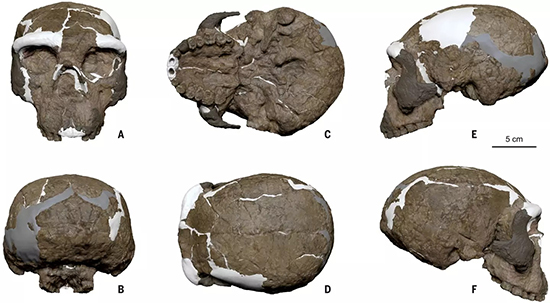 Professor Chris Stringer of London’s Natural History Museum explained that the fossil challenges the established evolutionary framework. “By one million years ago, our ancestors may have already divided into distinct groups,” Stringer said. “It more or less doubles the timeline for the origin of Homo sapiens.”This would indicate that early humans were far more widespread — and evolutionarily complex — than previously imagined. The skull’s features, such as its wide cranial vault and large brain capacity, also provide new clues about the adaptability and diversity of early human populations across Asia.Technology reveals ancient secrets hidden in stone
One of the reasons Yunxian 2 is rewriting history is the technology behind its reexamination. Over time, the skull had become crushed and distorted. Using cutting-edge digital reconstruction and CT scanning, scientists virtually “rebuilt” the fossil, restoring it to its original form.This process allowed researchers to measure and compare it with other ancient human skulls from Africa, Europe, and Asia. The virtual reconstruction revealed subtle features — including the curvature of the skull and jawline — that had been overlooked for decades.According to experts, such technological advances are transforming paleoanthropology. They make it possible to digitally reconstruct fossils too fragile to physically handle, unlocking new data about our distant ancestors. As more fossils are reexamined using these methods, we may discover other unexpected evolutionary relationships that challenge what we think we know.The implications for human origins and global evolution
If the Yunxian 2 findings are validated by additional fossils or genetic evidence, they could revolutionize our understanding of where and how modern humans evolved. One of the most profound implications is that Homo sapiens might have multiple points of origin rather than a single evolutionary cradle in Africa. This discovery also suggests that early humans were capable of complex migration patterns and adaptations much earlier than thought. It implies that human evolution was not a simple, linear process but a web of interactions, migrations, and interbreeding among multiple species across continents.The new research could prompt updates in anthropology textbooks worldwide, altering how future generations learn about human history. It also highlights how global collaboration and advanced imaging are driving modern discoveries in evolutionary science.A new chapter in the story of humanity
The Yunxian 2 skull is more than a relic of the past—it is a key to unlocking humanity’s origins. By merging ancient evidence with modern technology, scientists are rewriting the evolutionary narrative, revealing that our species’ history is more complex and interconnected than once believed.As research continues, the implications reach far beyond archaeology. The discovery encourages new questions about who we are, where we came from, and how diverse the human journey truly was. One million years after this skull’s owner walked the Earth, Yunxian 2 continues to reshape what it means to be human.
The Yunxian 2 skull was discovered in 1990 in China’s Hubei Province, in the Yunxian region. For decades, scientists believed it represented Homo erectus, an early human ancestor known for its upright posture and large brain. However, thanks to modern tools such as CT scans and 3D reconstruction technology, researchers have been able to reexamine the fossil in incredible detail.
Their findings are nothing short of revolutionary. The skull’s cranial shape, jawline, and internal bone structure suggest it might not fit neatly within the Homo erectus category. Instead, scientists believe it could represent a transitional species — possibly Homo longi, a relative of Denisovans. This would mean the fossil is part of a lineage that split from the common ancestor of modern humans, Neanderthals, and Denisovans far earlier than previously thought.If proven true, this could mean that distinct human lineages existed in Asia more than one million years ago, reshaping the conventional “Out of Africa” model that has dominated evolutionary theory for decades.A pivotal moment in human evolution researchThe study, published in Science, positions Yunxian 2 as one of the most significant fossils ever discovered in Asia. Researchers argue that this skull could represent one of the earliest known divergences among major human species. The findings push back the timeline for the evolutionary split between Homo sapiens, Neanderthals, and Denisovans by roughly 400,000 years.
Professor Chris Stringer of London’s Natural History Museum explained that the fossil challenges the established evolutionary framework. “By one million years ago, our ancestors may have already divided into distinct groups,” Stringer said. “It more or less doubles the timeline for the origin of Homo sapiens.”This would indicate that early humans were far more widespread — and evolutionarily complex — than previously imagined. The skull’s features, such as its wide cranial vault and large brain capacity, also provide new clues about the adaptability and diversity of early human populations across Asia.Technology reveals ancient secrets hidden in stoneOne of the reasons Yunxian 2 is rewriting history is the technology behind its reexamination. Over time, the skull had become crushed and distorted. Using cutting-edge digital reconstruction and CT scanning, scientists virtually “rebuilt” the fossil, restoring it to its original form.This process allowed researchers to measure and compare it with other ancient human skulls from Africa, Europe, and Asia. The virtual reconstruction revealed subtle features — including the curvature of the skull and jawline — that had been overlooked for decades.According to experts, such technological advances are transforming paleoanthropology. They make it possible to digitally reconstruct fossils too fragile to physically handle, unlocking new data about our distant ancestors. As more fossils are reexamined using these methods, we may discover other unexpected evolutionary relationships that challenge what we think we know.The implications for human origins and global evolution
If the Yunxian 2 findings are validated by additional fossils or genetic evidence, they could revolutionize our understanding of where and how modern humans evolved. One of the most profound implications is that Homo sapiens might have multiple points of origin rather than a single evolutionary cradle in Africa.
This discovery also suggests that early humans were capable of complex migration patterns and adaptations much earlier than thought. It implies that human evolution was not a simple, linear process but a web of interactions, migrations, and interbreeding among multiple species across continents.The new research could prompt updates in anthropology textbooks worldwide, altering how future generations learn about human history. It also highlights how global collaboration and advanced imaging are driving modern discoveries in evolutionary science.A new chapter in the story of humanityThe Yunxian 2 skull is more than a relic of the past—it is a key to unlocking humanity’s origins. By merging ancient evidence with modern technology, scientists are rewriting the evolutionary narrative, revealing that our species’ history is more complex and interconnected than once believed.As research continues, the implications reach far beyond archaeology. The discovery encourages new questions about who we are, where we came from, and how diverse the human journey truly was. One million years after this skull’s owner walked the Earth, Yunxian 2 continues to reshape what it means to be human.