The breathtaking journey of monarch butterflies
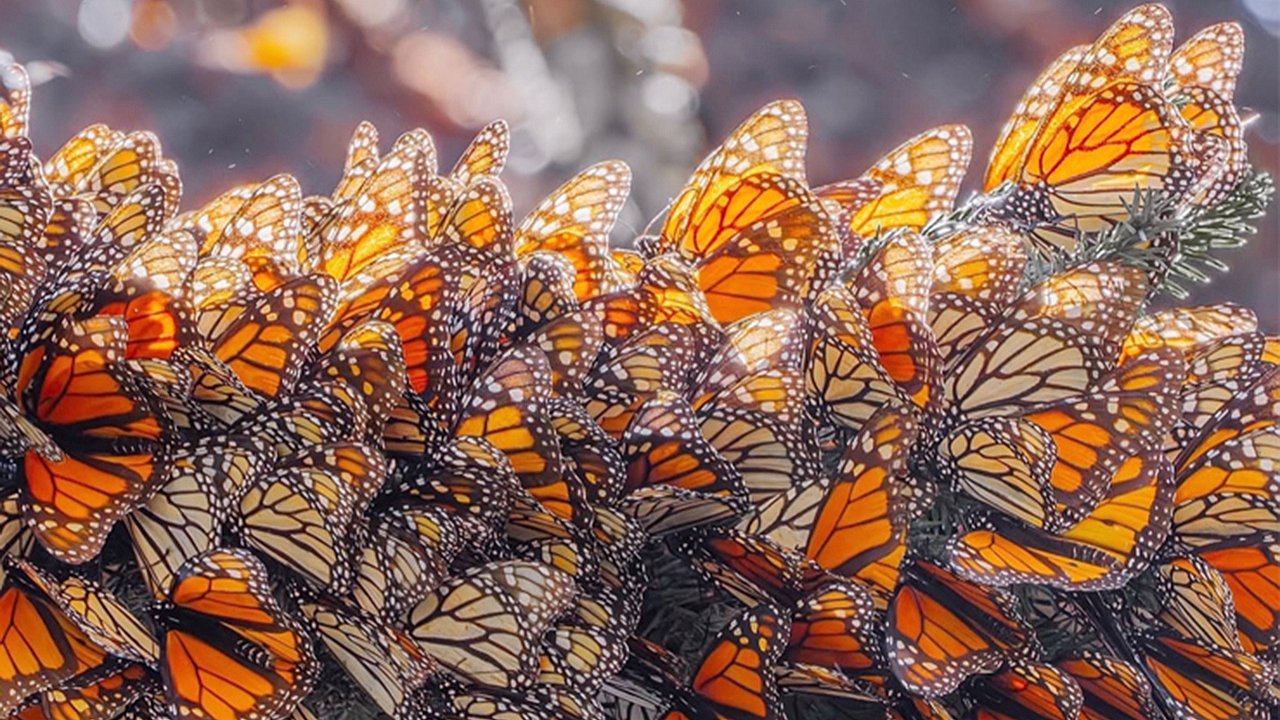
Every autumn, as the air cools and the days grow shorter, one of the most astonishing migrations in the natural world begins. Millions of monarch butterflies, easily recognized by their brilliant orange and black wings, embark on a 3,000-mile journey from Canada and the northern United States to the mountain forests of central Mexico. This annual voyage, both delicate and determined, has captivated scientists, photographers, and nature enthusiasts for generations.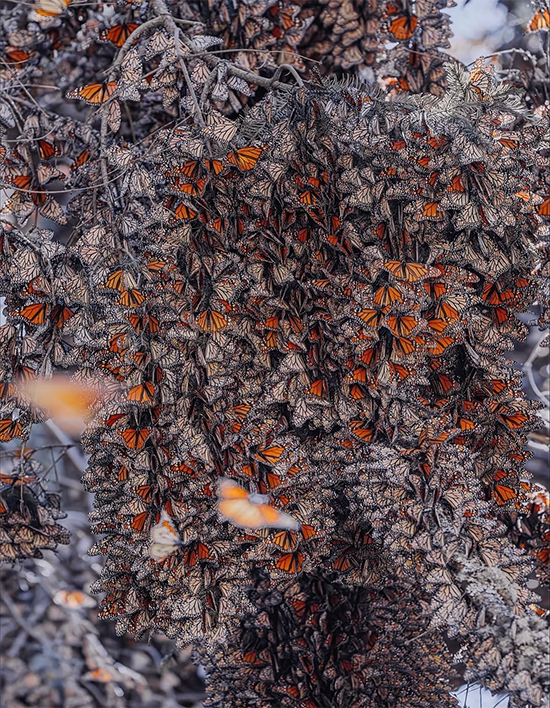 Recently, a wildlife photographer managed to document this incredible phenomenon in stunning clarity. His images reveal entire trees draped in fluttering wings, their branches shimmering in the sunlight as the butterflies rest before continuing their long trek. Through his lens, the monarchs’ migration transforms from a distant biological marvel into a deeply emotional portrait of endurance and unity within nature. The sight of these insects moving as one vast, living current across the continent reminds us of the fragile interconnectedness that binds ecosystems together.The unique migration that spans generations
Unlike most migratory species, monarch butterflies complete their epic journey across multiple generations. The butterflies that depart northward in spring are not the same individuals that return south in the fall. Instead, each generation lives only a few weeks, completing a single leg of the journey before reproducing and passing on an inherited instinct that guides their descendants along the same ancient route.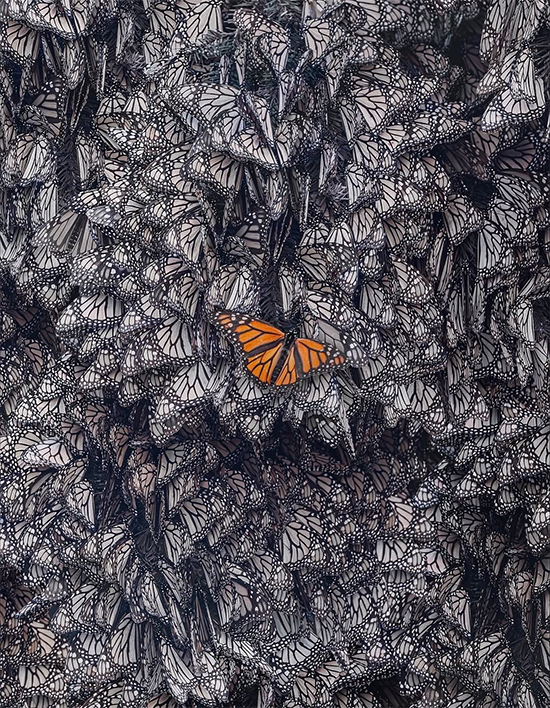 This process continues for several generations until, in late summer, a special “super generation” emerges. Unlike their short-lived predecessors, these monarchs can live up to eight months — long enough to travel all the way back to Mexico. Scientists remain fascinated by how these delicate creatures, weighing less than a gram, can navigate thousands of miles to the same forests their ancestors once roosted in. The answer likely lies in their ability to sense the position of the sun, the Earth's magnetic field, and subtle shifts in temperature and air currents.The magical arrival in the Mexican highlands
By late October, the monarchs reach the mountains of Michoacán and the State of Mexico, where they cluster in the cool, high-altitude oyamel fir forests. Here, they create a living tapestry of orange and gold, covering tree trunks and branches so thickly that the forest seems alive. The butterflies remain in this sanctuary throughout the winter, resting and conserving energy until warmer weather calls them north once again.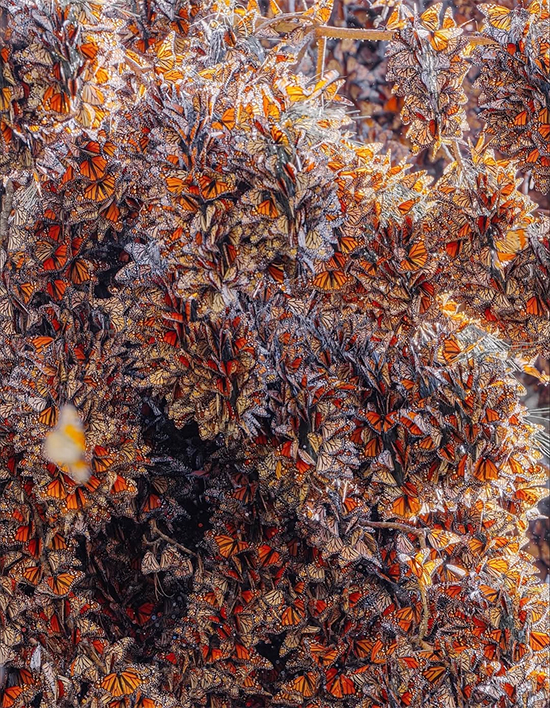 During these months, the forests of central Mexico become a world heritage site of life and movement. The sight is so mesmerizing that it draws thousands of visitors each year to reserves such as El Rosario and Sierra Chincua. Locals often describe the migration as a spiritual experience, linking the butterflies’ arrival with the Day of the Dead — a time when many believe ancestral spirits return home. In this way, the monarchs’ journey symbolizes both life and remembrance, a cycle of renewal that connects nature, culture, and time.The threats facing the monarchs’ ancient route
Despite the wonder it inspires, the monarch migration is now under threat. Over the past several decades, habitat loss, pesticide use, deforestation, and climate change have significantly reduced both the butterflies’ breeding grounds in North America and their wintering forests in Mexico. Rising temperatures disrupt their migratory timing, while the decline of milkweed — the sole food source for monarch caterpillars — limits reproduction.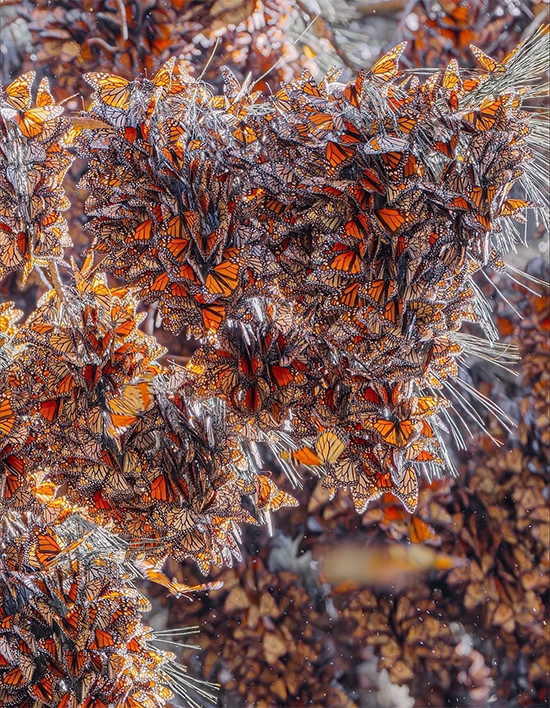 Conservation organizations and local communities are working tirelessly to reverse these declines. Efforts include planting native milkweed along migration corridors, protecting forest reserves from illegal logging, and creating “monarch-friendly” gardens in urban and rural areas alike. Scientists emphasize that saving the monarch migration requires cooperation across borders, reflecting the very nature of the journey itself — a shared effort stretching from Canada to Mexico.A symbol of resilience and renewal
The wildlife photographer’s collection captures more than just beauty; it documents survival against the odds. Each fluttering wing represents a generation bound by instinct, guided by sunlight, and driven by an unbreakable will to continue. The monarchs’ golden river in the sky is both a biological marvel and a message of hope — a reminder that even the smallest creatures can achieve extraordinary things when nature’s balance is preserved.As long as there are flowers to feed them, forests to shelter them, and people willing to protect them, the monarchs’ migration will continue to paint the skies of North America with color and life. Their story is one of endurance, unity, and renewal — a living testament to the resilience of nature and the power of preservation.
Every autumn, as the air cools and the days grow shorter, one of the most astonishing migrations in the natural world begins. Millions of monarch butterflies, easily recognized by their brilliant orange and black wings, embark on a 3,000-mile journey from Canada and the northern United States to the mountain forests of central Mexico. This annual voyage, both delicate and determined, has captivated scientists, photographers, and nature enthusiasts for generations.
Recently, a wildlife photographer managed to document this incredible phenomenon in stunning clarity. His images reveal entire trees draped in fluttering wings, their branches shimmering in the sunlight as the butterflies rest before continuing their long trek. Through his lens, the monarchs’ migration transforms from a distant biological marvel into a deeply emotional portrait of endurance and unity within nature. The sight of these insects moving as one vast, living current across the continent reminds us of the fragile interconnectedness that binds ecosystems together.The unique migration that spans generationsUnlike most migratory species, monarch butterflies complete their epic journey across multiple generations. The butterflies that depart northward in spring are not the same individuals that return south in the fall. Instead, each generation lives only a few weeks, completing a single leg of the journey before reproducing and passing on an inherited instinct that guides their descendants along the same ancient route.
This process continues for several generations until, in late summer, a special “super generation” emerges. Unlike their short-lived predecessors, these monarchs can live up to eight months — long enough to travel all the way back to Mexico. Scientists remain fascinated by how these delicate creatures, weighing less than a gram, can navigate thousands of miles to the same forests their ancestors once roosted in. The answer likely lies in their ability to sense the position of the sun, the Earth's magnetic field, and subtle shifts in temperature and air currents.The magical arrival in the Mexican highlandsBy late October, the monarchs reach the mountains of Michoacán and the State of Mexico, where they cluster in the cool, high-altitude oyamel fir forests. Here, they create a living tapestry of orange and gold, covering tree trunks and branches so thickly that the forest seems alive. The butterflies remain in this sanctuary throughout the winter, resting and conserving energy until warmer weather calls them north once again.
During these months, the forests of central Mexico become a world heritage site of life and movement. The sight is so mesmerizing that it draws thousands of visitors each year to reserves such as El Rosario and Sierra Chincua. Locals often describe the migration as a spiritual experience, linking the butterflies’ arrival with the Day of the Dead — a time when many believe ancestral spirits return home. In this way, the monarchs’ journey symbolizes both life and remembrance, a cycle of renewal that connects nature, culture, and time.The threats facing the monarchs’ ancient routeDespite the wonder it inspires, the monarch migration is now under threat. Over the past several decades, habitat loss, pesticide use, deforestation, and climate change have significantly reduced both the butterflies’ breeding grounds in North America and their wintering forests in Mexico. Rising temperatures disrupt their migratory timing, while the decline of milkweed — the sole food source for monarch caterpillars — limits reproduction.
Conservation organizations and local communities are working tirelessly to reverse these declines. Efforts include planting native milkweed along migration corridors, protecting forest reserves from illegal logging, and creating “monarch-friendly” gardens in urban and rural areas alike. Scientists emphasize that saving the monarch migration requires cooperation across borders, reflecting the very nature of the journey itself — a shared effort stretching from Canada to Mexico.A symbol of resilience and renewalThe wildlife photographer’s collection captures more than just beauty; it documents survival against the odds. Each fluttering wing represents a generation bound by instinct, guided by sunlight, and driven by an unbreakable will to continue. The monarchs’ golden river in the sky is both a biological marvel and a message of hope — a reminder that even the smallest creatures can achieve extraordinary things when nature’s balance is preserved.As long as there are flowers to feed them, forests to shelter them, and people willing to protect them, the monarchs’ migration will continue to paint the skies of North America with color and life. Their story is one of endurance, unity, and renewal — a living testament to the resilience of nature and the power of preservation.