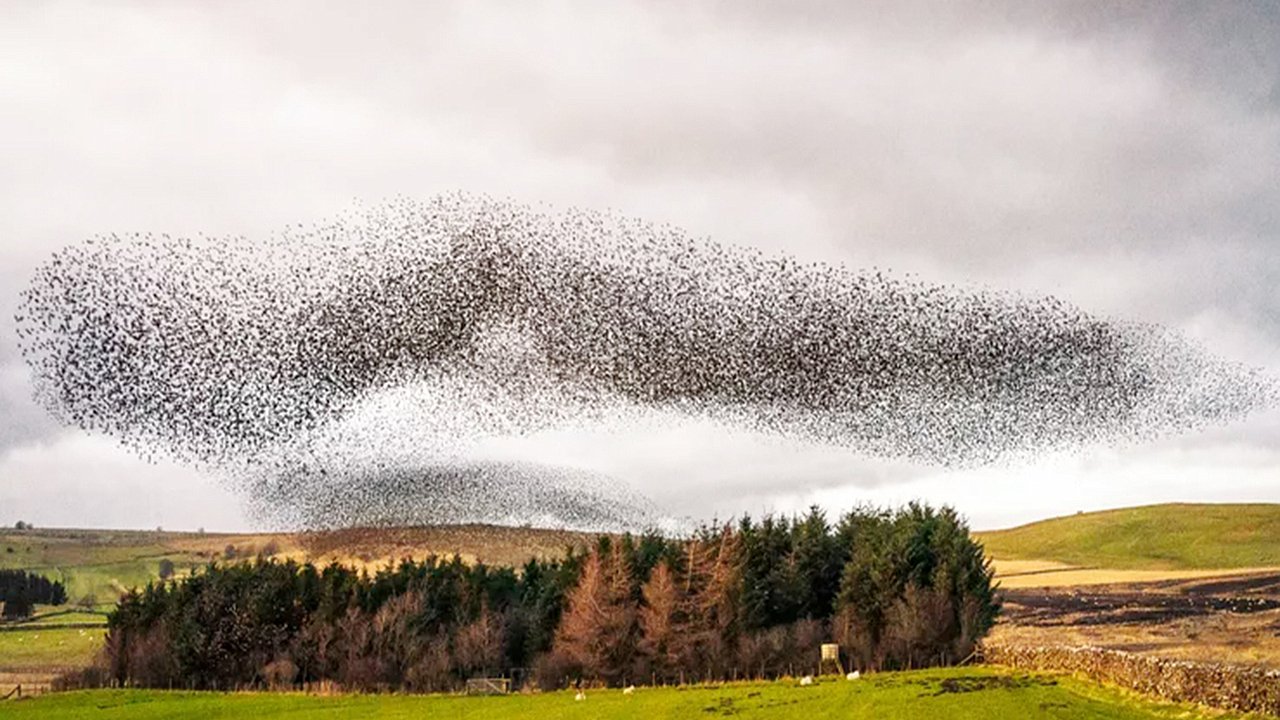
The Enchanting Dance of Starlings
These small to medium-sized birds, with glossy black plumage shimmering with purples and greens, can form massive, shape-shifting clouds that ripple across the evening sky. Unlike a typical bird flock, these murmurations twist, swirl, and bend in mesmerizing patterns that leave onlookers awestruck.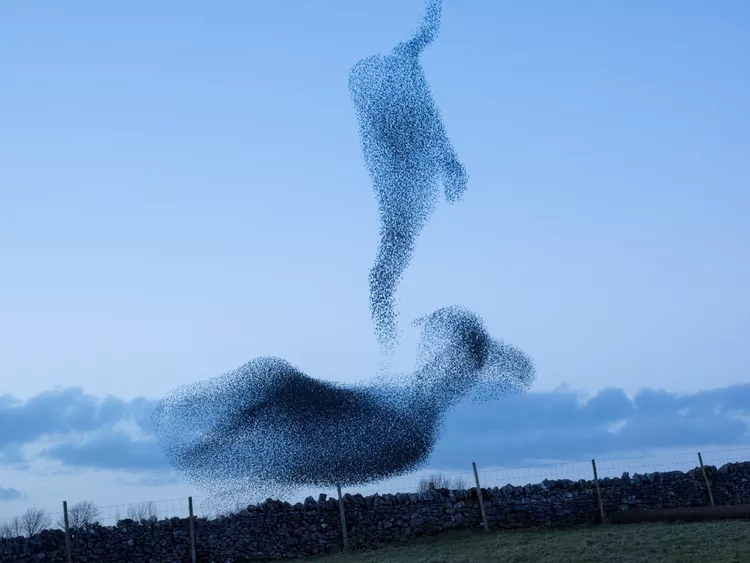 Scientists have long studied how these synchronized displays occur. The prevailing theory suggests that each starling reacts to the movement of its seven closest neighbors. This chain reaction spreads rapidly, allowing tens of thousands of birds to change direction simultaneously, creating the illusion of one giant organism gliding through the air.Why Starlings Form Murmurations
One of the leading explanations compares this behavior to schools of fish that move in unison to evade predators. By creating massive, ever-changing formations, starlings confuse and deter raptors such as hawks and falcons. The unpredictable shifts make it difficult for a predator to target a single bird, thus enhancing the flock’s overall safety.Another reason may be warmth. During colder months, murmurations help attract additional starlings to a central roosting site. The more birds gather, the warmer and more protected the roost becomes. Interestingly, the largest murmurations often appear in late summer, when starling numbers can swell to over 100,000 individuals.There’s also the “information center” hypothesis. This theory proposes that murmurations help starlings share knowledge about food sources, ensuring group survival during times when food is scarce.The Physics Behind the Phenomenon
In 2010, researchers publishing in the Proceedings of the National Academy of Sciences sought to understand murmuration dynamics using physics. They discovered that starling flocks exhibit “scale-free correlation,” meaning that each bird’s movement influences—and is influenced by—many others in the group, regardless of distance.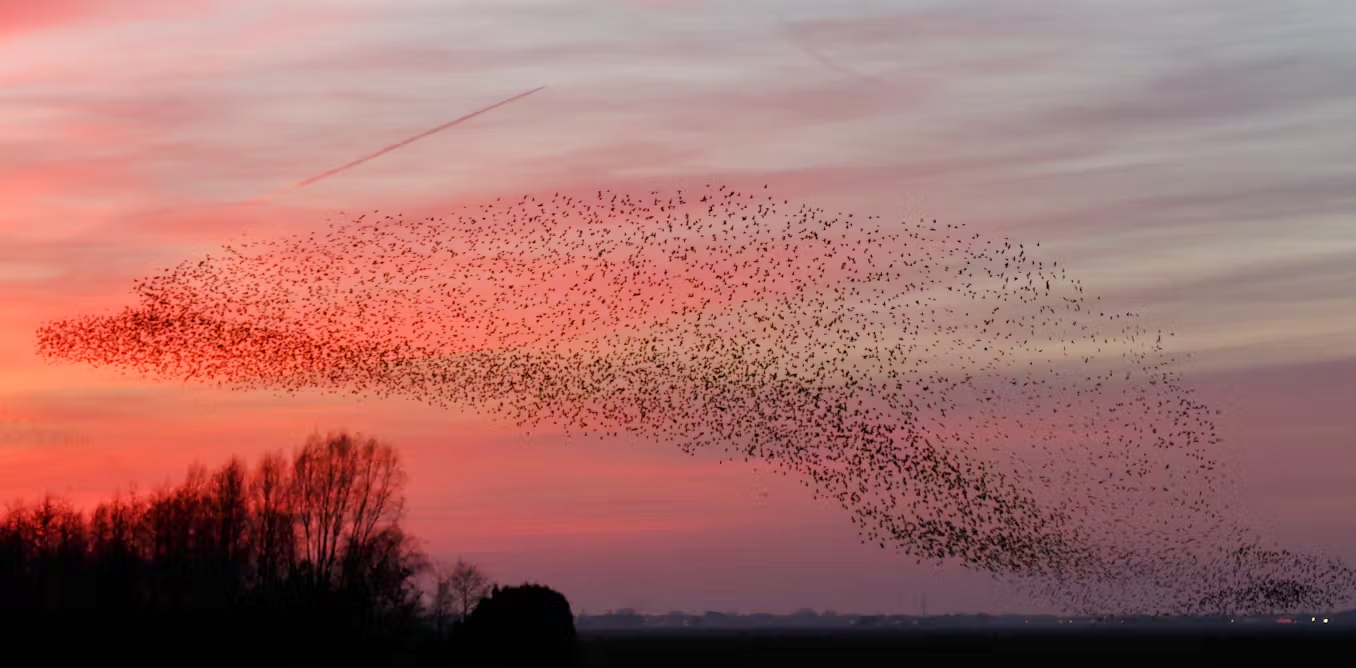 This coordinated behavior mirrors principles seen in magnetism, where particles align their direction much like electrons do when magnetized. Sound may also play a role, allowing starlings to synchronize their velocities instantly. Despite these findings, the exact mechanisms remain a puzzle, continuing to fascinate experts in biology, physics, and mathematics alike.Remarkably, no single bird leads a murmuration. Instead, the flock acts as a single, unified entity, shifting direction as though guided by an invisible force.When and Where Murmurations Occur
Murmurations are most famously observed across the United Kingdom, particularly during autumn and winter evenings. However, the phenomenon has also become common in the United States, where starlings were introduced in the late 1800s by enthusiasts hoping to bring every bird mentioned by Shakespeare to North America—despite the starling appearing only once in his works (Henry IV, Act 1).Today, an estimated 150 million starlings reside in the U.S. Although many people view them as invasive pests, their evening murmurations still captivate those lucky enough to witness them.During the day, starlings disperse into smaller groups to forage, but as the sun sets, they reconvene in spectacular formations over their chosen roosting sites. The term “murmuration” itself comes from the soft, murmuring sound of thousands of wings beating together as the flock moves like liquid across the sky.
These small to medium-sized birds, with glossy black plumage shimmering with purples and greens, can form massive, shape-shifting clouds that ripple across the evening sky. Unlike a typical bird flock, these murmurations twist, swirl, and bend in mesmerizing patterns that leave onlookers awestruck.
Scientists have long studied how these synchronized displays occur. The prevailing theory suggests that each starling reacts to the movement of its seven closest neighbors. This chain reaction spreads rapidly, allowing tens of thousands of birds to change direction simultaneously, creating the illusion of one giant organism gliding through the air.Why Starlings Form MurmurationsOne of the leading explanations compares this behavior to schools of fish that move in unison to evade predators. By creating massive, ever-changing formations, starlings confuse and deter raptors such as hawks and falcons. The unpredictable shifts make it difficult for a predator to target a single bird, thus enhancing the flock’s overall safety.Another reason may be warmth. During colder months, murmurations help attract additional starlings to a central roosting site. The more birds gather, the warmer and more protected the roost becomes. Interestingly, the largest murmurations often appear in late summer, when starling numbers can swell to over 100,000 individuals.There’s also the “information center” hypothesis. This theory proposes that murmurations help starlings share knowledge about food sources, ensuring group survival during times when food is scarce.The Physics Behind the Phenomenon
In 2010, researchers publishing in the Proceedings of the National Academy of Sciences sought to understand murmuration dynamics using physics. They discovered that starling flocks exhibit “scale-free correlation,” meaning that each bird’s movement influences—and is influenced by—many others in the group, regardless of distance.
This coordinated behavior mirrors principles seen in magnetism, where particles align their direction much like electrons do when magnetized. Sound may also play a role, allowing starlings to synchronize their velocities instantly. Despite these findings, the exact mechanisms remain a puzzle, continuing to fascinate experts in biology, physics, and mathematics alike.Remarkably, no single bird leads a murmuration. Instead, the flock acts as a single, unified entity, shifting direction as though guided by an invisible force.When and Where Murmurations OccurMurmurations are most famously observed across the United Kingdom, particularly during autumn and winter evenings. However, the phenomenon has also become common in the United States, where starlings were introduced in the late 1800s by enthusiasts hoping to bring every bird mentioned by Shakespeare to North America—despite the starling appearing only once in his works (Henry IV, Act 1).Today, an estimated 150 million starlings reside in the U.S. Although many people view them as invasive pests, their evening murmurations still captivate those lucky enough to witness them.During the day, starlings disperse into smaller groups to forage, but as the sun sets, they reconvene in spectacular formations over their chosen roosting sites. The term “murmuration” itself comes from the soft, murmuring sound of thousands of wings beating together as the flock moves like liquid across the sky.