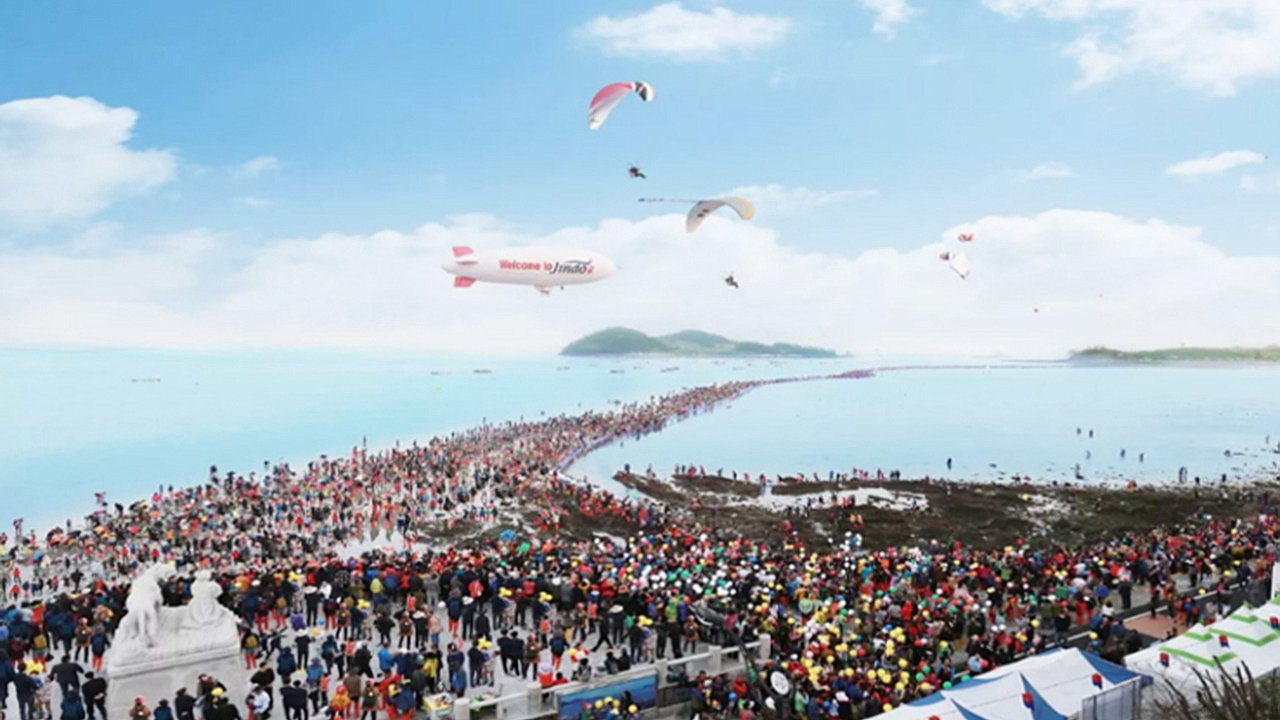
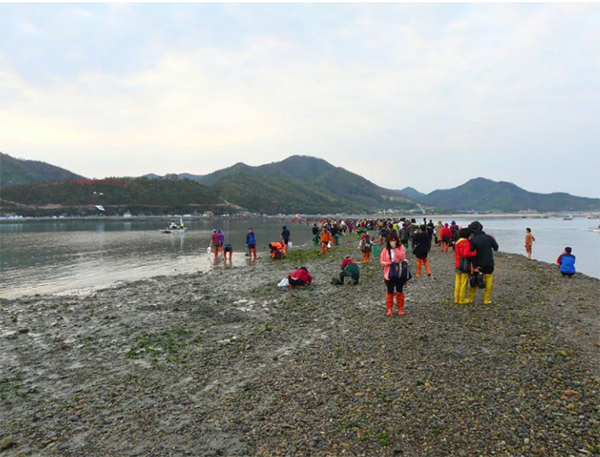
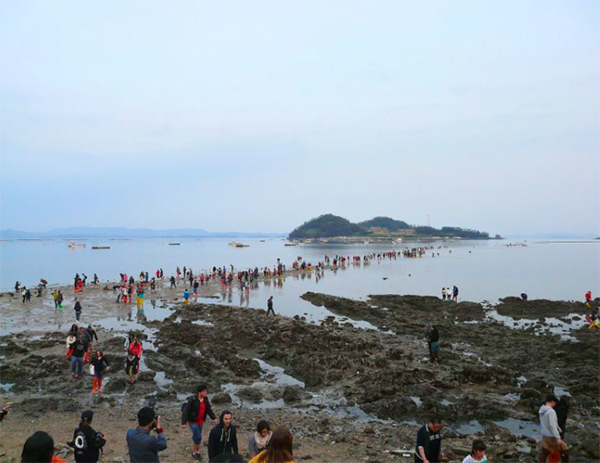
The miracle of Jindo: Where the sea opens before your eyesEvery year, off the southern coast of South Korea, a breathtaking natural phenomenon unfolds that seems straight out of a biblical tale. For just one hour, the sea between Jindo and Modo islands dramatically recedes, exposing a narrow strip of seabed nearly 2.8 kilometers long. Locals and tourists alike gather to cross this temporary land bridge, an experience so striking that it has often been compared to Moses parting the Red Sea.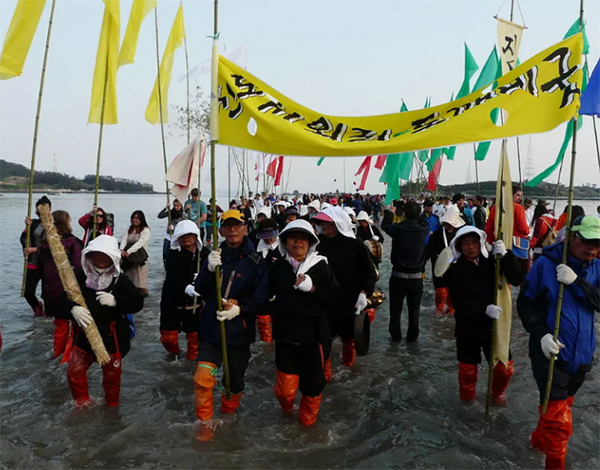 This extraordinary occurrence, known as the Jindo Sea Parting, happens two to three times a year, typically between March and June. It attracts tens of thousands of visitors from across the globe who come to witness — and walk through — this fleeting moment when nature reveals its mysterious harmony with the moon and tides. Beyond its scientific explanation, the event carries deep cultural and spiritual significance, woven into Korean folklore and celebrated through vibrant local festivals.The natural wonder behind the Jindo Sea PartingThe Jindo Sea Parting is the result of a fascinating combination of tidal harmonics and the region’s unique underwater topography. Due to the gravitational pull of the moon and the sun, combined with the narrow sea channel between Jindo and Modo islands, the water level temporarily drops, exposing a sandy path about 40 to 60 meters wide.For about an hour, people can cross the sea on foot, walking between the two islands before the tide returns to cover the land bridge once again. This rare alignment occurs only a few times a year, and those who start their journey too late often find themselves wading through shallow waters or sticky mud as the sea slowly reclaims its territory.While this natural marvel has been known to locals for generations, it wasn’t until 1975 that it gained global attention. French Ambassador Pierre Landy witnessed the event and likened it to the biblical story of Moses parting the Red Sea — a comparison that instantly captured international fascination and earned it the nickname, “The Miracle of Jindo.”A celebration of culture and connectionEach occurrence of the sea parting is celebrated with the Jindo Sea Parting Festival, an annual event that merges traditional performances, local food, and communal spirit. The festival transforms the small coastal town into a lively hub of color and sound. Drummers beat traditional rhythms, performers in bright costumes dance shamanistic rituals, and the air fills with the scent of local seafood dishes.Visitors often wear rubber boots or waders as they prepare to make the crossing, some carrying flags or joining hands with family and friends. Beyond the spectacle itself, the festival is a profound cultural gathering that celebrates the unity of people, the rhythm of nature, and centuries of Korean tradition.The legend of Grandma Bbyong and the sea godAdding a touch of mythology to the event is the legend of Grandma Bbyong, a tale passed down through generations on Jindo Island. According to local folklore, long ago, wild tigers forced the island’s residents to flee to nearby Modo Island. One elderly woman, Grandma Bbyong, was accidentally left behind. Alone and desperate, she prayed to the sea god, Yongwang, for a way to reunite with her family.
 Moved by her devotion, the sea god answered her prayers by parting the waters, creating a temporary path between the islands. Grandma Bbyong crossed safely to join her loved ones, and since then, locals believe that each time the sea parts, it is in her honor. This story gives the event a deeply emotional and spiritual meaning, reminding visitors of faith, hope, and perseverance.Science meets legend in perfect harmonyWhile the legend enriches the experience with symbolism and emotion, the true cause of the Jindo Sea Parting lies in science. The gravitational forces of the sun and moon influence tides around the world, but the specific alignment and shape of the seabed between Jindo and Modo make this phenomenon uniquely visible.Similar occurrences happen in places like Mont Saint-Michel in France or the Bay of Fundy in Canada, but Jindo’s version is particularly striking due to its timing, cultural integration, and scale of participation. For scientists and tourists alike, it offers a rare opportunity to witness how natural forces can mirror the stories that have shaped human belief for centuries.Experiencing the Jindo Sea Parting todayFor travelers visiting South Korea, witnessing the Jindo Sea Parting is an unforgettable experience. The event typically takes place between late March and early June, though dates vary depending on tidal predictions. Visitors can check local schedules and plan their trips accordingly.
 During the festival, accommodations fill quickly, so early booking is recommended. Beyond the sea crossing, the island offers scenic trails, coastal views, and a chance to immerse yourself in Korean coastal culture. The event is more than a natural phenomenon — it’s a celebration of life, tradition, and the delicate balance between nature and humanity.
This extraordinary occurrence, known as the Jindo Sea Parting, happens two to three times a year, typically between March and June. It attracts tens of thousands of visitors from across the globe who come to witness — and walk through — this fleeting moment when nature reveals its mysterious harmony with the moon and tides. Beyond its scientific explanation, the event carries deep cultural and spiritual significance, woven into Korean folklore and celebrated through vibrant local festivals.The natural wonder behind the Jindo Sea PartingThe Jindo Sea Parting is the result of a fascinating combination of tidal harmonics and the region’s unique underwater topography. Due to the gravitational pull of the moon and the sun, combined with the narrow sea channel between Jindo and Modo islands, the water level temporarily drops, exposing a sandy path about 40 to 60 meters wide.For about an hour, people can cross the sea on foot, walking between the two islands before the tide returns to cover the land bridge once again. This rare alignment occurs only a few times a year, and those who start their journey too late often find themselves wading through shallow waters or sticky mud as the sea slowly reclaims its territory.While this natural marvel has been known to locals for generations, it wasn’t until 1975 that it gained global attention. French Ambassador Pierre Landy witnessed the event and likened it to the biblical story of Moses parting the Red Sea — a comparison that instantly captured international fascination and earned it the nickname, “The Miracle of Jindo.”A celebration of culture and connectionEach occurrence of the sea parting is celebrated with the Jindo Sea Parting Festival, an annual event that merges traditional performances, local food, and communal spirit. The festival transforms the small coastal town into a lively hub of color and sound. Drummers beat traditional rhythms, performers in bright costumes dance shamanistic rituals, and the air fills with the scent of local seafood dishes.Visitors often wear rubber boots or waders as they prepare to make the crossing, some carrying flags or joining hands with family and friends. Beyond the spectacle itself, the festival is a profound cultural gathering that celebrates the unity of people, the rhythm of nature, and centuries of Korean tradition.The legend of Grandma Bbyong and the sea godAdding a touch of mythology to the event is the legend of Grandma Bbyong, a tale passed down through generations on Jindo Island. According to local folklore, long ago, wild tigers forced the island’s residents to flee to nearby Modo Island. One elderly woman, Grandma Bbyong, was accidentally left behind. Alone and desperate, she prayed to the sea god, Yongwang, for a way to reunite with her family.Moved by her devotion, the sea god answered her prayers by parting the waters, creating a temporary path between the islands. Grandma Bbyong crossed safely to join her loved ones, and since then, locals believe that each time the sea parts, it is in her honor. This story gives the event a deeply emotional and spiritual meaning, reminding visitors of faith, hope, and perseverance.Science meets legend in perfect harmonyWhile the legend enriches the experience with symbolism and emotion, the true cause of the Jindo Sea Parting lies in science. The gravitational forces of the sun and moon influence tides around the world, but the specific alignment and shape of the seabed between Jindo and Modo make this phenomenon uniquely visible.Similar occurrences happen in places like Mont Saint-Michel in France or the Bay of Fundy in Canada, but Jindo’s version is particularly striking due to its timing, cultural integration, and scale of participation. For scientists and tourists alike, it offers a rare opportunity to witness how natural forces can mirror the stories that have shaped human belief for centuries.Experiencing the Jindo Sea Parting todayFor travelers visiting South Korea, witnessing the Jindo Sea Parting is an unforgettable experience. The event typically takes place between late March and early June, though dates vary depending on tidal predictions. Visitors can check local schedules and plan their trips accordingly.During the festival, accommodations fill quickly, so early booking is recommended. Beyond the sea crossing, the island offers scenic trails, coastal views, and a chance to immerse yourself in Korean coastal culture. The event is more than a natural phenomenon — it’s a celebration of life, tradition, and the delicate balance between nature and humanity.