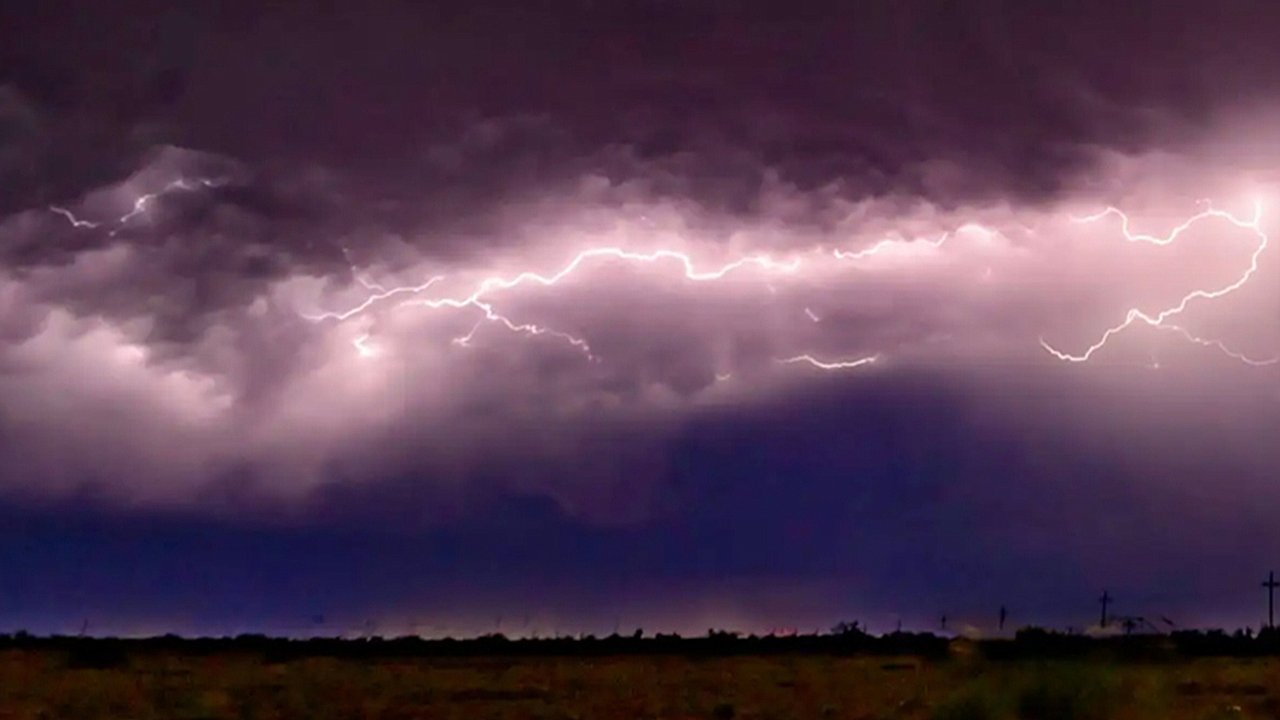
A Record-Breaking Lightning Flash Spanned from Texas to Missouri
In a stunning scientific update, researchers have officially confirmed that a lightning bolt stretching 515 miles (829 kilometers)—from Texas to Missouri—now holds the world record for the longest lightning flash ever recorded. The extraordinary event occurred in 2017, but it wasn’t until recently that scientists, using advanced satellite data, were able to verify its full extent.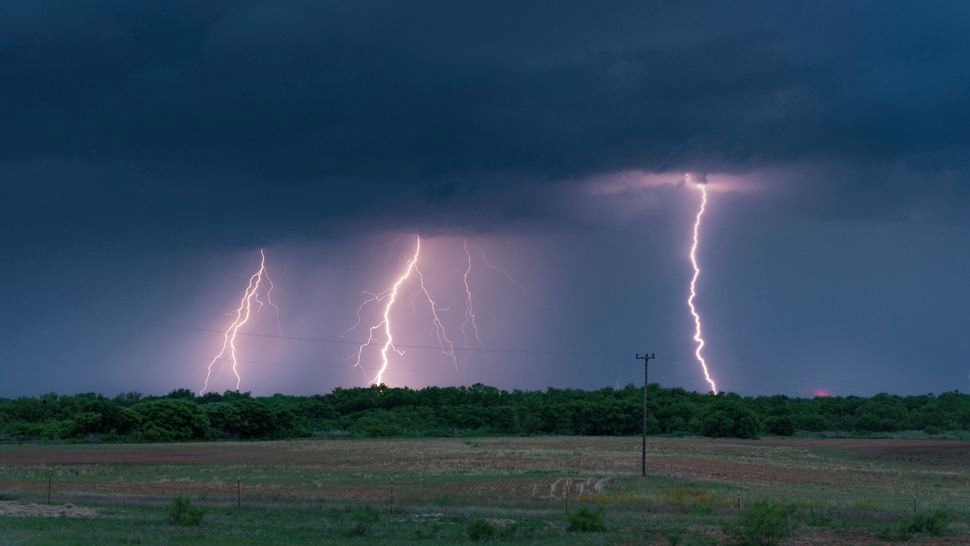 The previous record-holder, a 477-mile (768-km) flash captured in 2020, has now been surpassed by 38 miles (61 kilometers). This newly crowned bolt traveled almost the entire width of the southeastern United States, demonstrating the immense scale that thunderstorms and their electrical discharges can reach under the right atmospheric conditions.What Exactly is a Megaflash?
This monster bolt falls into a category known as a "megaflash"—a term used for lightning bolts that extend at least 62 miles (100 kilometers) in length. While the average lightning bolt spans less than 10 miles (16 km), megaflashes are rare and exceptional, forming under unique storm systems that persist for many hours and cover vast distances.“Megaflash lightning is still a relatively new phenomenon in terms of our understanding,” explained Randy Cerveny, a professor at Arizona State University who was part of the research team. “We’re only beginning to uncover the physics behind how these massive bolts form and propagate.”In fact, most lightning is shockingly narrow—just about an inch wide—and rarely travels long distances. This makes the detection of such large-scale flashes a significant scientific milestone.How the 515-mile lightning Flash Was Measured
To measure this remarkable event, scientists analyzed data from the GOES-16 satellite, a weather-monitoring satellite operated by the National Oceanic and Atmospheric Administration (NOAA). GOES-16 carries a Geostationary Lightning Mapper (GLM) that can detect and record around one million lightning strikes per day.“This satellite’s continuous observations from geostationary orbit have revolutionized how we study lightning,” said Michael Peterson of the Georgia Tech Research Institute and lead author of the study. “The ability to identify megaflashes in massive datasets is a major leap forward.”By combining geostationary satellite images with new data processing methods, scientists were able to map the precise structure and reach of the 2017 megaflash—including its positively and negatively charged branches—revealing its immense 515-mile footprint.What Conditions Create a Lightning Megaflash?
According to Peterson’s research, megaflashes require rare and powerful storm systems. These are often supercell or mesoscale convective systems that linger for 14 hours or more and stretch across regions as large as New Jersey or bigger. While such storms are not everyday events, they aren’t extraordinarily rare either.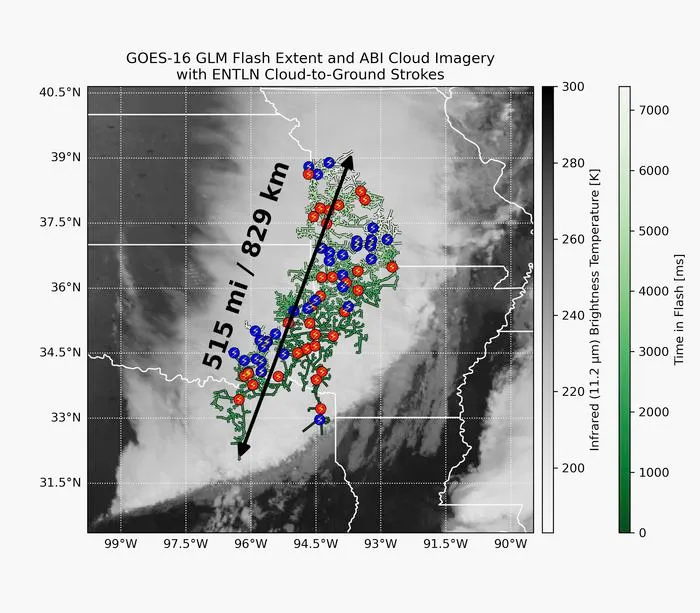 Only a small fraction—less than one percent—of thunderstorms produce megaflashes, but thanks to improved satellite technology, the number of confirmed events is expected to grow in the coming years. Cerveny emphasized that these findings might be only the beginning:
“It’s very likely that even longer lightning bolts exist. As lightning detection continues to improve, we’ll start seeing even more extreme cases.”A Glimpse Into Lightning's Extremes
This record-setting megaflash not only makes headlines for its jaw-dropping size but also marks a scientific milestone in extreme weather observation. By leveraging satellite tools like GLM and refining data analysis, researchers are getting closer to understanding the behavior of Earth’s most dramatic electrical phenomena.The findings were published in a peer-reviewed journal and open the door for more accurate lightning forecasting, safer flight paths, and deeper insight into storm dynamics.
In a stunning scientific update, researchers have officially confirmed that a lightning bolt stretching 515 miles (829 kilometers)—from Texas to Missouri—now holds the world record for the longest lightning flash ever recorded. The extraordinary event occurred in 2017, but it wasn’t until recently that scientists, using advanced satellite data, were able to verify its full extent.
The previous record-holder, a 477-mile (768-km) flash captured in 2020, has now been surpassed by 38 miles (61 kilometers). This newly crowned bolt traveled almost the entire width of the southeastern United States, demonstrating the immense scale that thunderstorms and their electrical discharges can reach under the right atmospheric conditions.What Exactly is a Megaflash?This monster bolt falls into a category known as a "megaflash"—a term used for lightning bolts that extend at least 62 miles (100 kilometers) in length. While the average lightning bolt spans less than 10 miles (16 km), megaflashes are rare and exceptional, forming under unique storm systems that persist for many hours and cover vast distances.“Megaflash lightning is still a relatively new phenomenon in terms of our understanding,” explained Randy Cerveny, a professor at Arizona State University who was part of the research team. “We’re only beginning to uncover the physics behind how these massive bolts form and propagate.”In fact, most lightning is shockingly narrow—just about an inch wide—and rarely travels long distances. This makes the detection of such large-scale flashes a significant scientific milestone.How the 515-mile lightning Flash Was Measured
To measure this remarkable event, scientists analyzed data from the GOES-16 satellite, a weather-monitoring satellite operated by the National Oceanic and Atmospheric Administration (NOAA). GOES-16 carries a Geostationary Lightning Mapper (GLM) that can detect and record around one million lightning strikes per day.“This satellite’s continuous observations from geostationary orbit have revolutionized how we study lightning,” said Michael Peterson of the Georgia Tech Research Institute and lead author of the study. “The ability to identify megaflashes in massive datasets is a major leap forward.”By combining geostationary satellite images with new data processing methods, scientists were able to map the precise structure and reach of the 2017 megaflash—including its positively and negatively charged branches—revealing its immense 515-mile footprint.What Conditions Create a Lightning Megaflash?
According to Peterson’s research, megaflashes require rare and powerful storm systems. These are often supercell or mesoscale convective systems that linger for 14 hours or more and stretch across regions as large as New Jersey or bigger. While such storms are not everyday events, they aren’t extraordinarily rare either.
Only a small fraction—less than one percent—of thunderstorms produce megaflashes, but thanks to improved satellite technology, the number of confirmed events is expected to grow in the coming years. Cerveny emphasized that these findings might be only the beginning:“It’s very likely that even longer lightning bolts exist. As lightning detection continues to improve, we’ll start seeing even more extreme cases.”A Glimpse Into Lightning's Extremes
This record-setting megaflash not only makes headlines for its jaw-dropping size but also marks a scientific milestone in extreme weather observation. By leveraging satellite tools like GLM and refining data analysis, researchers are getting closer to understanding the behavior of Earth’s most dramatic electrical phenomena.The findings were published in a peer-reviewed journal and open the door for more accurate lightning forecasting, safer flight paths, and deeper insight into storm dynamics.