
Bill Moyers, Journalist and Former LBJ Aide Who Challenged Power with Principle, Dies at 91Bill Moyers, who once served as President Lyndon B. Johnson’s chief press secretary during the escalation of the Vietnam War and later transformed into a revered voice in public television, died on Thursday in Manhattan. He was 91 years old.His son, William Cope Moyers, confirmed that he passed away at Memorial Sloan Kettering Cancer Center. Moyers had resided in Manhattan.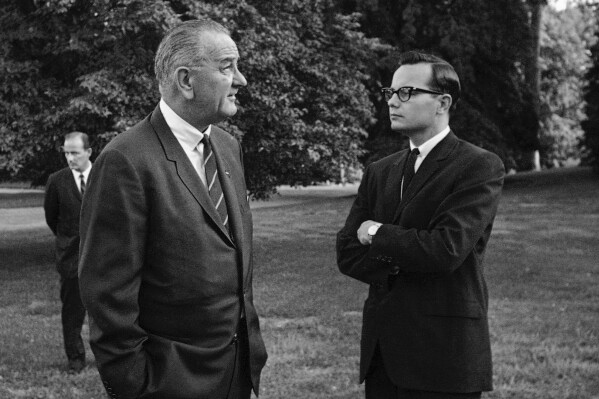 To Americans who came of age after the 1960s, Moyers became a distinctive presence in public broadcasting. Known for his thoughtful and principled commentary, he was described by journalist Peter J. Boyer as “a rare and powerful voice, a kind of secular evangelist.” Before he became a household name in journalism, Moyers was an influential figure inside the White House, one of President Johnson’s most trusted aides.He was aboard Air Force One on November 22, 1963, when Johnson was sworn in following the assassination of President John F. Kennedy. Moyers was a key architect of the Great Society programs and became Johnson’s top administrative assistant and press secretary during the crucial years of the Vietnam War buildup.From the White House to the AirwavesMoyers left the Johnson administration in December 1966, just shy of his 33rd birthday, after tensions with the president became irreparable. Johnson, known for his explosive temperament and demand for loyalty, had sidelined Moyers for several key foreign policy roles. Their split was final. Johnson barely mentioned Moyers in his 1971 memoir The Vantage Point, relegating the once-central aide to a passing reference.After leaving politics, Moyers turned to journalism, where he found his true calling. Over the next four decades, he produced acclaimed documentaries and in-depth reporting on poverty, inequality, race, environmental issues, and the distortion of democracy by money and special interests. An ordained Baptist minister, Moyers brought a deep moral seriousness to his work that resonated with millions.Breaking with JohnsonMoyers’s early exit from the White House did not lessen his impact on public life. His departure marked a turning point not only in his own journey but in the evolving American media landscape. Johnson, unable to fully trust or control the thoughtful and independent Moyers, cast him aside — and Moyers, in turn, became one of the country’s leading chroniclers and critics of political power.A Career of Conscience in JournalismIn his long run on television — mostly on PBS — Moyers received more than 30 Emmy Awards, drawing comparisons to the legendary Edward R. Murrow. His work often focused on exposing threats to American democracy, from unchecked campaign financing to governmental overreach. Programs like Now with Bill Moyers and Bill Moyers Journal set a high bar for investigative storytelling.Perhaps his most famous series was Joseph Campbell and the Power of Myth (1988), a six-part PBS special that reached 30 million viewers. The series introduced audiences to Campbell’s teachings and made the phrase “Follow your bliss” part of the cultural lexicon.Champion of Ideas and Public DiscourseSoft-spoken yet piercing, Moyers often sat with poets, educators, philosophers, and ordinary citizens, preferring depth and contemplation over spectacle. In a media age increasingly dominated by confrontation and sensationalism, he stood apart. His interviews exuded respect, intellect, and sincerity, serving as a counterbalance to the noisier corners of broadcasting.A Divisive but Respected LegacyWhile praised by liberals as a moral compass for the nation, Moyers faced criticism from conservative corners. Some accused him of liberal bias and ideological preaching. A 2004 retrospective by FrontPageMag.com called him a “sweater-wearing pundit who delivered socialist and neo-Marxist propaganda with a soft Texas accent.” But supporters saw him as a relentless truth-seeker driven by democratic ideals.Humble Beginnings and a Private PersonaBilly Don Moyers was born on June 5, 1934, in Hugo, Oklahoma, and raised in Marshall, Texas. His father, John Moyers, was an unskilled laborer. Despite rising to national prominence, Moyers remained deeply connected to his roots and frequently invoked his small-town upbringing. He valued ordinary voices and often highlighted their stories in his reporting.Although a master interviewer, Moyers seldom opened up about his own life. He rarely discussed his years with Johnson and declined all requests to be interviewed by Robert A. Caro, the celebrated biographer chronicling Johnson’s life. Journalist Ann Crittenden once described him as “one of the most complicated men that politics or the media ever produced.”In the end, Moyers remained devoted to asking difficult questions, exploring the moral dimensions of public life, and telling the stories that others ignored. His legacy endures in the many journalists he inspired — and in the audiences who found in his work a deep and abiding respect for truth.
To Americans who came of age after the 1960s, Moyers became a distinctive presence in public broadcasting. Known for his thoughtful and principled commentary, he was described by journalist Peter J. Boyer as “a rare and powerful voice, a kind of secular evangelist.” Before he became a household name in journalism, Moyers was an influential figure inside the White House, one of President Johnson’s most trusted aides.He was aboard Air Force One on November 22, 1963, when Johnson was sworn in following the assassination of President John F. Kennedy. Moyers was a key architect of the Great Society programs and became Johnson’s top administrative assistant and press secretary during the crucial years of the Vietnam War buildup.From the White House to the AirwavesMoyers left the Johnson administration in December 1966, just shy of his 33rd birthday, after tensions with the president became irreparable. Johnson, known for his explosive temperament and demand for loyalty, had sidelined Moyers for several key foreign policy roles. Their split was final. Johnson barely mentioned Moyers in his 1971 memoir The Vantage Point, relegating the once-central aide to a passing reference.After leaving politics, Moyers turned to journalism, where he found his true calling. Over the next four decades, he produced acclaimed documentaries and in-depth reporting on poverty, inequality, race, environmental issues, and the distortion of democracy by money and special interests. An ordained Baptist minister, Moyers brought a deep moral seriousness to his work that resonated with millions.Breaking with JohnsonMoyers’s early exit from the White House did not lessen his impact on public life. His departure marked a turning point not only in his own journey but in the evolving American media landscape. Johnson, unable to fully trust or control the thoughtful and independent Moyers, cast him aside — and Moyers, in turn, became one of the country’s leading chroniclers and critics of political power.A Career of Conscience in JournalismIn his long run on television — mostly on PBS — Moyers received more than 30 Emmy Awards, drawing comparisons to the legendary Edward R. Murrow. His work often focused on exposing threats to American democracy, from unchecked campaign financing to governmental overreach. Programs like Now with Bill Moyers and Bill Moyers Journal set a high bar for investigative storytelling.Perhaps his most famous series was Joseph Campbell and the Power of Myth (1988), a six-part PBS special that reached 30 million viewers. The series introduced audiences to Campbell’s teachings and made the phrase “Follow your bliss” part of the cultural lexicon.Champion of Ideas and Public DiscourseSoft-spoken yet piercing, Moyers often sat with poets, educators, philosophers, and ordinary citizens, preferring depth and contemplation over spectacle. In a media age increasingly dominated by confrontation and sensationalism, he stood apart. His interviews exuded respect, intellect, and sincerity, serving as a counterbalance to the noisier corners of broadcasting.A Divisive but Respected LegacyWhile praised by liberals as a moral compass for the nation, Moyers faced criticism from conservative corners. Some accused him of liberal bias and ideological preaching. A 2004 retrospective by FrontPageMag.com called him a “sweater-wearing pundit who delivered socialist and neo-Marxist propaganda with a soft Texas accent.” But supporters saw him as a relentless truth-seeker driven by democratic ideals.Humble Beginnings and a Private PersonaBilly Don Moyers was born on June 5, 1934, in Hugo, Oklahoma, and raised in Marshall, Texas. His father, John Moyers, was an unskilled laborer. Despite rising to national prominence, Moyers remained deeply connected to his roots and frequently invoked his small-town upbringing. He valued ordinary voices and often highlighted their stories in his reporting.Although a master interviewer, Moyers seldom opened up about his own life. He rarely discussed his years with Johnson and declined all requests to be interviewed by Robert A. Caro, the celebrated biographer chronicling Johnson’s life. Journalist Ann Crittenden once described him as “one of the most complicated men that politics or the media ever produced.”In the end, Moyers remained devoted to asking difficult questions, exploring the moral dimensions of public life, and telling the stories that others ignored. His legacy endures in the many journalists he inspired — and in the audiences who found in his work a deep and abiding respect for truth.