It usually happens late at night. You turn on the bathroom light, hear a sudden buzzing sound, and then a loud thump against the wall or mirror makes you jump. For a split second, you wonder if a giant beetle has invaded your home. Many people immediately assume it is a June bug, a cockroach, or some kind of dangerous flying insect. In most cases, however, the culprit is something far less alarming: the cockchafer beetle. Also known as the May bug, this noisy insect is famous for its clumsy flying, attraction to lights, and dramatic nighttime appearances.Although the cockchafer looks intimidating because of its size and loud buzzing sound, it is completely harmless to humans and pets. It does not sting, bite, or infest homes. In fact, it usually enters houses by accident while searching for outdoor light sources during its short spring mating season.Understanding why these beetles appear, how to identify them, and what to do when one flies into your bathroom can make the experience far less stressful. Instead of panicking, you can safely guide the insect back outside while also learning something fascinating about one of nature’s loudest nighttime visitors.What is a cockchafer beetle
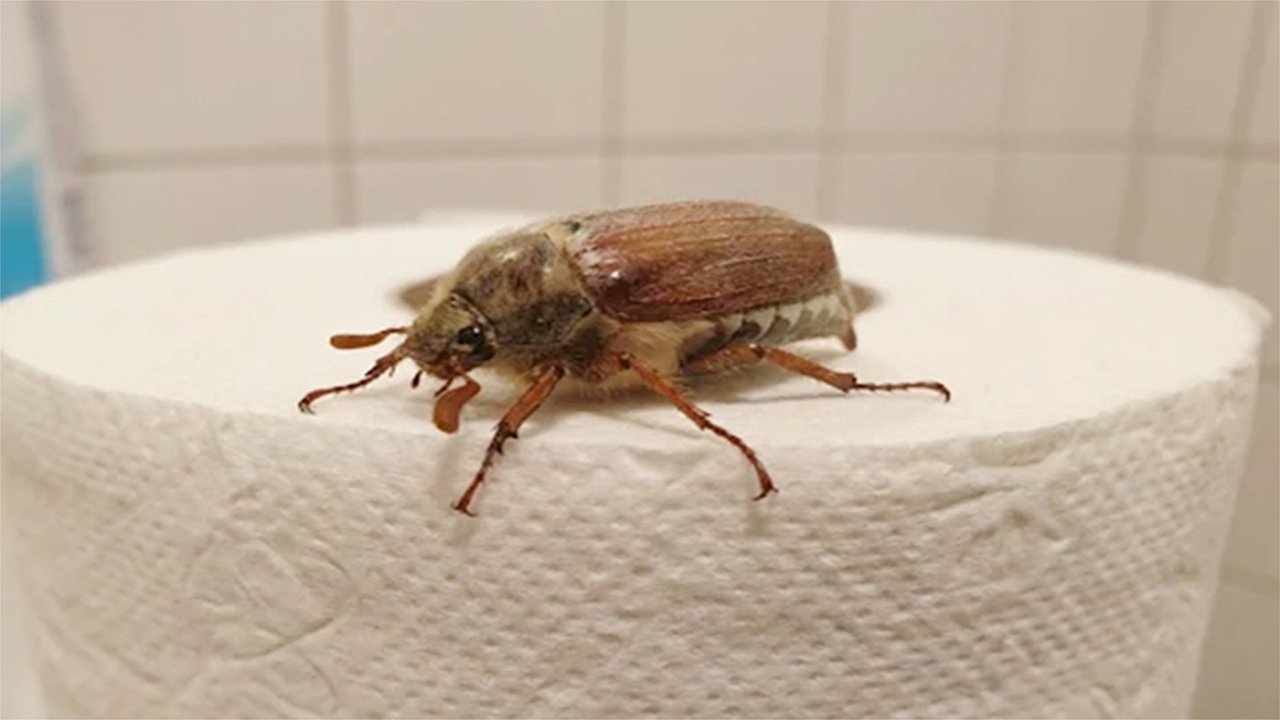
The cockchafer, scientifically known as Melolontha melolontha, is a large brown beetle commonly found across Europe and parts of Asia. It belongs to the scarab beetle family and is often referred to as a May bug because adult cockchafers usually emerge during late spring.Adult cockchafers are typically between 25 and 35 millimeters long, making them noticeably larger than many common beetles people encounter indoors. They have reddish-brown wing covers, a dark head, short antennae, and a stocky oval-shaped body.One reason people remember cockchafer encounters so vividly is the sound. These insects are surprisingly loud in flight and often crash into walls, windows, lights, and ceilings because they are poor flyers.Despite their dramatic entrance, cockchafers are harmless insects that spend most of their lives outdoors.Why cockchafers fly into bathrooms at night
Cockchafers are strongly attracted to artificial light. Bright bathroom lights, especially near open windows or vents, can easily confuse them.At night, the reflection from mirrors, tiles, and shiny bathroom surfaces creates an even stronger visual attraction. If a window is open during spring evenings, the beetle may accidentally fly inside while following the light source.Bathrooms also tend to be warmer and more humid than other rooms, which can make them feel inviting to nighttime insects.Cockchafers do not enter homes looking for food or shelter. They are not trying to build nests or infest bathrooms. Most indoor encounters happen simply because the insect becomes disoriented while flying at night.Their active adult season is also very short. Most cockchafers appear between late April and early June, depending on the local climate.How to identify a cockchafer beetleMany people confuse cockchafers with June bugs because both insects are large, noisy, and active during warm months.However, there are several easy ways to identify a cockchafer.Cockchafers are generally larger and stockier than June bugs. They have a dull reddish-brown appearance instead of a shiny metallic shell.Their flying style is another clue. Cockchafers fly awkwardly and often bounce off objects, producing loud buzzing and thumping sounds.You may also notice fan-shaped antennae near their heads, especially on males.Unlike cockroaches, cockchafers do not run quickly across surfaces or hide in dark corners. They are slow-moving insects that usually appear confused indoors.Correct identification matters because many people panic unnecessarily when they see a large beetle flying inside their home.Are cockchafers dangerous to humans or petsThe good news is that cockchafers are not dangerous.They do not bite humans, sting, or spread diseases inside homes. Even if one lands on your arm or clothing, it is simply trying to regain balance or escape.Cockchafers are also not poisonous to cats or dogs, although curious pets may try to chase or eat them.Because they are relatively large and noisy, people sometimes assume they are aggressive insects. In reality, they are harmless herbivores that mainly feed on leaves during their adult stage.The larvae, often called white grubs, live underground and feed on plant roots. While large populations can sometimes damage lawns or crops, adult cockchafers themselves are not household pests.There is no reason to call pest control because of a single cockchafer flying indoors.What to do if you find a cockchafer inside your homeThe best response is to remain calm.Because cockchafers are attracted to light, turning off indoor lights often helps reduce their frantic flying. If possible, open a nearby window or door leading outside.Turning on an outdoor light may encourage the beetle to fly back outdoors on its own.If the insect does not leave, you can gently capture it using a glass, container, or cup along with a piece of cardboard or stiff paper.Place the container over the beetle, slide the paper underneath, and carefully carry it outside.Releasing the insect onto a tree, bush, or elevated surface is ideal because cockchafers climb before taking flight.Avoid crushing or spraying the beetle with chemicals. Insecticides are unnecessary for harmless outdoor insects and may introduce toxic substances into your bathroom.How to prevent cockchafers from entering your house
Although occasional visits are normal during spring, there are a few simple ways to reduce the chances of future nighttime encounters.Installing screens on bathroom windows is one of the most effective solutions.Keeping windows closed after dark during peak cockchafer season can also help.Some homeowners switch to softer yellow outdoor lights because insects are generally less attracted to warm-colored lighting than bright white bulbs.Reducing unnecessary indoor lighting near open windows may further decrease the chance of attracting nighttime insects.Fortunately, cockchafer season is short, so even if you see one indoors, the activity usually disappears within a few weeks.Why cockchafers matter for the ecosystem
Although gardeners sometimes view cockchafers as pests because adults feed on leaves and larvae feed on roots, these insects still play an important ecological role.Cockchafer larvae help break down organic matter and contribute to soil aeration underground.More importantly, both larvae and adult beetles serve as an important food source for birds, bats, hedgehogs, and other wildlife.In many areas, cockchafer populations declined dramatically during the twentieth century because of widespread pesticide use.Their gradual return in some regions is considered a positive sign for biodiversity and healthier ecosystems. Seeing a cockchafer occasionally may actually indicate that local insect populations are recovering.Why people are so startled by cockchafers
Part of the reason cockchafer encounters feel so dramatic is because humans are naturally sensitive to sudden movement and unexpected sounds at night.The loud buzzing combined with the beetle’s clumsy flight can create an instant fear response, especially in small spaces like bathrooms. Their large size also makes them seem more threatening than they really are.Unlike tiny flies or moths, a cockchafer can sound surprisingly heavy when it bumps into walls or mirrors.Fortunately, once people understand that these beetles are harmless, future encounters become far less stressful.Many people even begin to see them as curious seasonal visitors rather than frightening pests.Why understanding insects reduces fear
Fear often comes from uncertainty. When people do not recognize an insect, they may immediately assume it is dangerous.Learning how to identify common insects like cockchafers helps replace panic with confidence.Understanding their behavior, life cycle, and harmless nature can transform an alarming moment into an interesting wildlife encounter.Nature occasionally finds its way indoors, especially during warm spring evenings. Most insects that accidentally enter homes are not trying to harm anyone.The next time you hear that unmistakable buzzing sound in the bathroom, you will know exactly what you are dealing with and how to handle it safely.Instead of reaching for panic or pesticides, you can simply turn off the light, guide the beetle outside, and appreciate one of nature’s loudest but most harmless nighttime insects.
In most cases, however, the culprit is something far less alarming: the cockchafer beetle. Also known as the May bug, this noisy insect is famous for its clumsy flying, attraction to lights, and dramatic nighttime appearances.Although the cockchafer looks intimidating because of its size and loud buzzing sound, it is completely harmless to humans and pets. It does not sting, bite, or infest homes. In fact, it usually enters houses by accident while searching for outdoor light sources during its short spring mating season.Understanding why these beetles appear, how to identify them, and what to do when one flies into your bathroom can make the experience far less stressful. Instead of panicking, you can safely guide the insect back outside while also learning something fascinating about one of nature’s loudest nighttime visitors.What is a cockchafer beetleThe cockchafer, scientifically known as Melolontha melolontha, is a large brown beetle commonly found across Europe and parts of Asia. It belongs to the scarab beetle family and is often referred to as a May bug because adult cockchafers usually emerge during late spring.Adult cockchafers are typically between 25 and 35 millimeters long, making them noticeably larger than many common beetles people encounter indoors. They have reddish-brown wing covers, a dark head, short antennae, and a stocky oval-shaped body.One reason people remember cockchafer encounters so vividly is the sound. These insects are surprisingly loud in flight and often crash into walls, windows, lights, and ceilings because they are poor flyers.Despite their dramatic entrance, cockchafers are harmless insects that spend most of their lives outdoors.Why cockchafers fly into bathrooms at night
Cockchafers are strongly attracted to artificial light. Bright bathroom lights, especially near open windows or vents, can easily confuse them.At night, the reflection from mirrors, tiles, and shiny bathroom surfaces creates an even stronger visual attraction. If a window is open during spring evenings, the beetle may accidentally fly inside while following the light source.Bathrooms also tend to be warmer and more humid than other rooms, which can make them feel inviting to nighttime insects.Cockchafers do not enter homes looking for food or shelter. They are not trying to build nests or infest bathrooms. Most indoor encounters happen simply because the insect becomes disoriented while flying at night.Their active adult season is also very short. Most cockchafers appear between late April and early June, depending on the local climate.How to identify a cockchafer beetleMany people confuse cockchafers with June bugs because both insects are large, noisy, and active during warm months.However, there are several easy ways to identify a cockchafer.Cockchafers are generally larger and stockier than June bugs. They have a dull reddish-brown appearance instead of a shiny metallic shell.Their flying style is another clue. Cockchafers fly awkwardly and often bounce off objects, producing loud buzzing and thumping sounds.You may also notice fan-shaped antennae near their heads, especially on males.Unlike cockroaches, cockchafers do not run quickly across surfaces or hide in dark corners. They are slow-moving insects that usually appear confused indoors.Correct identification matters because many people panic unnecessarily when they see a large beetle flying inside their home.Are cockchafers dangerous to humans or petsThe good news is that cockchafers are not dangerous.They do not bite humans, sting, or spread diseases inside homes. Even if one lands on your arm or clothing, it is simply trying to regain balance or escape.Cockchafers are also not poisonous to cats or dogs, although curious pets may try to chase or eat them.Because they are relatively large and noisy, people sometimes assume they are aggressive insects. In reality, they are harmless herbivores that mainly feed on leaves during their adult stage.The larvae, often called white grubs, live underground and feed on plant roots. While large populations can sometimes damage lawns or crops, adult cockchafers themselves are not household pests.There is no reason to call pest control because of a single cockchafer flying indoors.What to do if you find a cockchafer inside your homeThe best response is to remain calm.Because cockchafers are attracted to light, turning off indoor lights often helps reduce their frantic flying. If possible, open a nearby window or door leading outside.Turning on an outdoor light may encourage the beetle to fly back outdoors on its own.If the insect does not leave, you can gently capture it using a glass, container, or cup along with a piece of cardboard or stiff paper.Place the container over the beetle, slide the paper underneath, and carefully carry it outside.Releasing the insect onto a tree, bush, or elevated surface is ideal because cockchafers climb before taking flight.Avoid crushing or spraying the beetle with chemicals. Insecticides are unnecessary for harmless outdoor insects and may introduce toxic substances into your bathroom.How to prevent cockchafers from entering your house
Although occasional visits are normal during spring, there are a few simple ways to reduce the chances of future nighttime encounters.Installing screens on bathroom windows is one of the most effective solutions.Keeping windows closed after dark during peak cockchafer season can also help.Some homeowners switch to softer yellow outdoor lights because insects are generally less attracted to warm-colored lighting than bright white bulbs.Reducing unnecessary indoor lighting near open windows may further decrease the chance of attracting nighttime insects.Fortunately, cockchafer season is short, so even if you see one indoors, the activity usually disappears within a few weeks.Why cockchafers matter for the ecosystem
Although gardeners sometimes view cockchafers as pests because adults feed on leaves and larvae feed on roots, these insects still play an important ecological role.Cockchafer larvae help break down organic matter and contribute to soil aeration underground.More importantly, both larvae and adult beetles serve as an important food source for birds, bats, hedgehogs, and other wildlife.In many areas, cockchafer populations declined dramatically during the twentieth century because of widespread pesticide use.Their gradual return in some regions is considered a positive sign for biodiversity and healthier ecosystems. Seeing a cockchafer occasionally may actually indicate that local insect populations are recovering.Why people are so startled by cockchafers
Part of the reason cockchafer encounters feel so dramatic is because humans are naturally sensitive to sudden movement and unexpected sounds at night.The loud buzzing combined with the beetle’s clumsy flight can create an instant fear response, especially in small spaces like bathrooms. Their large size also makes them seem more threatening than they really are.Unlike tiny flies or moths, a cockchafer can sound surprisingly heavy when it bumps into walls or mirrors.Fortunately, once people understand that these beetles are harmless, future encounters become far less stressful.Many people even begin to see them as curious seasonal visitors rather than frightening pests.Why understanding insects reduces fear
Fear often comes from uncertainty. When people do not recognize an insect, they may immediately assume it is dangerous.Learning how to identify common insects like cockchafers helps replace panic with confidence.Understanding their behavior, life cycle, and harmless nature can transform an alarming moment into an interesting wildlife encounter.Nature occasionally finds its way indoors, especially during warm spring evenings. Most insects that accidentally enter homes are not trying to harm anyone.The next time you hear that unmistakable buzzing sound in the bathroom, you will know exactly what you are dealing with and how to handle it safely.Instead of reaching for panic or pesticides, you can simply turn off the light, guide the beetle outside, and appreciate one of nature’s loudest but most harmless nighttime insects.