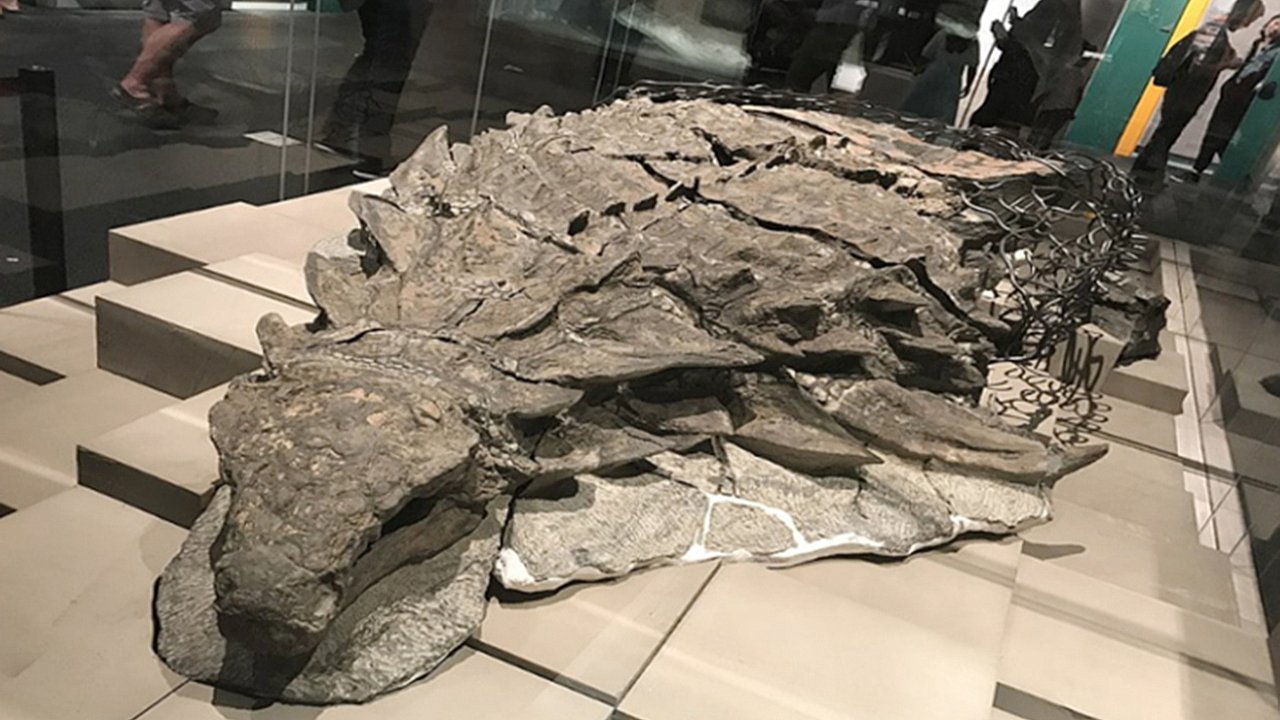
Scientists Unveil Exceptionally Preserved Dinosaur Mummy in Canada
Discovered by miners in Alberta, Canada, this fossilized nodosaur has stunned researchers—not just because of its age, but because its skin, armor, and even internal organs remain remarkably intact.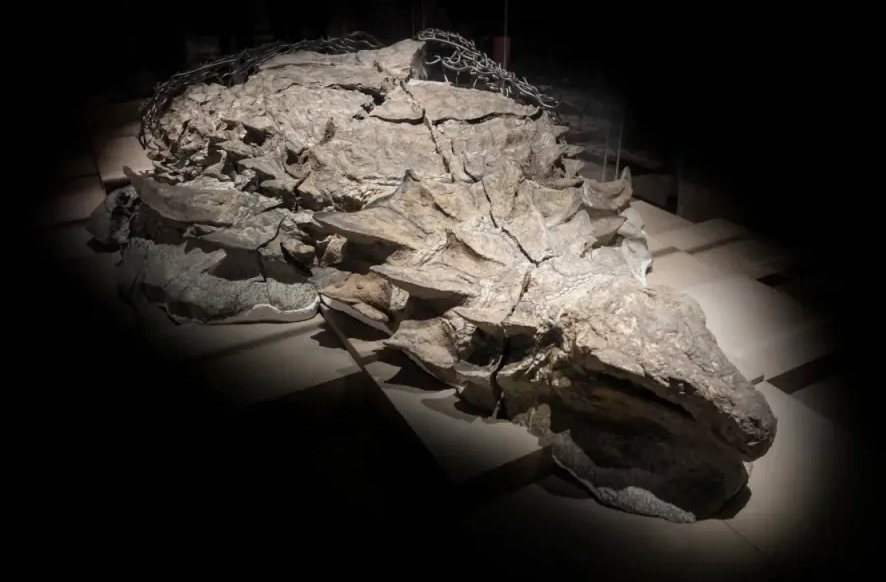 Nodosaur: highlight of the dino exhibit at the Royal Tyrrell Museum of Palaeontology in Alberta, Canada. Robert Clark/National Geographic“We don’t just have a skeleton,” one paleontologist involved in the study remarked. “We have a dinosaur as it would have appeared in life.” Indeed, the preservation is so complete that bones are hidden beneath well-defined skin and natural armor plating. Instead of a flattened fossil, this specimen retains its three-dimensional shape, earning it the nickname “dinosaur mummy.”
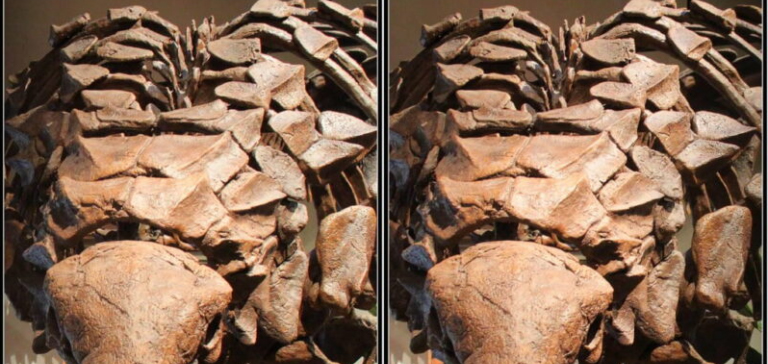 Nodosaur bones at Houston Museum of Natural Science at Sugar Land, Fort Bend Co., Texas. Image credit: fossilmikeThe incredible discovery happened by chance. A worker at an oil sands mine stumbled upon the find during routine excavation. Paleontologists were soon called in, and over 7,000 hours of meticulous work later, the creature was ready to meet the world. The team at the Royal Tyrrell Museum of Palaeontology led the excavation and preparation efforts, ultimately naming the nodosaur Borealopelta markmitchelli—a tribute to technician Mark Mitchell, who undertook the painstaking restoration.The nodosaur, a plant-eating, armored dinosaur, was a formidable creature in its own right. Weighing about 3,000 pounds in life and still weighing 2,500 pounds as a fossil, it was built like a tank, covered in spiked, bony armor to defend against predators. The specimen measures roughly 5.5 meters (18 feet) in length.
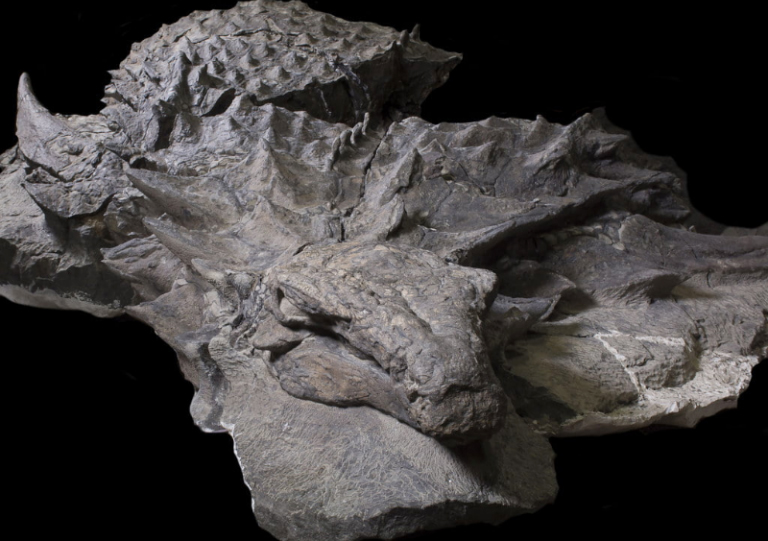 Nodosaur (armoured dinosaur) fossil discovered at the Suncor Mine near Fort McMurray by Government of AlbertaWhat makes this find even more fascinating is that researchers were able to determine the dinosaur’s skin color. By analyzing microscopic pigment molecules using mass spectrometry, scientists discovered the nodosaur had a dark reddish-brown coloration on its back and a lighter underside. This camouflage pattern, known as countershading, likely helped the animal avoid detection from predators—an indication of the dangerous world it lived in.
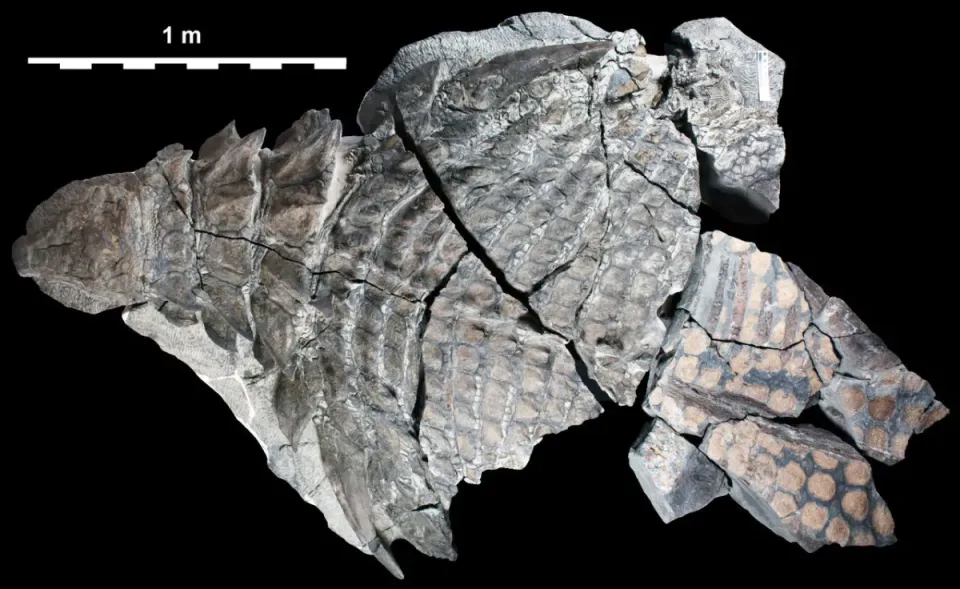 Robert Clark/National GeographicHow did the nodosaur remain so perfectly preserved for over a hundred million years? Experts believe the animal may have died near a river and was carried out to sea by a flood. Sinking to the ocean floor, it was rapidly buried in sediment, which protected its body from decay and scavengers. Over time, minerals seeped into its tissues, fossilizing the creature in stunning detail.Unlike many flattened fossil specimens, the nodosaur’s body maintained its natural shape, giving researchers an almost lifelike view of the dinosaur. “If you just squint your eyes,” one scientist said, “you could almost believe it’s just sleeping.”
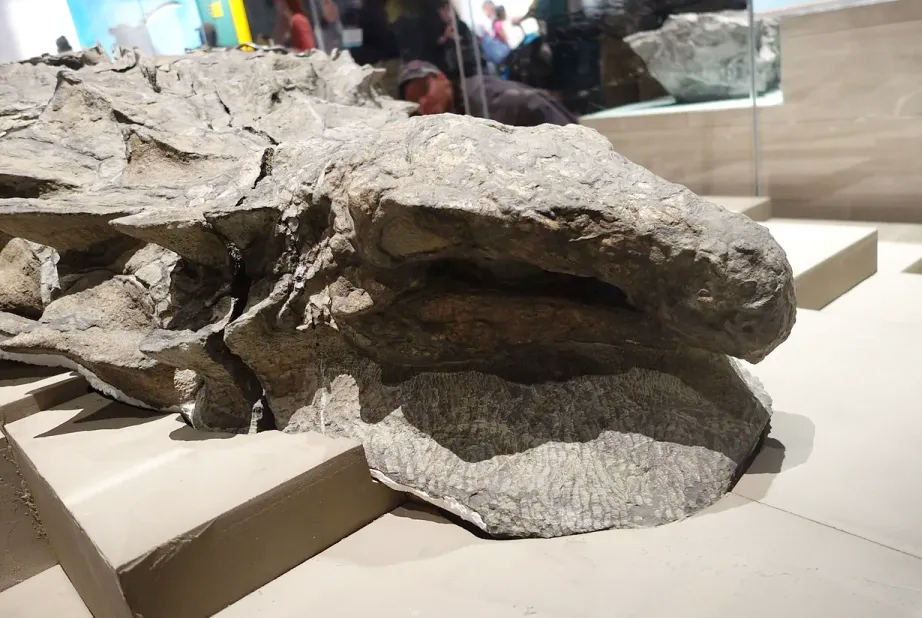 Robert Clark/National GeographicThis “Mona Lisa of dinosaurs,” as it’s now affectionately called, is not only a scientific marvel but also a powerful reminder of the ancient world. Its discovery opens a new window into dinosaur biology, behavior, and the prehistoric ecosystems they once ruled.
Discovered by miners in Alberta, Canada, this fossilized nodosaur has stunned researchers—not just because of its age, but because its skin, armor, and even internal organs remain remarkably intact.
Nodosaur: highlight of the dino exhibit at the Royal Tyrrell Museum of Palaeontology in Alberta, Canada. Robert Clark/National Geographic“We don’t just have a skeleton,” one paleontologist involved in the study remarked. “We have a dinosaur as it would have appeared in life.” Indeed, the preservation is so complete that bones are hidden beneath well-defined skin and natural armor plating. Instead of a flattened fossil, this specimen retains its three-dimensional shape, earning it the nickname “dinosaur mummy.”Nodosaur bones at Houston Museum of Natural Science at Sugar Land, Fort Bend Co., Texas. Image credit: fossilmikeThe incredible discovery happened by chance. A worker at an oil sands mine stumbled upon the find during routine excavation. Paleontologists were soon called in, and over 7,000 hours of meticulous work later, the creature was ready to meet the world. The team at the Royal Tyrrell Museum of Palaeontology led the excavation and preparation efforts, ultimately naming the nodosaur Borealopelta markmitchelli—a tribute to technician Mark Mitchell, who undertook the painstaking restoration.The nodosaur, a plant-eating, armored dinosaur, was a formidable creature in its own right. Weighing about 3,000 pounds in life and still weighing 2,500 pounds as a fossil, it was built like a tank, covered in spiked, bony armor to defend against predators. The specimen measures roughly 5.5 meters (18 feet) in length.Nodosaur (armoured dinosaur) fossil discovered at the Suncor Mine near Fort McMurray by Government of AlbertaWhat makes this find even more fascinating is that researchers were able to determine the dinosaur’s skin color. By analyzing microscopic pigment molecules using mass spectrometry, scientists discovered the nodosaur had a dark reddish-brown coloration on its back and a lighter underside. This camouflage pattern, known as countershading, likely helped the animal avoid detection from predators—an indication of the dangerous world it lived in.Robert Clark/National GeographicHow did the nodosaur remain so perfectly preserved for over a hundred million years? Experts believe the animal may have died near a river and was carried out to sea by a flood. Sinking to the ocean floor, it was rapidly buried in sediment, which protected its body from decay and scavengers. Over time, minerals seeped into its tissues, fossilizing the creature in stunning detail.Unlike many flattened fossil specimens, the nodosaur’s body maintained its natural shape, giving researchers an almost lifelike view of the dinosaur. “If you just squint your eyes,” one scientist said, “you could almost believe it’s just sleeping.”Robert Clark/National GeographicThis “Mona Lisa of dinosaurs,” as it’s now affectionately called, is not only a scientific marvel but also a powerful reminder of the ancient world. Its discovery opens a new window into dinosaur biology, behavior, and the prehistoric ecosystems they once ruled.