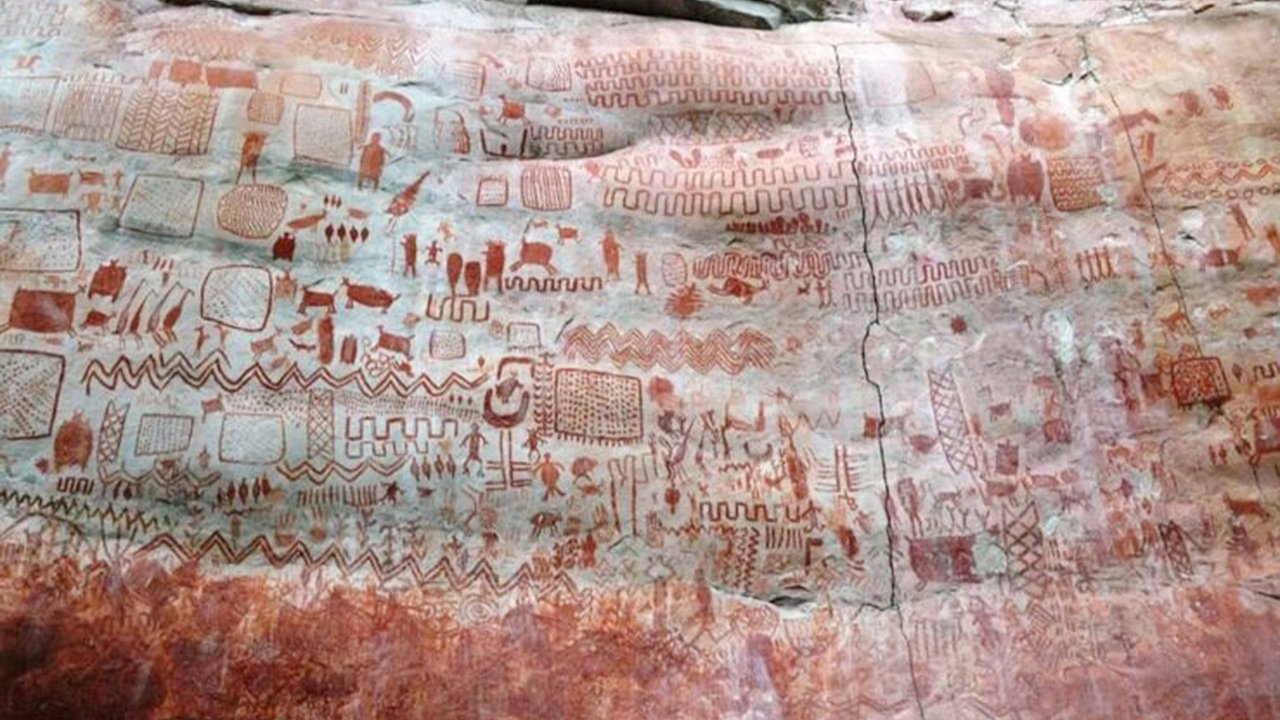
The rock art, found in Serranía de la Lindosa, was created using ochre, a red pigment commonly utilized in ancient times. This remarkable site, dating back between 11,800 and 12,600 years ago, stands as one of the most significant prehistoric discoveries of recent years. Now referred to as the “Sistine Chapel of the Ancients,” the site provides valuable insights into the world of its creators—people who lived as the Ice Age was ending and the Amazon landscape was evolving into the rainforest we see today.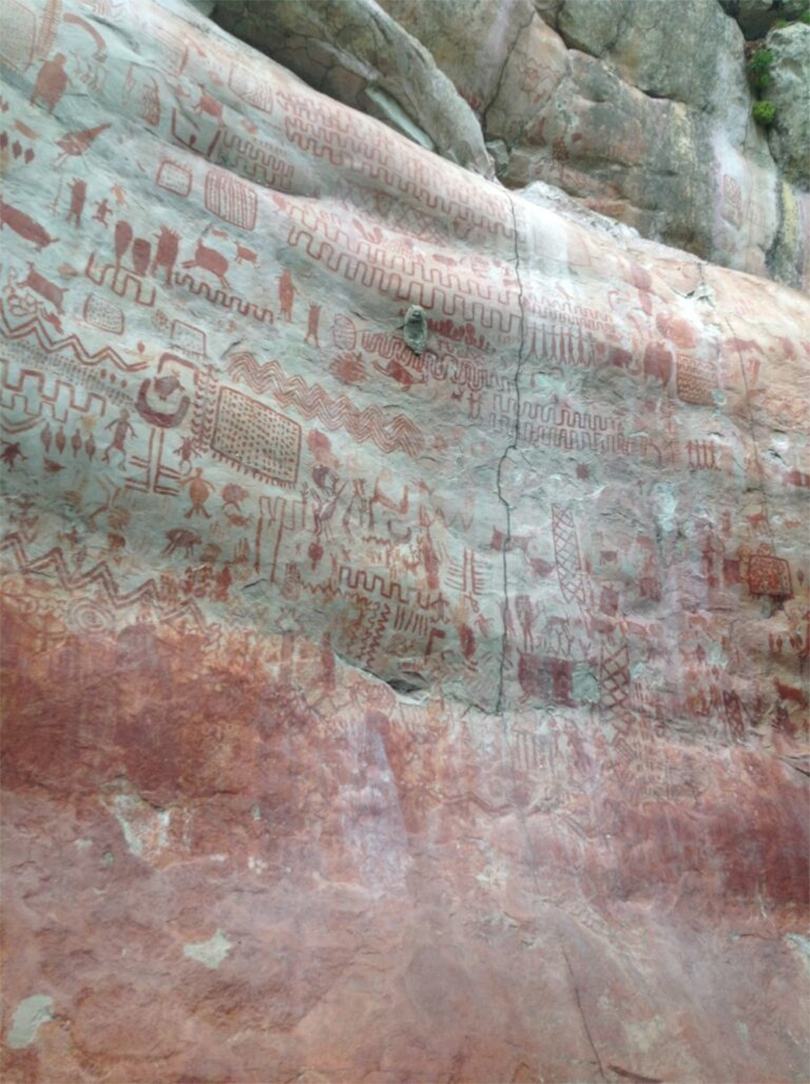 Image credit: Parques Nacionales Naturales de ColombiaThe Journey to Discovery
A team of British and Colombian archaeologists first came across this awe-inspiring site in 2017, though details of their find have only recently been shared with the public. To reach the location, researchers had to secure permissions from both the Colombian government and local rebel groups, followed by a grueling five-hour trek through the jungle. The scale of the discovery is staggering. While the total number of individual paintings has yet to be determined, estimates suggest there are tens of thousands of detailed illustrations. These depict not only animals but also early humans engaged in activities such as hunting, wearing masks, and even performing what appears to be ritualistic dances.An Ancient World in Flux
The paintings offer a unique perspective on life at the end of the last Ice Age, when the Amazon was a patchwork of savannas, thorny scrublands, and forests rather than the dense rainforest it is today. Among the depicted creatures are extinct species like palaeolama, giant sloths, and mastodons—massive herbivores that once roamed this ancient landscape.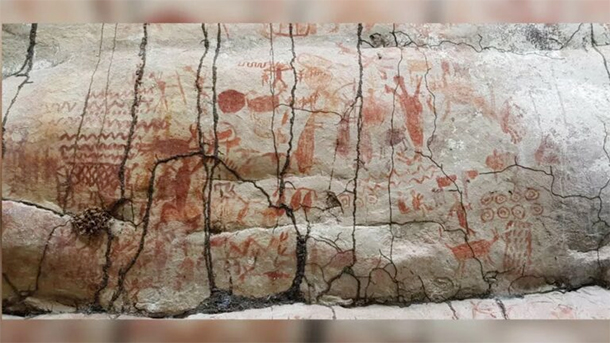 Rock art showing humans interacting with ice age animals. (Image credit: Ella Al-Shamahi)
Mark Robinson, an archaeologist at the University of Exeter and a co-researcher of the study, expressed his astonishment at the discovery: “These are incredible images created by the first inhabitants of western Amazonia. It is mind-blowing to think that people lived among and hunted creatures as large as small cars.”
Archaeologist and explorer Ella Al-Shamahi, who also visited the site, emphasized how crucial this discovery is for understanding the Amazon’s transformation over time. “Seeing Ice Age megafauna in the artwork provides a tangible marker of time,” she explained. “People don’t always realize that the Amazon has undergone significant changes—it hasn’t always been this rainforest.”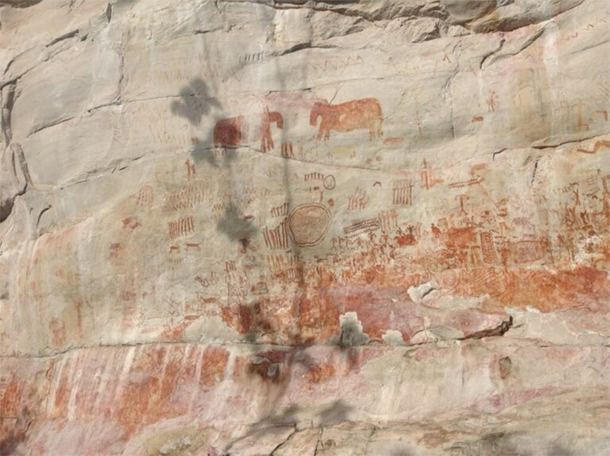 Image credit: Parques Nacionales Naturales de ColombiaUnraveling the Mysteries of the Past
One of the most puzzling aspects of the paintings is the depiction of humans appearing to be suspended from or leaping off wooden towers. Researchers theorize that such structures might have been used to help artists reach the higher sections of the rock face.
Beyond their artistic significance, the paintings provide crucial clues about early human life in the region. Excavations at rock shelters beneath the artwork have revealed some of the oldest human-occupied sites in the Amazon. Findings from these shelters include plant and animal remains, offering insight into the diet of these ancient hunter-gatherers. Their meals included a diverse range of foods, such as palm fruits, alligators, snakes, piranhas, capybaras, armadillos, and rodents like pacas.The Lasting Impact of Early Humans
Scientists believe that many of South America’s large Ice Age animals went extinct due to a combination of human activity and climate change. The LastJourney project, initiated after the Colombian government’s 2016 peace treaty with FARC rebel forces, aims to uncover how early human settlements impacted the Amazon’s biodiversity through farming and hunting.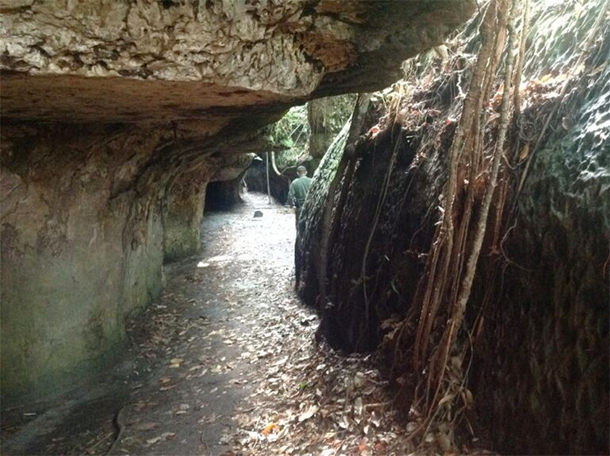 Image credit: Parques Nacionales Naturales de Colombia
“These rock paintings provide spectacular evidence of how humans interacted with the land, hunted, fished, and cultivated resources,” said José Iriarte, an archaeologist from the University of Exeter. “Art likely played a crucial role in their culture, acting as both a social connector and a way of narrating their experiences.”What Lies Ahead?
Research at the site has temporarily paused due to the global pandemic, but archaeologists are confident that further exploration will yield even more astonishing finds. Given the vastness of the surrounding rainforest, many more prehistoric wonders may still be hidden beneath the jungle’s dense foliage, waiting to be uncovered.
This extraordinary discovery not only redefines our understanding of early Amazonian cultures but also highlights the deep historical roots of human creativity and survival. The rock art of Serranía de la Lindosa stands as a testament to the ingenuity and resilience of our ancestors, preserving their stories across millennia.
Image credit: Parques Nacionales Naturales de ColombiaThe Journey to DiscoveryA team of British and Colombian archaeologists first came across this awe-inspiring site in 2017, though details of their find have only recently been shared with the public. To reach the location, researchers had to secure permissions from both the Colombian government and local rebel groups, followed by a grueling five-hour trek through the jungle. The scale of the discovery is staggering. While the total number of individual paintings has yet to be determined, estimates suggest there are tens of thousands of detailed illustrations. These depict not only animals but also early humans engaged in activities such as hunting, wearing masks, and even performing what appears to be ritualistic dances.An Ancient World in Flux
The paintings offer a unique perspective on life at the end of the last Ice Age, when the Amazon was a patchwork of savannas, thorny scrublands, and forests rather than the dense rainforest it is today. Among the depicted creatures are extinct species like palaeolama, giant sloths, and mastodons—massive herbivores that once roamed this ancient landscape.
Rock art showing humans interacting with ice age animals. (Image credit: Ella Al-Shamahi)Mark Robinson, an archaeologist at the University of Exeter and a co-researcher of the study, expressed his astonishment at the discovery: “These are incredible images created by the first inhabitants of western Amazonia. It is mind-blowing to think that people lived among and hunted creatures as large as small cars.”
Archaeologist and explorer Ella Al-Shamahi, who also visited the site, emphasized how crucial this discovery is for understanding the Amazon’s transformation over time. “Seeing Ice Age megafauna in the artwork provides a tangible marker of time,” she explained. “People don’t always realize that the Amazon has undergone significant changes—it hasn’t always been this rainforest.”
Image credit: Parques Nacionales Naturales de ColombiaUnraveling the Mysteries of the PastOne of the most puzzling aspects of the paintings is the depiction of humans appearing to be suspended from or leaping off wooden towers. Researchers theorize that such structures might have been used to help artists reach the higher sections of the rock face.
Beyond their artistic significance, the paintings provide crucial clues about early human life in the region. Excavations at rock shelters beneath the artwork have revealed some of the oldest human-occupied sites in the Amazon. Findings from these shelters include plant and animal remains, offering insight into the diet of these ancient hunter-gatherers. Their meals included a diverse range of foods, such as palm fruits, alligators, snakes, piranhas, capybaras, armadillos, and rodents like pacas.The Lasting Impact of Early Humans
Scientists believe that many of South America’s large Ice Age animals went extinct due to a combination of human activity and climate change. The LastJourney project, initiated after the Colombian government’s 2016 peace treaty with FARC rebel forces, aims to uncover how early human settlements impacted the Amazon’s biodiversity through farming and hunting.
Image credit: Parques Nacionales Naturales de Colombia“These rock paintings provide spectacular evidence of how humans interacted with the land, hunted, fished, and cultivated resources,” said José Iriarte, an archaeologist from the University of Exeter. “Art likely played a crucial role in their culture, acting as both a social connector and a way of narrating their experiences.”What Lies Ahead?
Research at the site has temporarily paused due to the global pandemic, but archaeologists are confident that further exploration will yield even more astonishing finds. Given the vastness of the surrounding rainforest, many more prehistoric wonders may still be hidden beneath the jungle’s dense foliage, waiting to be uncovered.
This extraordinary discovery not only redefines our understanding of early Amazonian cultures but also highlights the deep historical roots of human creativity and survival. The rock art of Serranía de la Lindosa stands as a testament to the ingenuity and resilience of our ancestors, preserving their stories across millennia.