ISS Astronaut Photographs Massive Sprite Over North America
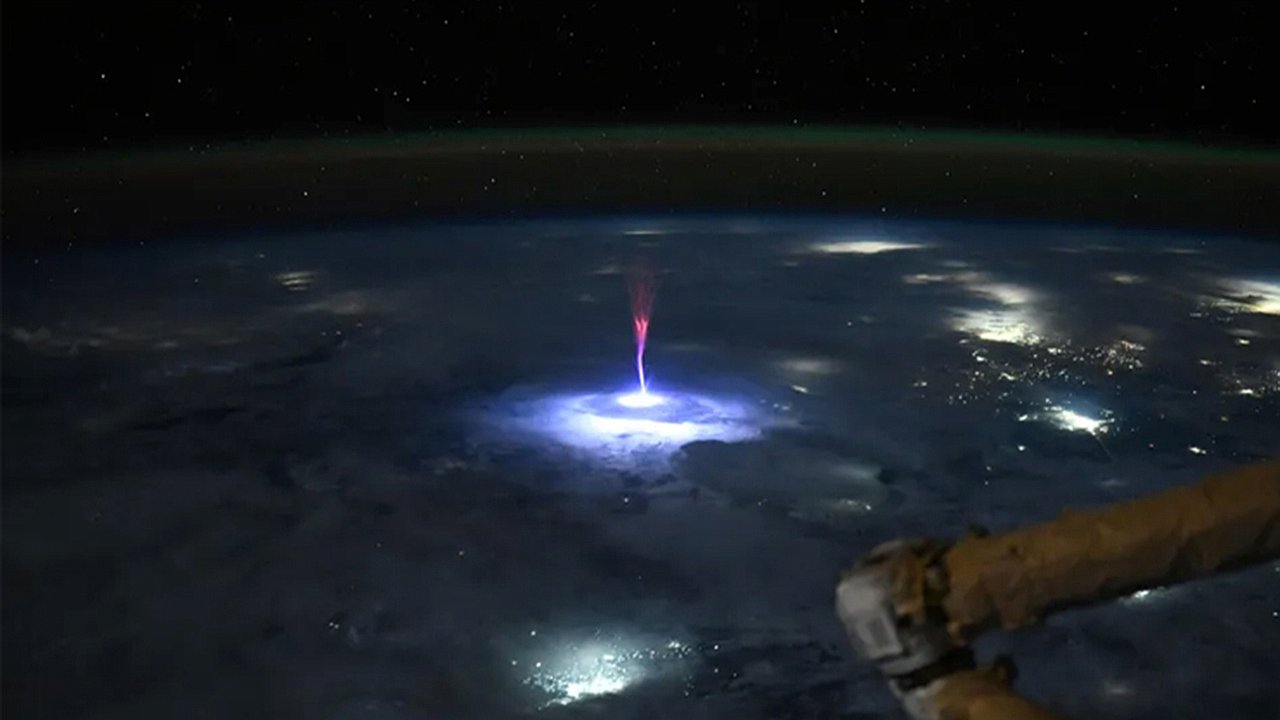
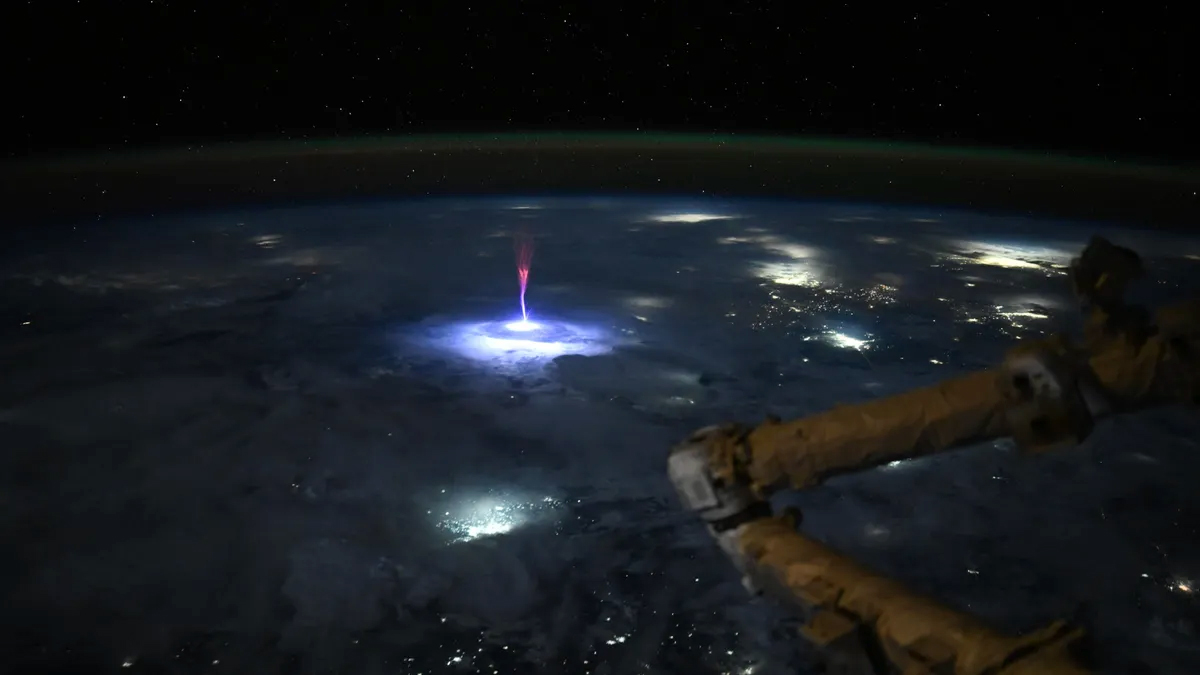
While circling 250 miles (400 kilometers) above Earth on the International Space Station (ISS), U.S. astronaut Nichole "Vapor" Ayers captured a rare and breathtaking image of a massive electrical phenomenon called a “sprite” illuminating the upper atmosphere above a thunderstorm."Sprites are TLEs — Transient Luminous Events — that occur high above thunderstorms, caused by intense lightning activity," Ayers explained in a post on X (formerly Twitter), where she shared the striking image. "From our perspective above the clouds, we get a unique vantage point. These pictures can help scientists study how these events form and interact with storms below."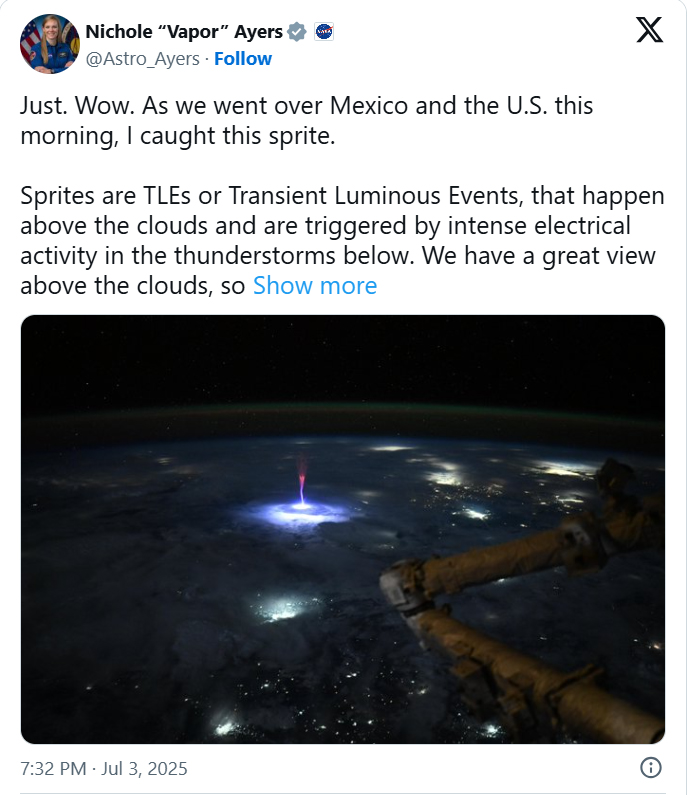 Sprites are among the most visually dramatic and scientifically mysterious atmospheric phenomena. These vibrant bursts of red and purple light erupt around 50 miles (80 kilometers) above Earth’s surface and are triggered by powerful lightning strikes. NASA describes them as taking on intricate, tentacle-like shapes that extend outward in luminous clusters, sometimes resembling jellyfish or trees in their complexity.The sprite captured by Ayers was particularly dramatic. It soared high into Earth’s upper atmosphere above regions of Mexico and the southern United States, visible in stark contrast to the glowing cities beneath it. The towering structure radiated red light, adding a surreal touch to the already awe-inspiring view of Earth from orbit.
 This image contributes to a growing collection of sprite observations as part of NASA’s "Spritacular" citizen science initiative. The project invites the public to submit photos of TLEs to help researchers build a more complete database of these enigmatic events. Contributions from astronauts aboard the ISS are proving invaluable due to their unmatched view from space.Astronauts like Ayers often take up photography while on the station, and their creative work is now advancing science in unexpected ways. With more documented sightings — both from Earth and space — scientists are inching closer to understanding why sprites form, what governs their shape and behavior, and how they interact with the atmosphere.For now, many questions remain, but as images like Ayers' continue to shed light — quite literally — on this upper-atmosphere mystery, answers may be on the horizon.
While circling 250 miles (400 kilometers) above Earth on the International Space Station (ISS), U.S. astronaut Nichole "Vapor" Ayers captured a rare and breathtaking image of a massive electrical phenomenon called a “sprite” illuminating the upper atmosphere above a thunderstorm."Sprites are TLEs — Transient Luminous Events — that occur high above thunderstorms, caused by intense lightning activity," Ayers explained in a post on X (formerly Twitter), where she shared the striking image. "From our perspective above the clouds, we get a unique vantage point. These pictures can help scientists study how these events form and interact with storms below."
Sprites are among the most visually dramatic and scientifically mysterious atmospheric phenomena. These vibrant bursts of red and purple light erupt around 50 miles (80 kilometers) above Earth’s surface and are triggered by powerful lightning strikes. NASA describes them as taking on intricate, tentacle-like shapes that extend outward in luminous clusters, sometimes resembling jellyfish or trees in their complexity.The sprite captured by Ayers was particularly dramatic. It soared high into Earth’s upper atmosphere above regions of Mexico and the southern United States, visible in stark contrast to the glowing cities beneath it. The towering structure radiated red light, adding a surreal touch to the already awe-inspiring view of Earth from orbit.This image contributes to a growing collection of sprite observations as part of NASA’s "Spritacular" citizen science initiative. The project invites the public to submit photos of TLEs to help researchers build a more complete database of these enigmatic events. Contributions from astronauts aboard the ISS are proving invaluable due to their unmatched view from space.Astronauts like Ayers often take up photography while on the station, and their creative work is now advancing science in unexpected ways. With more documented sightings — both from Earth and space — scientists are inching closer to understanding why sprites form, what governs their shape and behavior, and how they interact with the atmosphere.For now, many questions remain, but as images like Ayers' continue to shed light — quite literally — on this upper-atmosphere mystery, answers may be on the horizon.