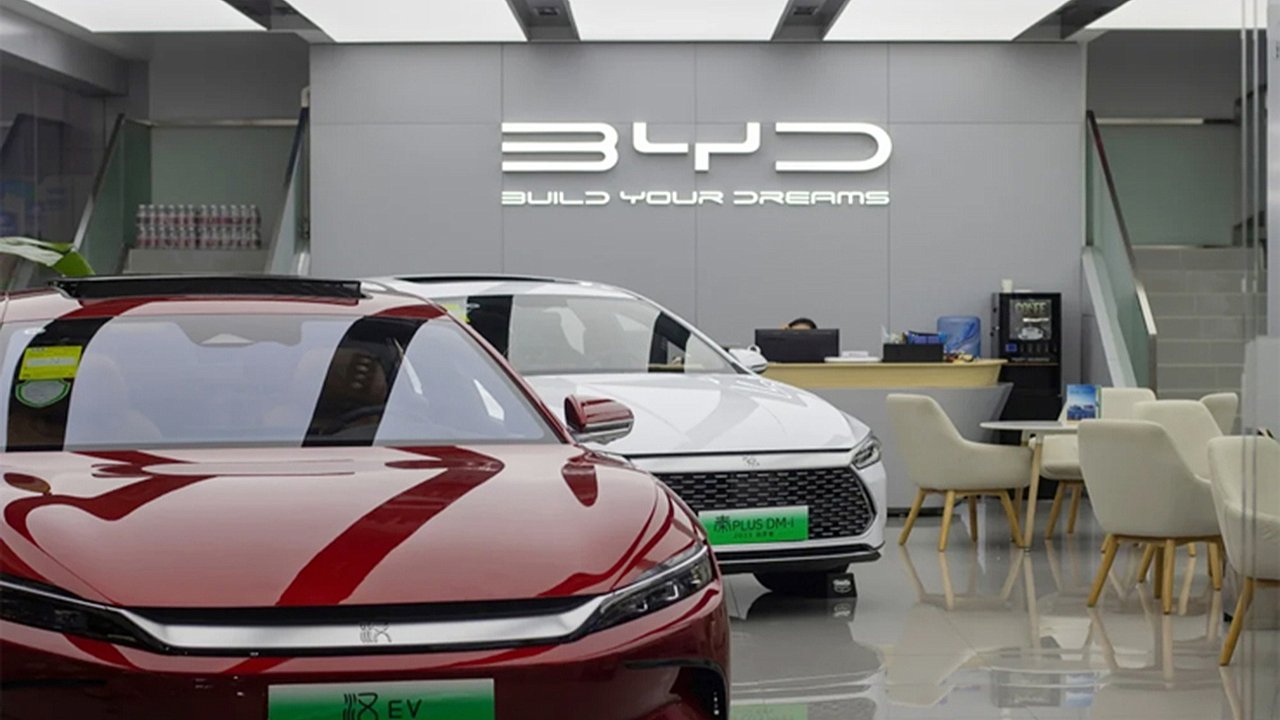
BYD shares tumble as Berkshire exitsShares of Chinese electric-vehicle giant BYD Co. fell sharply in Hong Kong after reports revealed that Warren Buffett’s Berkshire Hathaway Inc. has sold its entire stake in the company. The news, first reported by CNBC and later confirmed by a Berkshire spokesperson, marked the end of a 17-year investment relationship that had once been seen as a powerful vote of confidence in China’s electric-vehicle industry.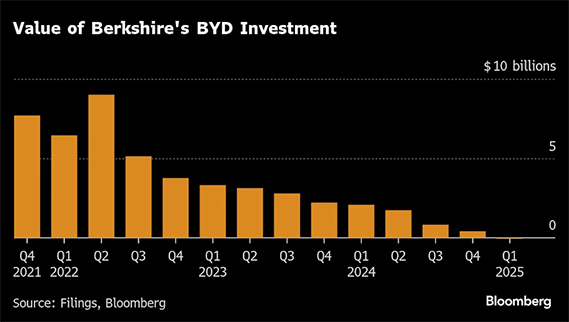 BYD’s stock fell 3.4% on Monday, ranking among the worst performers on the Hang Seng gauge of Chinese companies listed in Hong Kong. The decline came amid already heightened concerns about the company’s ability to withstand fierce competition and a price war in China’s electric-vehicle sector. With the departure of one of its most high-profile investors, questions are mounting over BYD’s future strategy and market positioning.Buffett’s long-term bet on BYDWarren Buffett’s investment in BYD dates back to September 2008, when Berkshire Hathaway acquired 225 million shares at the recommendation of his long-time business partner Charlie Munger and Himalaya Capital Chairman Li Lu. At the time, BYD was primarily known as a manufacturer of rechargeable batteries for mobile phones.Over the years, the company transformed into China’s largest producer of electric and hybrid vehicles, riding the global shift toward clean energy. Buffett’s backing was widely viewed as a turning point for BYD, helping elevate its profile both in China and abroad. From the day before Berkshire’s first purchase until March 31 of this year, BYD’s stock price surged more than 4,500%, cementing the investment as one of Berkshire’s most lucrative bets on the clean energy revolution.Berkshire’s gradual sell-off since 2022Despite the extraordinary returns, Berkshire began trimming its holdings in BYD starting in mid-2022. By last year, its ownership had fallen below the 5% disclosure threshold set by the Hong Kong Stock Exchange, meaning subsequent transactions were no longer publicly reported.According to CNBC, a Berkshire Hathaway Energy filing listed the value of its BYD investment as zero as of March 31, effectively confirming that the position has been fully liquidated. This gradual and discreet exit strategy allowed Berkshire to reduce its exposure without significantly disrupting the stock price until now.Market challenges facing BYDBYD’s recent struggles add context to Berkshire’s exit. The company’s shares have tumbled roughly 30% from their record highs reached just four months ago. The decline has been fueled by growing concerns over a brutal price war in China’s EV market, where aggressive discounting by rivals such as Tesla and newer domestic startups has put immense pressure on profit margins.While BYD remains China’s leading EV manufacturer by volume, analysts have warned that sustaining growth in such a competitive environment will require continuous innovation and stronger international expansion. Investors are watching closely to see if BYD can maintain its dominance while defending market share against both global competitors and aggressive local challengers.BYD responds to Buffett’s departureIn response to the news, BYD sought to downplay the impact of Buffett’s departure. Li Yunfei, the company’s general manager for branding and public relations, addressed the matter in a post on Chinese social media platform Weibo. “In stock investing, buying and selling are normal practices,” he wrote. “We’re grateful to Munger and Buffett for their recognition of BYD, and for their 17 years of investment, support, and companionship.”A spokesperson for BYD referred international media outlets to Li’s statement, emphasizing the company’s appreciation for the long-term partnership. However, with investor sentiment already weakened by recent stock declines, reassurance may not be enough to prevent further volatility in BYD’s share price.What Buffett’s exit means for the EV sectorBuffett’s full exit from BYD raises broader questions for the electric-vehicle sector. While Berkshire’s investment produced extraordinary gains, the timing of its departure reflects heightened caution around the sustainability of growth in the Chinese EV market.For global investors, Berkshire’s move could signal growing skepticism about Chinese automakers’ ability to maintain profitability amid intense competition. At the same time, it underscores the risk-reward balance inherent in investing in rapidly evolving industries.For BYD, the challenge now lies in proving that it can thrive without the symbolic backing of one of the world’s most respected investors. The company’s ability to sustain growth, expand internationally, and innovate in both technology and design will determine whether it can maintain its leadership in the next phase of the electric-vehicle revolution.Warren Buffett’s Berkshire Hathaway closing the chapter on its 17-year investment in BYD marks a significant moment for both the company and China’s broader electric-vehicle industry. While the exit is a financial milestone, it also carries symbolic weight, raising concerns about investor confidence in the sector.BYD, however, remains a dominant force in China’s EV market and continues to expand its global footprint. Whether it can weather the storm of rising competition and market uncertainty will be a key storyline to watch in the months ahead.
BYD’s stock fell 3.4% on Monday, ranking among the worst performers on the Hang Seng gauge of Chinese companies listed in Hong Kong. The decline came amid already heightened concerns about the company’s ability to withstand fierce competition and a price war in China’s electric-vehicle sector. With the departure of one of its most high-profile investors, questions are mounting over BYD’s future strategy and market positioning.Buffett’s long-term bet on BYDWarren Buffett’s investment in BYD dates back to September 2008, when Berkshire Hathaway acquired 225 million shares at the recommendation of his long-time business partner Charlie Munger and Himalaya Capital Chairman Li Lu. At the time, BYD was primarily known as a manufacturer of rechargeable batteries for mobile phones.Over the years, the company transformed into China’s largest producer of electric and hybrid vehicles, riding the global shift toward clean energy. Buffett’s backing was widely viewed as a turning point for BYD, helping elevate its profile both in China and abroad. From the day before Berkshire’s first purchase until March 31 of this year, BYD’s stock price surged more than 4,500%, cementing the investment as one of Berkshire’s most lucrative bets on the clean energy revolution.Berkshire’s gradual sell-off since 2022Despite the extraordinary returns, Berkshire began trimming its holdings in BYD starting in mid-2022. By last year, its ownership had fallen below the 5% disclosure threshold set by the Hong Kong Stock Exchange, meaning subsequent transactions were no longer publicly reported.According to CNBC, a Berkshire Hathaway Energy filing listed the value of its BYD investment as zero as of March 31, effectively confirming that the position has been fully liquidated. This gradual and discreet exit strategy allowed Berkshire to reduce its exposure without significantly disrupting the stock price until now.Market challenges facing BYDBYD’s recent struggles add context to Berkshire’s exit. The company’s shares have tumbled roughly 30% from their record highs reached just four months ago. The decline has been fueled by growing concerns over a brutal price war in China’s EV market, where aggressive discounting by rivals such as Tesla and newer domestic startups has put immense pressure on profit margins.While BYD remains China’s leading EV manufacturer by volume, analysts have warned that sustaining growth in such a competitive environment will require continuous innovation and stronger international expansion. Investors are watching closely to see if BYD can maintain its dominance while defending market share against both global competitors and aggressive local challengers.BYD responds to Buffett’s departureIn response to the news, BYD sought to downplay the impact of Buffett’s departure. Li Yunfei, the company’s general manager for branding and public relations, addressed the matter in a post on Chinese social media platform Weibo. “In stock investing, buying and selling are normal practices,” he wrote. “We’re grateful to Munger and Buffett for their recognition of BYD, and for their 17 years of investment, support, and companionship.”A spokesperson for BYD referred international media outlets to Li’s statement, emphasizing the company’s appreciation for the long-term partnership. However, with investor sentiment already weakened by recent stock declines, reassurance may not be enough to prevent further volatility in BYD’s share price.What Buffett’s exit means for the EV sectorBuffett’s full exit from BYD raises broader questions for the electric-vehicle sector. While Berkshire’s investment produced extraordinary gains, the timing of its departure reflects heightened caution around the sustainability of growth in the Chinese EV market.For global investors, Berkshire’s move could signal growing skepticism about Chinese automakers’ ability to maintain profitability amid intense competition. At the same time, it underscores the risk-reward balance inherent in investing in rapidly evolving industries.For BYD, the challenge now lies in proving that it can thrive without the symbolic backing of one of the world’s most respected investors. The company’s ability to sustain growth, expand internationally, and innovate in both technology and design will determine whether it can maintain its leadership in the next phase of the electric-vehicle revolution.Warren Buffett’s Berkshire Hathaway closing the chapter on its 17-year investment in BYD marks a significant moment for both the company and China’s broader electric-vehicle industry. While the exit is a financial milestone, it also carries symbolic weight, raising concerns about investor confidence in the sector.BYD, however, remains a dominant force in China’s EV market and continues to expand its global footprint. Whether it can weather the storm of rising competition and market uncertainty will be a key storyline to watch in the months ahead.