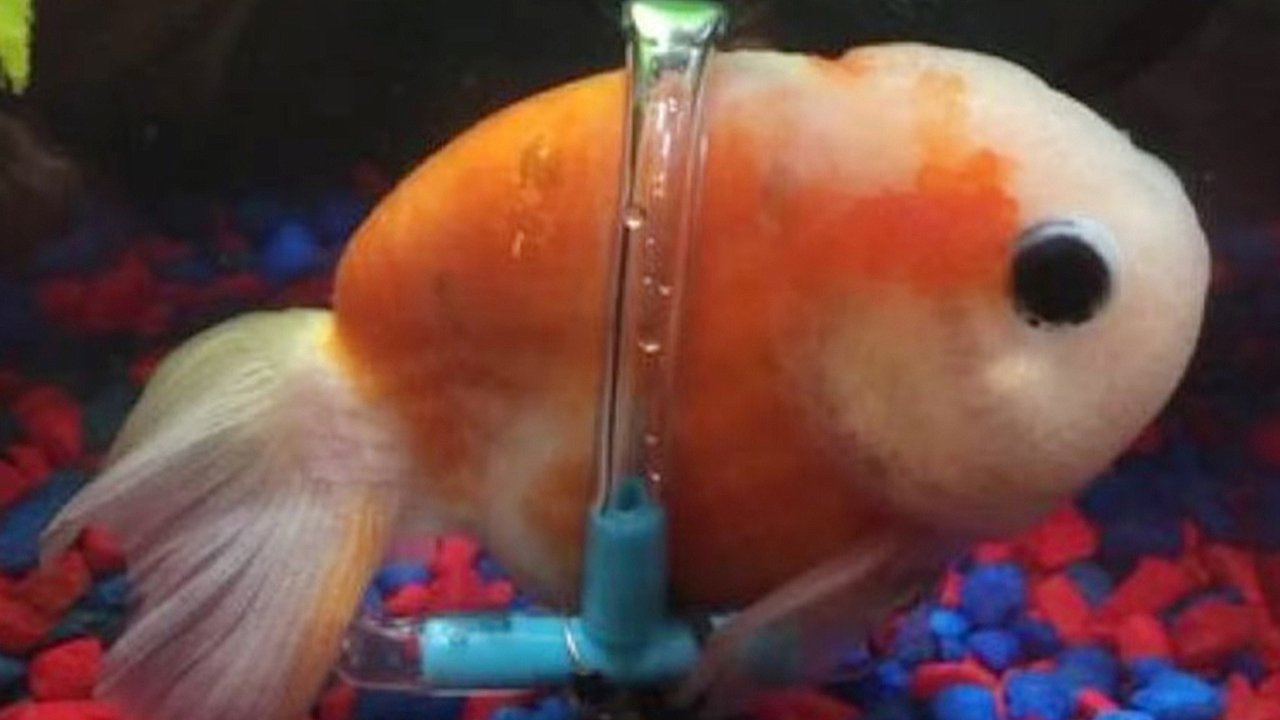
Sometimes, pets face challenges that seem impossible to overcome. For one Ranchu goldfish, a bladder problem meant spending most of his life upside down at the bottom of the tank, unable to swim properly or eat comfortably. His side was even rubbing raw from constant contact with the tank.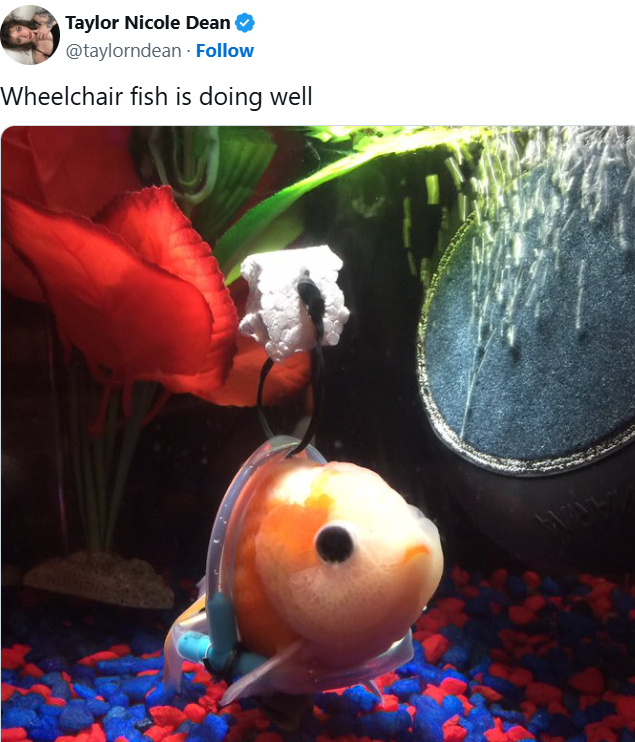 While many might have given up on a fish in this condition, Derek Burnett, a marine biology enthusiast and manager at Aquarium Designs in San Antonio, Texas, refused to do so. Determined to give the little fish a better life, Burnett created a tiny fish “wheelchair,” allowing the disabled goldfish to swim upright, move freely, and regain his strength. The story quickly captured attention online, highlighting the compassion and innovation that can transform the lives of pets with special needs.Goldfish struggling with a bladder issueThe goldfish arrived at Aquarium Designs alongside other fish that had been given up by their previous owner. While most of the other fish quickly found new homes, this particular Ranchu remained. His upside-down swimming and inability to feed easily made him a challenge for potential adopters. Derek Burnett noticed that despite the fish’s disability, he was incredibly determined to survive. “He was so tough. He was trying so hard to live,” Burnett explained. Recognizing the fish’s spirit and friendly personality, Burnett decided to take him home and find a solution to help him thrive.Creating a tiny wheelchair for a goldfishAt first, Burnett experimented with special diets to help the goldfish recover, but nothing worked. That’s when he had a creative idea: why not build a small device to help him swim? Using aquarium-safe materials, Burnett fashioned a buoyancy device designed to support the goldfish’s body without causing abrasions.
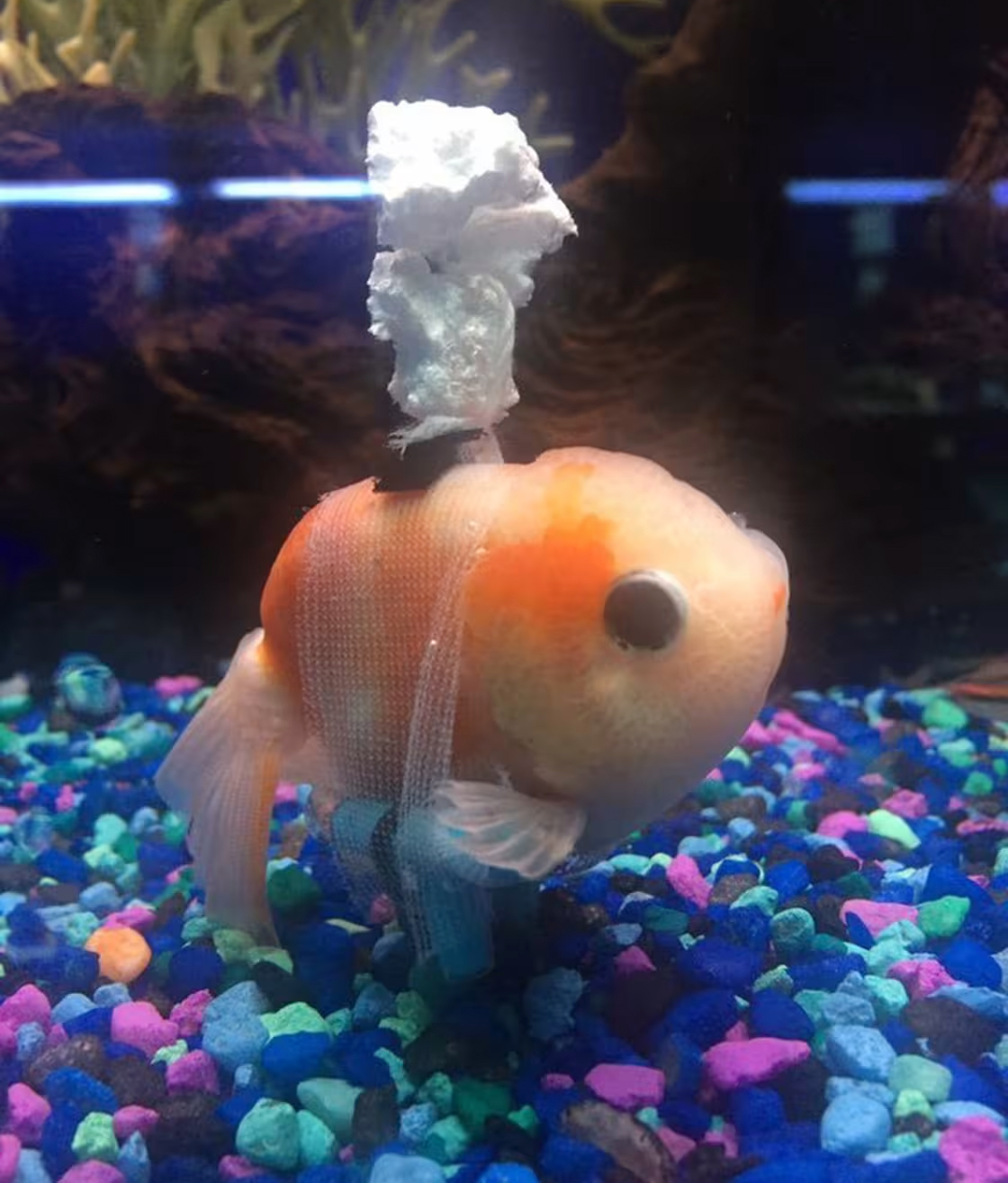 The device combines lightweight tubing, netting, Styrofoam for flotation, and small weights to maintain proper balance. For the first time, the goldfish was able to swim upright, feed comfortably, and avoid injuries caused by dragging along the tank bottom. Burnett described the transformation as life-changing, both for the fish and for himself.Public reaction and online attentionBurnett’s innovation didn’t stay private for long. Animal lover and content creator Taylor Nicole Dean, familiar with Burnett through local fish circles, shared photos of the fish and his tiny wheelchair on Twitter. The images quickly went viral, captivating animal enthusiasts and inspiring people around the world. Dean noted that the story highlighted how complex and deserving of care fish can be. Experts, like Leigh Clayton from the National Aquarium, emphasized that innovative devices for animals with medical needs are becoming increasingly common, improving their health and overall welfare.Life with the wheelchairNow, the goldfish spends most of his time in the specially designed wheelchair, where he swims comfortably and enjoys interacting with visitors. While he cannot move efficiently without the device, he seems content, strong, and even playful. Feeding time has become easier and safer, preventing injuries from rubbing against the tank. Burnett affectionately regards the fish as a family member, highlighting the emotional bond between pets and their owners. The wheelchair has not only improved the goldfish’s physical health but also enhanced his overall quality of life.Inspiring other pet ownersBurnett’s innovation has sparked interest from other fish owners facing similar challenges. Many have reached out for advice on caring for disabled fish, inspired by his dedication and creativity. By sharing his approach, Burnett hopes to encourage others to look for solutions rather than giving up on pets with disabilities. His work demonstrates that with patience, knowledge, and compassion, even small innovations can make a significant difference in the lives of animals. The goldfish’s story has become a symbol of perseverance, love, and the importance of treating all pets with care and respect.
While many might have given up on a fish in this condition, Derek Burnett, a marine biology enthusiast and manager at Aquarium Designs in San Antonio, Texas, refused to do so. Determined to give the little fish a better life, Burnett created a tiny fish “wheelchair,” allowing the disabled goldfish to swim upright, move freely, and regain his strength. The story quickly captured attention online, highlighting the compassion and innovation that can transform the lives of pets with special needs.Goldfish struggling with a bladder issueThe goldfish arrived at Aquarium Designs alongside other fish that had been given up by their previous owner. While most of the other fish quickly found new homes, this particular Ranchu remained. His upside-down swimming and inability to feed easily made him a challenge for potential adopters. Derek Burnett noticed that despite the fish’s disability, he was incredibly determined to survive. “He was so tough. He was trying so hard to live,” Burnett explained. Recognizing the fish’s spirit and friendly personality, Burnett decided to take him home and find a solution to help him thrive.Creating a tiny wheelchair for a goldfishAt first, Burnett experimented with special diets to help the goldfish recover, but nothing worked. That’s when he had a creative idea: why not build a small device to help him swim? Using aquarium-safe materials, Burnett fashioned a buoyancy device designed to support the goldfish’s body without causing abrasions.The device combines lightweight tubing, netting, Styrofoam for flotation, and small weights to maintain proper balance. For the first time, the goldfish was able to swim upright, feed comfortably, and avoid injuries caused by dragging along the tank bottom. Burnett described the transformation as life-changing, both for the fish and for himself.Public reaction and online attentionBurnett’s innovation didn’t stay private for long. Animal lover and content creator Taylor Nicole Dean, familiar with Burnett through local fish circles, shared photos of the fish and his tiny wheelchair on Twitter. The images quickly went viral, captivating animal enthusiasts and inspiring people around the world. Dean noted that the story highlighted how complex and deserving of care fish can be. Experts, like Leigh Clayton from the National Aquarium, emphasized that innovative devices for animals with medical needs are becoming increasingly common, improving their health and overall welfare.Life with the wheelchairNow, the goldfish spends most of his time in the specially designed wheelchair, where he swims comfortably and enjoys interacting with visitors. While he cannot move efficiently without the device, he seems content, strong, and even playful. Feeding time has become easier and safer, preventing injuries from rubbing against the tank. Burnett affectionately regards the fish as a family member, highlighting the emotional bond between pets and their owners. The wheelchair has not only improved the goldfish’s physical health but also enhanced his overall quality of life.Inspiring other pet ownersBurnett’s innovation has sparked interest from other fish owners facing similar challenges. Many have reached out for advice on caring for disabled fish, inspired by his dedication and creativity. By sharing his approach, Burnett hopes to encourage others to look for solutions rather than giving up on pets with disabilities. His work demonstrates that with patience, knowledge, and compassion, even small innovations can make a significant difference in the lives of animals. The goldfish’s story has become a symbol of perseverance, love, and the importance of treating all pets with care and respect.