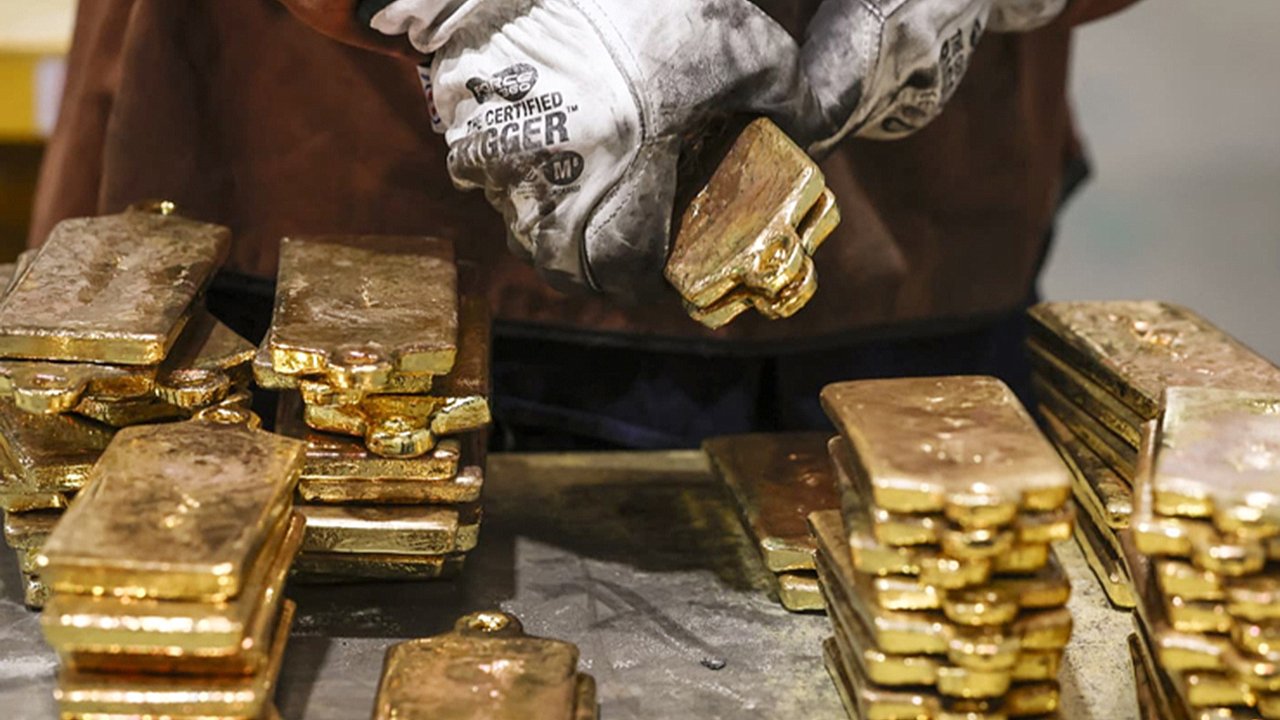
Gold prices soared to historic highs on Wednesday after the U.S. Federal Reserve announced a quarter-point interest rate cut, fueling strong demand for the precious metal. Spot gold climbed 0.4% to $3,707.40 per ounce by mid-afternoon trading in New York, setting a new record and highlighting the metal’s appeal as a safe-haven asset. While December futures settled slightly lower at $3,717.80, the broader market momentum remained firmly bullish. The Fed’s decision marks a significant shift in monetary policy, sparking optimism for gold bulls who see reduced interest rates as a tailwind for non-yielding assets. Investors worldwide are watching the precious metals market closely, as geopolitical uncertainties and inflationary pressures continue to add fuel to gold’s rally.Why the Federal Reserve cut ratesThe Federal Reserve reduced interest rates by 25 basis points at its latest policy meeting, citing signs of economic slowdown and persistent concerns about achieving its inflation target. Policymakers emphasized that the decision was aimed at supporting growth and stabilizing financial markets. Lower interest rates typically weaken the U.S. dollar, making gold more attractive to international buyers. This monetary easing also reduces the opportunity cost of holding non-yielding assets like gold, strengthening the metal’s role as a safe-haven during uncertain times.Investor demand for safe-haven assetsIn times of global uncertainty, investors often turn to gold as a hedge against volatility and inflation. The latest rally underscores the market’s appetite for stability amid fluctuating equity markets and geopolitical tensions. Demand for gold exchange-traded funds (ETFs) and physical bullion has increased steadily over recent weeks, further pushing prices higher. With central banks diversifying reserves and retail investors seeking security, gold continues to hold a unique position as both a wealth preservation tool and a speculative opportunity.Impact on global marketsThe surge in gold prices has ripple effects across global markets. A stronger gold price often signals investor caution about riskier assets such as equities and emerging market currencies. Stock markets showed mixed reactions following the Fed’s rate cut, with some sectors benefiting from cheaper borrowing costs while others suffered from weaker dollar-driven trade imbalances. Meanwhile, silver and platinum also posted gains, benefiting from the broader precious metals rally. Analysts suggest that if gold maintains momentum above $3,700, it could trigger further speculative buying and test even higher thresholds.Outlook for gold pricesLooking ahead, analysts remain divided on whether gold’s rally can sustain its pace. Optimists argue that continued monetary easing, ongoing geopolitical risks, and stubborn inflation could push prices toward new milestones in the coming months. Some forecasts suggest that gold could climb above $3,800 if global uncertainty persists. However, others warn that if inflation pressures ease or the Fed signals a pause in rate cuts, gold could face corrective pullbacks. Regardless, most experts agree that gold will remain a central focus for investors navigating an unpredictable economic landscape.The role of inflation and the U.S. dollarAnother key factor shaping gold’s trajectory is the interplay between inflation and the U.S. dollar. Persistent inflationary pressures make gold more attractive as a store of value, while a weaker dollar enhances its affordability for overseas buyers. The Fed’s recent policy action reinforces concerns that inflation will remain a challenge in the near term, which could sustain demand for gold. If the dollar continues to soften, the precious metal may gain even more traction in global markets.What investors should watch nextFor investors, the most critical indicators to monitor include the Fed’s forward guidance, upcoming economic data releases, and international geopolitical developments. Employment figures, consumer price index data, and global trade reports will likely play a decisive role in shaping market expectations. At the same time, escalating conflicts or trade disputes could further increase demand for safe-haven assets. Whether investors are trading futures, ETFs, or physical bullion, vigilance and flexibility will be essential in capitalizing on gold’s next major move.
While December futures settled slightly lower at $3,717.80, the broader market momentum remained firmly bullish. The Fed’s decision marks a significant shift in monetary policy, sparking optimism for gold bulls who see reduced interest rates as a tailwind for non-yielding assets. Investors worldwide are watching the precious metals market closely, as geopolitical uncertainties and inflationary pressures continue to add fuel to gold’s rally.Why the Federal Reserve cut ratesThe Federal Reserve reduced interest rates by 25 basis points at its latest policy meeting, citing signs of economic slowdown and persistent concerns about achieving its inflation target. Policymakers emphasized that the decision was aimed at supporting growth and stabilizing financial markets. Lower interest rates typically weaken the U.S. dollar, making gold more attractive to international buyers. This monetary easing also reduces the opportunity cost of holding non-yielding assets like gold, strengthening the metal’s role as a safe-haven during uncertain times.Investor demand for safe-haven assetsIn times of global uncertainty, investors often turn to gold as a hedge against volatility and inflation. The latest rally underscores the market’s appetite for stability amid fluctuating equity markets and geopolitical tensions. Demand for gold exchange-traded funds (ETFs) and physical bullion has increased steadily over recent weeks, further pushing prices higher. With central banks diversifying reserves and retail investors seeking security, gold continues to hold a unique position as both a wealth preservation tool and a speculative opportunity.Impact on global marketsThe surge in gold prices has ripple effects across global markets. A stronger gold price often signals investor caution about riskier assets such as equities and emerging market currencies. Stock markets showed mixed reactions following the Fed’s rate cut, with some sectors benefiting from cheaper borrowing costs while others suffered from weaker dollar-driven trade imbalances. Meanwhile, silver and platinum also posted gains, benefiting from the broader precious metals rally. Analysts suggest that if gold maintains momentum above $3,700, it could trigger further speculative buying and test even higher thresholds.Outlook for gold pricesLooking ahead, analysts remain divided on whether gold’s rally can sustain its pace. Optimists argue that continued monetary easing, ongoing geopolitical risks, and stubborn inflation could push prices toward new milestones in the coming months. Some forecasts suggest that gold could climb above $3,800 if global uncertainty persists. However, others warn that if inflation pressures ease or the Fed signals a pause in rate cuts, gold could face corrective pullbacks. Regardless, most experts agree that gold will remain a central focus for investors navigating an unpredictable economic landscape.The role of inflation and the U.S. dollarAnother key factor shaping gold’s trajectory is the interplay between inflation and the U.S. dollar. Persistent inflationary pressures make gold more attractive as a store of value, while a weaker dollar enhances its affordability for overseas buyers. The Fed’s recent policy action reinforces concerns that inflation will remain a challenge in the near term, which could sustain demand for gold. If the dollar continues to soften, the precious metal may gain even more traction in global markets.What investors should watch nextFor investors, the most critical indicators to monitor include the Fed’s forward guidance, upcoming economic data releases, and international geopolitical developments. Employment figures, consumer price index data, and global trade reports will likely play a decisive role in shaping market expectations. At the same time, escalating conflicts or trade disputes could further increase demand for safe-haven assets. Whether investors are trading futures, ETFs, or physical bullion, vigilance and flexibility will be essential in capitalizing on gold’s next major move.