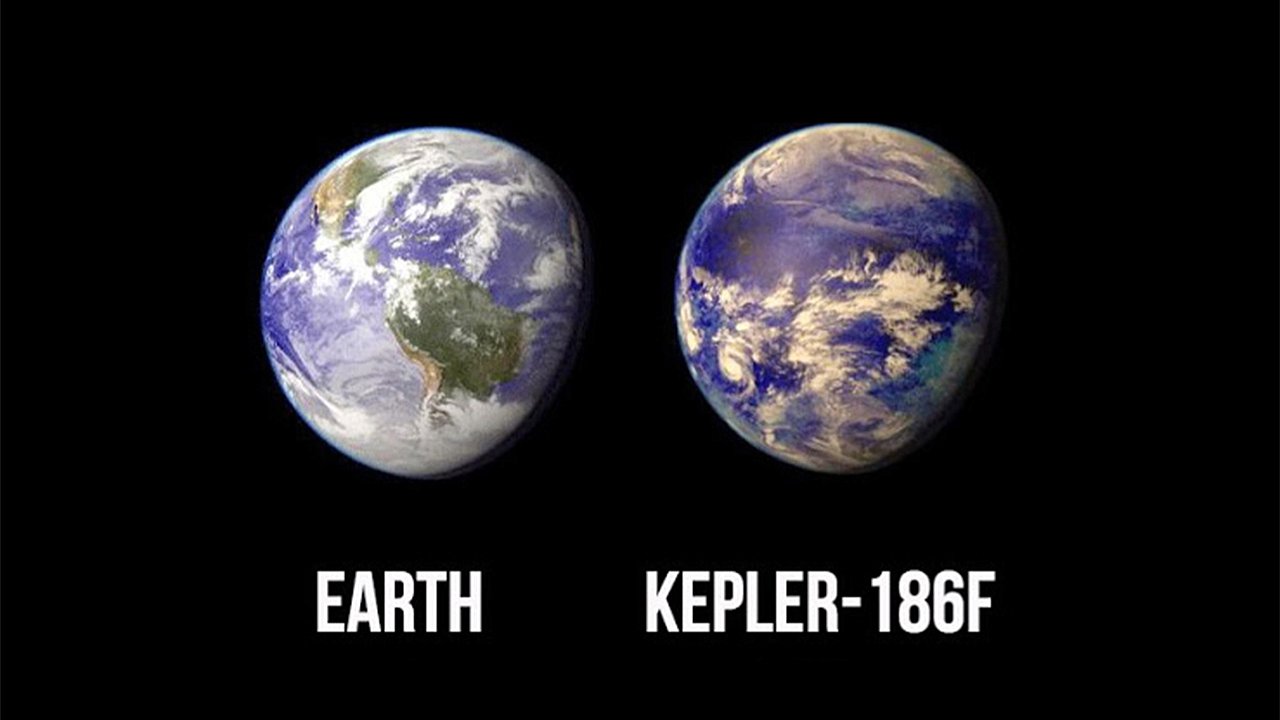
NASA’s Kepler Space Telescope has made a groundbreaking discovery: an Earth-sized planet located in the habitable zone of a distant star. This planet, known as Kepler-186f, is about 500 light-years away in the Cygnus constellation. The habitable zone, often referred to as the "Goldilocks zone," is the region around a star where conditions may be just right for liquid water to exist on a planet's surface, making it a prime candidate for the potential development of life.Though scientists estimate that there are at least 40 billion Earth-sized planets in our Milky Way galaxy, Kepler-186f is the first confirmed planet of its size found within the habitable zone of another star.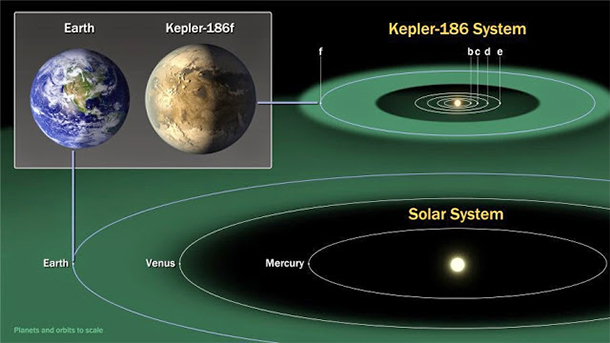 Kepler-186f is part of a larger system with four other planets orbiting the same star. While this star is smaller and cooler than our Sun, the fact that Kepler-186f resides in the habitable zone significantly increases the possibility of it supporting life.“We only know of one planet that sustains life—Earth. As we search for life beyond our solar system, we focus on finding planets that share similar characteristics with Earth,” said Elisa Quintana, a research scientist at NASA’s Ames Research Center and lead author of the study published in Science. “The discovery of an Earth-sized planet in the habitable zone marks a monumental step forward.”The star that Kepler-186f orbits is about half the size and mass of our Sun, and it provides only a third of the energy that Earth receives. Kepler-186f completes its orbit around the star every 130 days, making it a prime subject for further investigation into its ability to host life.
Kepler-186f is part of a larger system with four other planets orbiting the same star. While this star is smaller and cooler than our Sun, the fact that Kepler-186f resides in the habitable zone significantly increases the possibility of it supporting life.“We only know of one planet that sustains life—Earth. As we search for life beyond our solar system, we focus on finding planets that share similar characteristics with Earth,” said Elisa Quintana, a research scientist at NASA’s Ames Research Center and lead author of the study published in Science. “The discovery of an Earth-sized planet in the habitable zone marks a monumental step forward.”The star that Kepler-186f orbits is about half the size and mass of our Sun, and it provides only a third of the energy that Earth receives. Kepler-186f completes its orbit around the star every 130 days, making it a prime subject for further investigation into its ability to host life.