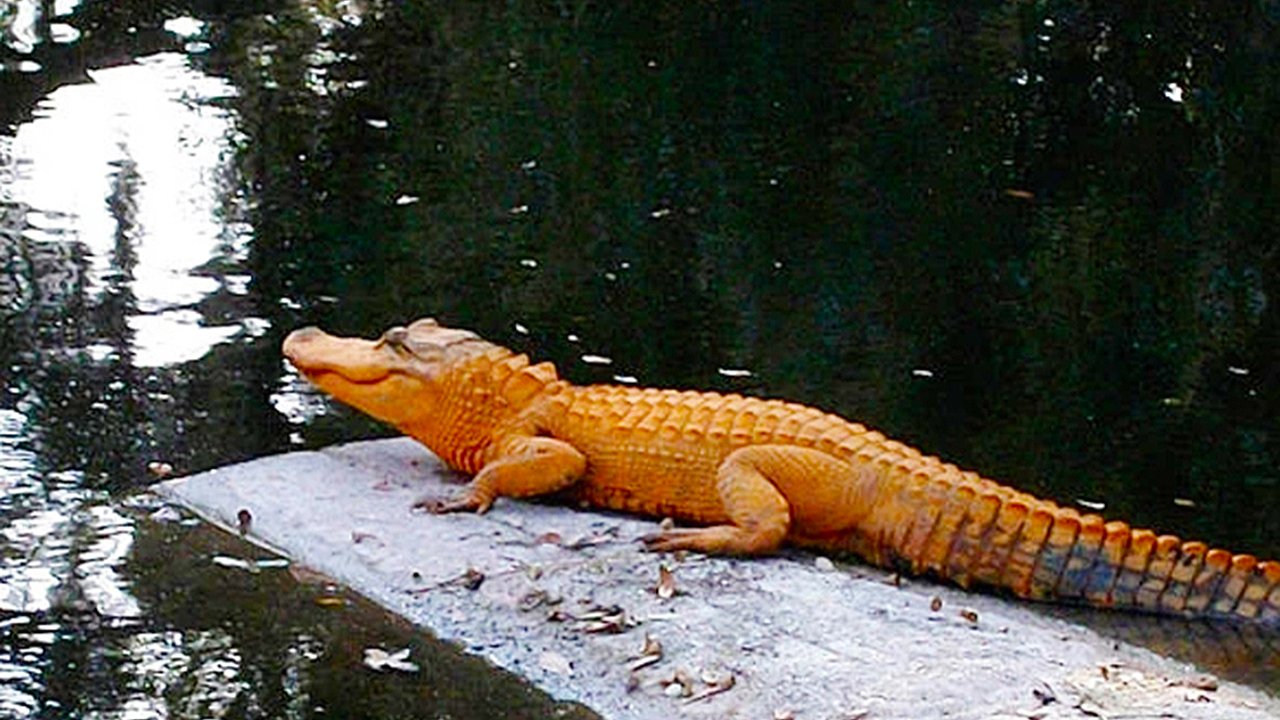
A strange sight along the riverbankImagine walking a quiet river path and spotting a reptile stretched out in the sun, its skin a shocking, bright orange that looks almost too unnatural to be real. This is exactly what happened in South Carolina, where residents recently shared photos of an alligator that seemed to glow like a traffic cone with teeth. The sight spread quickly online, stirring debates about whether someone painted the animal, whether it was sick, or if it might even be a newly discovered species.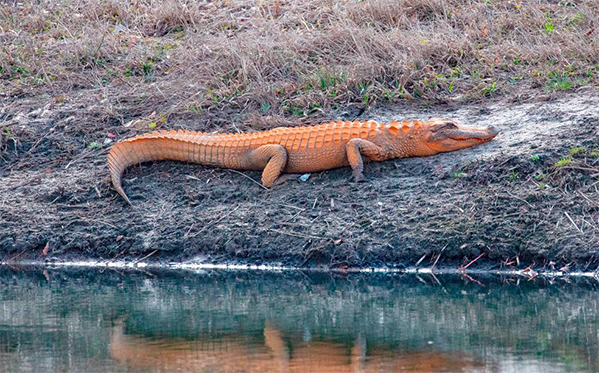 For locals, this isn’t the first time such a creature has appeared. Orange alligators occasionally surface after winter, leaving people amazed and a little uneasy. The truth, however, is far less mysterious than it looks—and it reveals just how much the natural and human-shaped environments of the Lowcountry are connected.Why do alligators turn orange?The bright orange color that shocks so many observers is not a natural genetic trait or evidence of a new alligator species. According to wildlife experts, the explanation is far simpler: staining. During the colder months, alligators often hunker down in culverts, retention ponds, and other waterways where water can be rich in iron. Rusty pipes and clay-based soils add iron oxides that cling to the rough, bumpy surface of gator scales. The result is a reptile that looks like it has received an artificial spray tan, courtesy of the mud and minerals in its environment.This coloration is temporary. As the seasons shift and the alligator returns to cleaner waterways, the orange hues gradually fade. The process may take several swims, a shedding of old skin, or even longer, but beneath the surface remains the same American alligator that has thrived in South Carolina’s wetlands for millions of years.Online debates and popular theoriesEach time an orange gator surfaces, online forums and neighborhood groups light up with theories. Some people assume the color is caused by algae, while others point to pollution or possible health issues. Algae can sometimes grow on reptile scales, but experts note that the crisp, metallic orange pattern aligns far more closely with iron-rich sediments and clay deposits.While the truth may be less sensational than the idea of a mutant gator or a new species, it still captures public imagination. The photographs continue to spread widely because they show a rare and striking example of how environment leaves its mark on wildlife.Does the orange color harm the alligator?One of the most common questions raised is whether this unusual coloration is harmful. So far, there is no evidence that the orange tint poses any health risks to the alligator. It appears to be purely cosmetic, a natural byproduct of spending time in iron-heavy or clay-rich water.The real danger arises not for the gator but for people. A brightly colored reptile draws attention, and many curious onlookers may be tempted to get closer than they should. Despite its unusual look, an orange alligator is still a wild predator with strong jaws and lightning-fast reflexes. Wildlife officials strongly advise keeping a safe distance, using zoom lenses for photos, and never attempting to approach or interact with the animal.What these sightings reveal about human impactThe mystery of the orange gator also highlights how much human infrastructure overlaps with natural habitats. Storm drains, culverts, retention ponds, and old pipes form micro-ecosystems that wildlife uses to survive through winter. When alligators or other animals spend extended periods in these spaces, they often carry the environmental “signature” of the place on their bodies.This serves as a reminder that even routine construction materials—like iron pipes or clay-rich soil—can shape the way animals look and live. In a sense, the orange alligator is a living symbol of the intersection between modern development and ancient wetlands.Staying safe around unusual wildlife sightingsIf you encounter a brightly colored gator along a river path or pond, there’s no reason to panic. The reptile isn’t radioactive or alien—it’s simply wearing the colors of the landscape. Over time, the orange will fade as the animal sheds skin and moves into cleaner water.However, safety should always come first. Keep pets leashed, admire from a safe distance, and avoid disturbing the animal. If the alligator is in a high-traffic or risky area, local wildlife authorities should be notified so they can monitor the situation.And if you happen to capture a photograph, sharing it responsibly can help educate others about the fascinating ways the environment leaves visible marks on its inhabitants. These rare moments remind us that South Carolina’s wetlands are full of surprises—sometimes glowing as brightly as a traffic cone.Orange alligator sightings in South Carolina may appear shocking, but they are natural, harmless, and temporary. Caused by environmental staining from iron-rich waters and clay soils, the unusual coloration serves as a vivid example of how wildlife adapts and interacts with human-shaped landscapes. While the gator’s color may fade, the story it creates will remain unforgettable.
For locals, this isn’t the first time such a creature has appeared. Orange alligators occasionally surface after winter, leaving people amazed and a little uneasy. The truth, however, is far less mysterious than it looks—and it reveals just how much the natural and human-shaped environments of the Lowcountry are connected.Why do alligators turn orange?The bright orange color that shocks so many observers is not a natural genetic trait or evidence of a new alligator species. According to wildlife experts, the explanation is far simpler: staining. During the colder months, alligators often hunker down in culverts, retention ponds, and other waterways where water can be rich in iron. Rusty pipes and clay-based soils add iron oxides that cling to the rough, bumpy surface of gator scales. The result is a reptile that looks like it has received an artificial spray tan, courtesy of the mud and minerals in its environment.This coloration is temporary. As the seasons shift and the alligator returns to cleaner waterways, the orange hues gradually fade. The process may take several swims, a shedding of old skin, or even longer, but beneath the surface remains the same American alligator that has thrived in South Carolina’s wetlands for millions of years.Online debates and popular theoriesEach time an orange gator surfaces, online forums and neighborhood groups light up with theories. Some people assume the color is caused by algae, while others point to pollution or possible health issues. Algae can sometimes grow on reptile scales, but experts note that the crisp, metallic orange pattern aligns far more closely with iron-rich sediments and clay deposits.While the truth may be less sensational than the idea of a mutant gator or a new species, it still captures public imagination. The photographs continue to spread widely because they show a rare and striking example of how environment leaves its mark on wildlife.Does the orange color harm the alligator?One of the most common questions raised is whether this unusual coloration is harmful. So far, there is no evidence that the orange tint poses any health risks to the alligator. It appears to be purely cosmetic, a natural byproduct of spending time in iron-heavy or clay-rich water.The real danger arises not for the gator but for people. A brightly colored reptile draws attention, and many curious onlookers may be tempted to get closer than they should. Despite its unusual look, an orange alligator is still a wild predator with strong jaws and lightning-fast reflexes. Wildlife officials strongly advise keeping a safe distance, using zoom lenses for photos, and never attempting to approach or interact with the animal.What these sightings reveal about human impactThe mystery of the orange gator also highlights how much human infrastructure overlaps with natural habitats. Storm drains, culverts, retention ponds, and old pipes form micro-ecosystems that wildlife uses to survive through winter. When alligators or other animals spend extended periods in these spaces, they often carry the environmental “signature” of the place on their bodies.This serves as a reminder that even routine construction materials—like iron pipes or clay-rich soil—can shape the way animals look and live. In a sense, the orange alligator is a living symbol of the intersection between modern development and ancient wetlands.Staying safe around unusual wildlife sightingsIf you encounter a brightly colored gator along a river path or pond, there’s no reason to panic. The reptile isn’t radioactive or alien—it’s simply wearing the colors of the landscape. Over time, the orange will fade as the animal sheds skin and moves into cleaner water.However, safety should always come first. Keep pets leashed, admire from a safe distance, and avoid disturbing the animal. If the alligator is in a high-traffic or risky area, local wildlife authorities should be notified so they can monitor the situation.And if you happen to capture a photograph, sharing it responsibly can help educate others about the fascinating ways the environment leaves visible marks on its inhabitants. These rare moments remind us that South Carolina’s wetlands are full of surprises—sometimes glowing as brightly as a traffic cone.Orange alligator sightings in South Carolina may appear shocking, but they are natural, harmless, and temporary. Caused by environmental staining from iron-rich waters and clay soils, the unusual coloration serves as a vivid example of how wildlife adapts and interacts with human-shaped landscapes. While the gator’s color may fade, the story it creates will remain unforgettable.