Point Nemo: Earth's Loneliest Coordinates in the Heart of the Pacific. This enigmatic location captivates the curiosity of researchers, explorers, and sci-fi fans alike.Where Is Point Nemo?
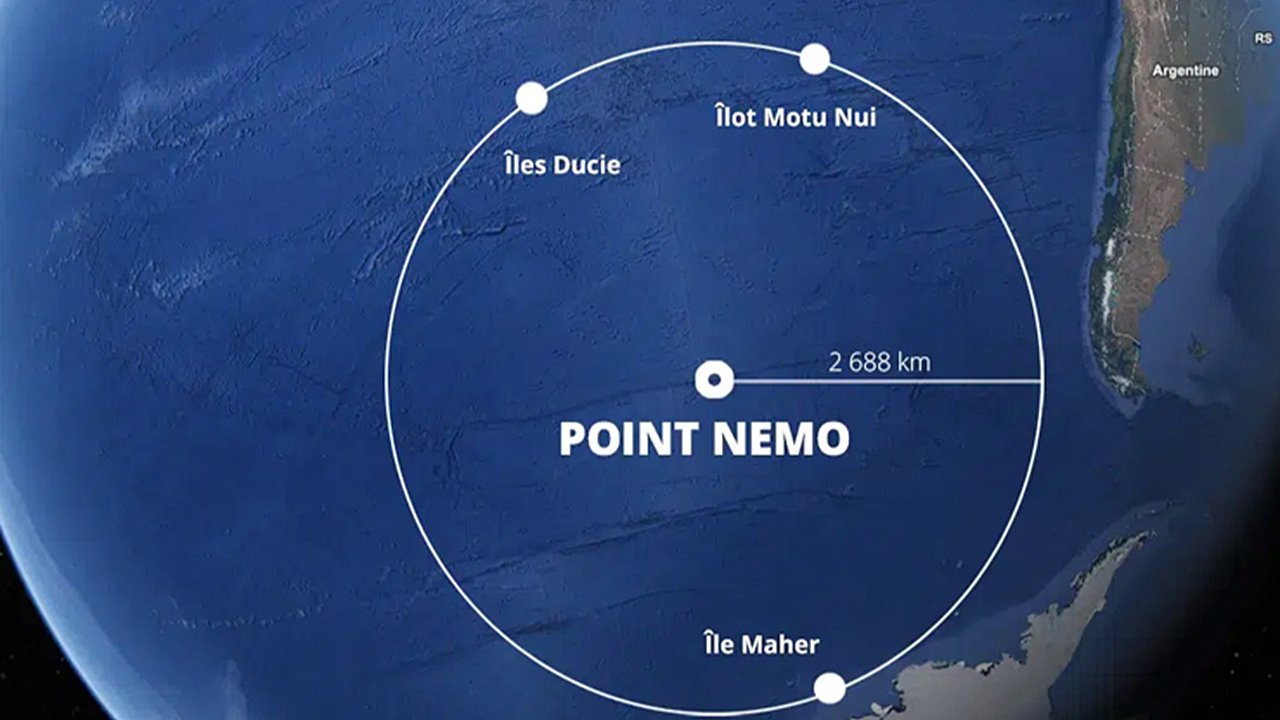
First identified in 1992 by Canadian-Croatian engineer Hrvoje Lukatela through advanced geospatial algorithms, Point Nemo earned its name from Jules Verne’s legendary character Captain Nemo, the solitary explorer of Twenty Thousand Leagues Under the Sea. The term “Nemo” itself means “no one” in Latin, which perfectly reflects the isolation of the place.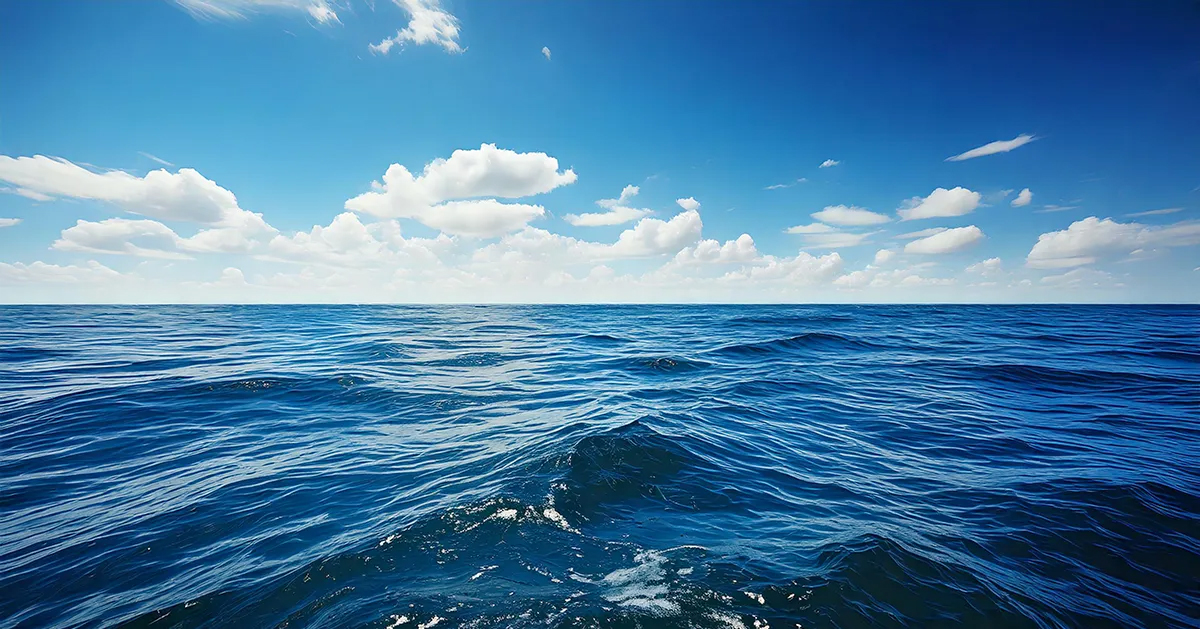 Positioned within the South Pacific, Point Nemo is surrounded by the closest landmasses—Ducie Island, Motu Nui (near Easter Island), and Maher Island in Antarctica—all located precisely 2,688 kilometers away. From this silent center of the ocean, not a single speck of land can be seen in any direction—only an endless horizon of sea and sky.Closer to Astronauts Than Humans
The remoteness of Point Nemo is so extreme that the nearest people are often orbiting the planet overhead. When astronauts aboard the International Space Station fly above this stretch of ocean, they are frequently closer to Point Nemo than anyone on land. With the ISS cruising at an altitude between 330 and 410 kilometers, it highlights just how isolated this point on Earth truly is.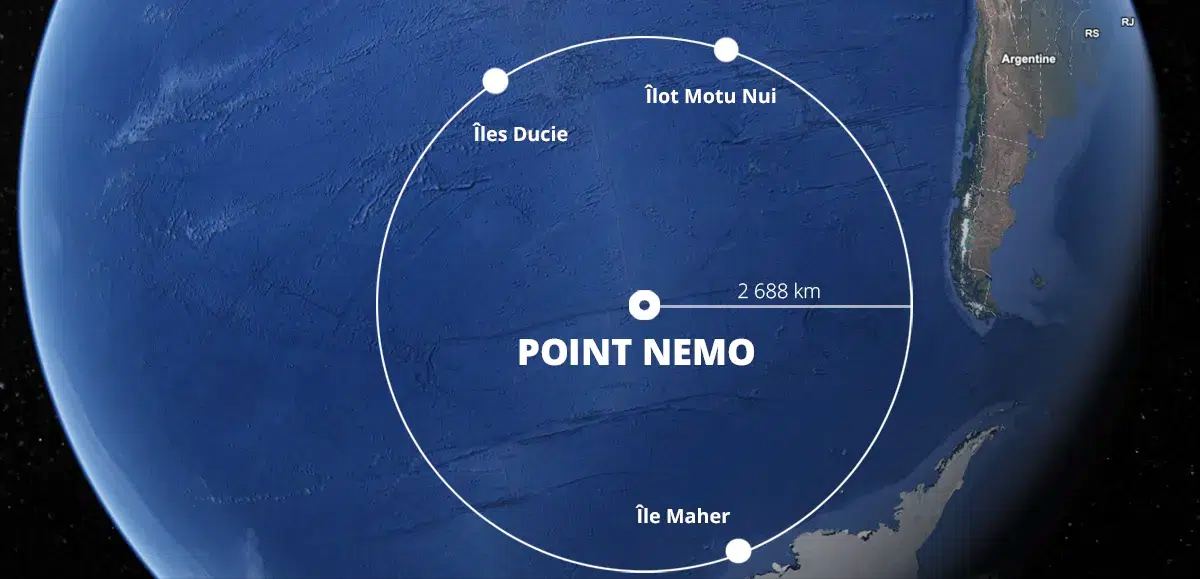 Earth’s Spacecraft Graveyard
Despite its lifeless nature, Point Nemo plays an important role in space exploration history. It serves as a designated "spacecraft cemetery," where retired satellites and decommissioned space stations are directed to crash. Its extreme isolation makes it the safest place on the planet to dispose of falling space debris. Over 260 objects—including parts of Russia’s Mir space station—now rest in its depths, and by 2031, the ISS itself is expected to be laid to rest here.A Lifeless Ocean Vortex
Point Nemo lies within the South Pacific Gyre, a massive swirl of ocean currents that block nutrient-rich waters from entering the area. As a result, it's one of the most biologically barren places in the world's oceans. Marine organisms struggle to survive here, making it inhospitable for both sea creatures and human presence. Its emptiness makes it ideal for spacecraft disposal, but it’s a virtual desert of life beneath the waves.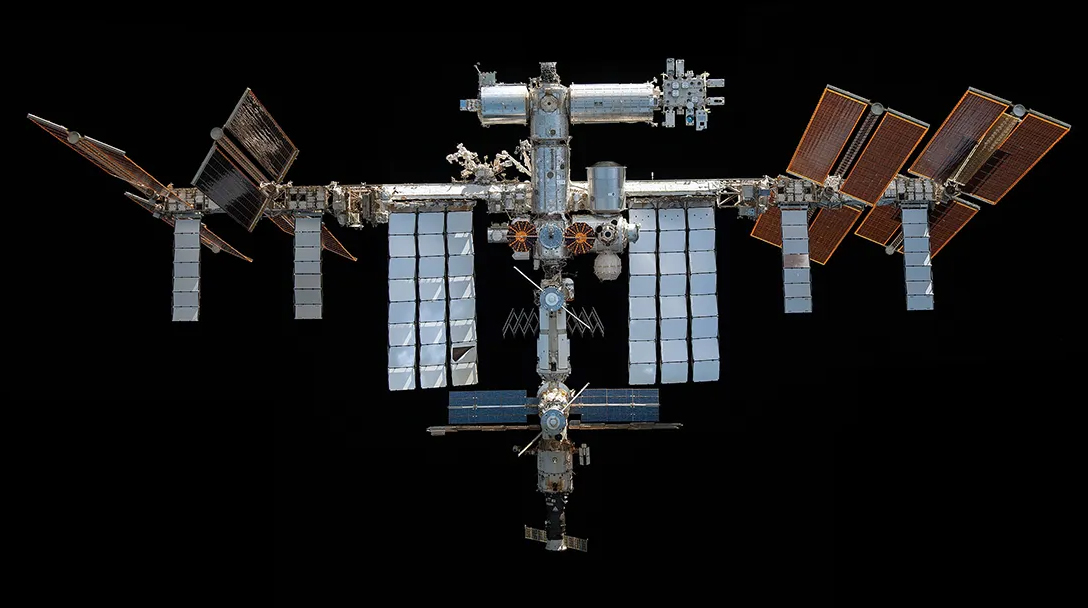 Legends and Oceanic Lore
With its surreal solitude, Point Nemo has sparked countless speculations and conspiracy theories. From tales of hidden underwater bases to stories of alien activity, it has fueled imaginations for decades. In 1997, a powerful, low-frequency sound—dubbed “The Bloop”—was recorded in the area, igniting theories of giant sea creatures or secret experiments. Though later identified as the sound of icequakes, the mystery still lingers in public fascination.Point Nemo remains a symbol of the planet’s enduring enigma—a reminder that even in the age of global maps and satellite data, there are still places on Earth untouched by human hands, echoing the silence of the deep and the stories that swirl above it.
First identified in 1992 by Canadian-Croatian engineer Hrvoje Lukatela through advanced geospatial algorithms, Point Nemo earned its name from Jules Verne’s legendary character Captain Nemo, the solitary explorer of Twenty Thousand Leagues Under the Sea. The term “Nemo” itself means “no one” in Latin, which perfectly reflects the isolation of the place.
Positioned within the South Pacific, Point Nemo is surrounded by the closest landmasses—Ducie Island, Motu Nui (near Easter Island), and Maher Island in Antarctica—all located precisely 2,688 kilometers away. From this silent center of the ocean, not a single speck of land can be seen in any direction—only an endless horizon of sea and sky.Closer to Astronauts Than HumansThe remoteness of Point Nemo is so extreme that the nearest people are often orbiting the planet overhead. When astronauts aboard the International Space Station fly above this stretch of ocean, they are frequently closer to Point Nemo than anyone on land. With the ISS cruising at an altitude between 330 and 410 kilometers, it highlights just how isolated this point on Earth truly is.
Earth’s Spacecraft GraveyardDespite its lifeless nature, Point Nemo plays an important role in space exploration history. It serves as a designated "spacecraft cemetery," where retired satellites and decommissioned space stations are directed to crash. Its extreme isolation makes it the safest place on the planet to dispose of falling space debris. Over 260 objects—including parts of Russia’s Mir space station—now rest in its depths, and by 2031, the ISS itself is expected to be laid to rest here.A Lifeless Ocean Vortex
Point Nemo lies within the South Pacific Gyre, a massive swirl of ocean currents that block nutrient-rich waters from entering the area. As a result, it's one of the most biologically barren places in the world's oceans. Marine organisms struggle to survive here, making it inhospitable for both sea creatures and human presence. Its emptiness makes it ideal for spacecraft disposal, but it’s a virtual desert of life beneath the waves.
Legends and Oceanic LoreWith its surreal solitude, Point Nemo has sparked countless speculations and conspiracy theories. From tales of hidden underwater bases to stories of alien activity, it has fueled imaginations for decades. In 1997, a powerful, low-frequency sound—dubbed “The Bloop”—was recorded in the area, igniting theories of giant sea creatures or secret experiments. Though later identified as the sound of icequakes, the mystery still lingers in public fascination.Point Nemo remains a symbol of the planet’s enduring enigma—a reminder that even in the age of global maps and satellite data, there are still places on Earth untouched by human hands, echoing the silence of the deep and the stories that swirl above it.