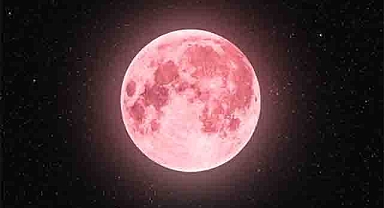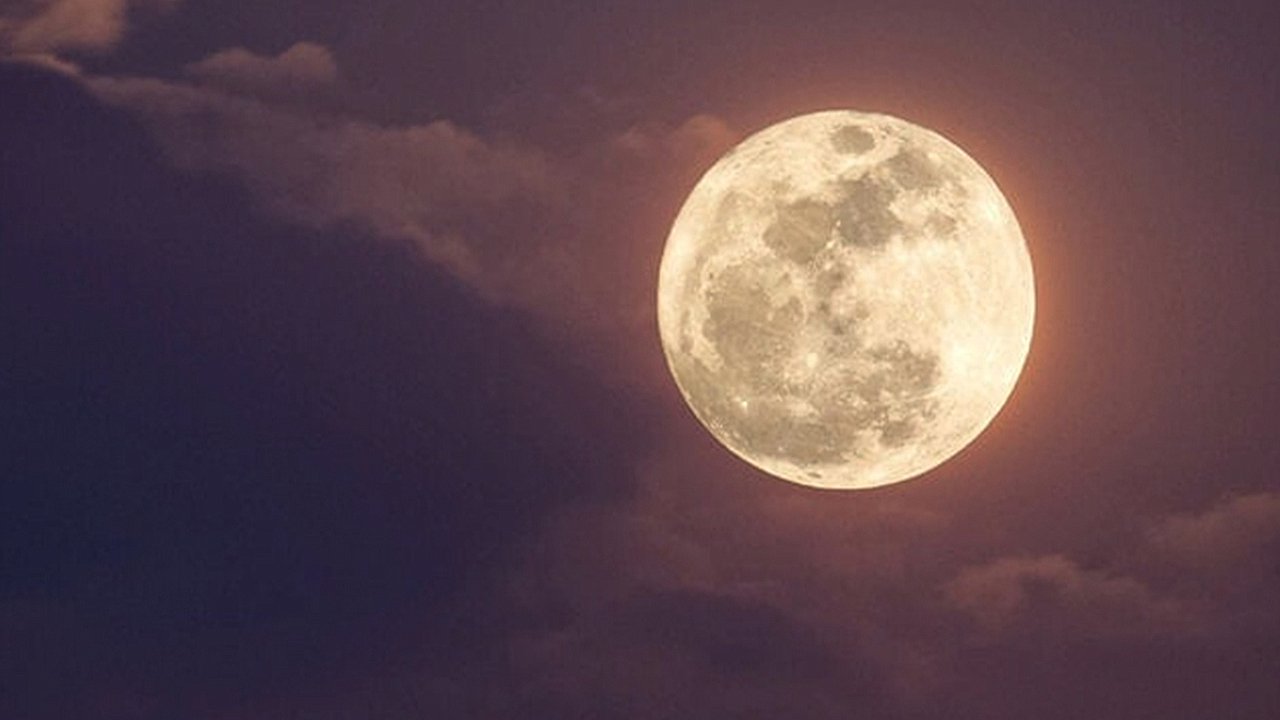
The Moon has always fascinated humanity, and in 2025 it will once again put on a dazzling display. Skywatchers can look forward to three consecutive supermoons this year, appearing on October 7, November 5, and December 4. These will coincide with the Harvest Moon, Beaver Moon, and Cold Moon, making the events even more captivating.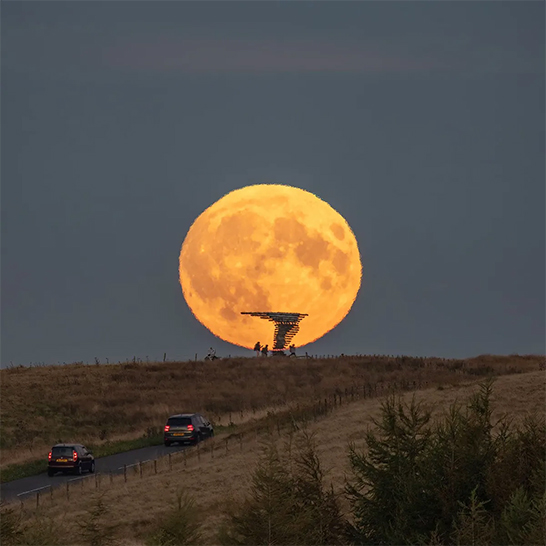 While the term "supermoon" has become popular in recent years, there is often confusion about what it really means, how much larger these Moons appear, and whether they truly live up to the hype. In this guide, we’ll explore the science behind supermoons, explain why they occur, and give you tips on when and how to see them at their best.What a supermoon really isA supermoon occurs when a full Moon coincides with perigee, the point in the Moon’s elliptical orbit where it comes closest to Earth. At this time, the Moon appears slightly larger and brighter than usual, though the difference is often more subtle than many expect. The popular term “supermoon” was first introduced in 1979 by astrologer Richard Nolle, but astronomers typically use the more precise term perigee full Moon or perigee syzygy Moon. The opposite phenomenon is called a micromoon, which happens when a full Moon occurs near apogee, the point when the Moon is farthest from Earth.Supermoons in 2025
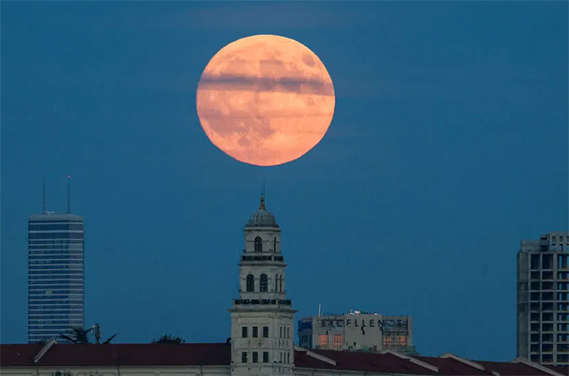 Interestingly, the horizon Moon is actually slightly smaller in angular size due to distance and atmospheric refraction, but the illusion is powerful enough to make it look enormous. Observers can test this by photographing the Moon at different altitudes and comparing the images side by side.How to observe a supermoonYou don’t need special equipment to enjoy a supermoon—the naked eye is enough to appreciate its beauty. For an even better experience, use binoculars or a small telescope to see details on the lunar surface. The best times to watch are during moonrise or moonset, when the Moon appears closest to the horizon and the illusion makes it look larger. Clear skies and darker surroundings away from city lights will enhance the view. If you are photographing the event, use a telephoto lens and include foreground objects such as trees or buildings for dramatic effect.Myths and misconceptionsSupermoons are often linked in the media to natural disasters such as earthquakes, volcanic eruptions, or severe weather. However, scientists emphasize that there is no evidence connecting supermoons to such events. While the Moon does influence tides, the effect of a supermoon only increases tidal variation by a few centimeters. The real value of a supermoon lies not in exaggerated claims but in the opportunity it provides for people to connect with astronomy and appreciate our celestial neighbor.Why supermoons matterEven if the size difference is modest, supermoons are still a wonderful way to engage with the night sky. They remind us of the Moon’s influence on Earth and inspire curiosity in both young and experienced stargazers. For many, watching a supermoon is less about the science and more about the shared experience of witnessing a natural spectacle that has been observed for thousands of years.
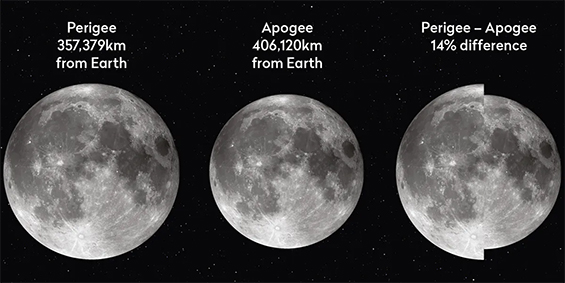 The next supermoon of 2025 will appear on October 7, followed by two more in November and December. While they may not be dramatically larger than ordinary full Moons, they are brighter, more visually striking, and perfect opportunities for skywatching. Whether you’re a seasoned astronomer or just someone who enjoys looking up at the night sky, supermoons are a reminder of the beauty and wonder of our cosmic companion.
While the term "supermoon" has become popular in recent years, there is often confusion about what it really means, how much larger these Moons appear, and whether they truly live up to the hype. In this guide, we’ll explore the science behind supermoons, explain why they occur, and give you tips on when and how to see them at their best.What a supermoon really isA supermoon occurs when a full Moon coincides with perigee, the point in the Moon’s elliptical orbit where it comes closest to Earth. At this time, the Moon appears slightly larger and brighter than usual, though the difference is often more subtle than many expect. The popular term “supermoon” was first introduced in 1979 by astrologer Richard Nolle, but astronomers typically use the more precise term perigee full Moon or perigee syzygy Moon. The opposite phenomenon is called a micromoon, which happens when a full Moon occurs near apogee, the point when the Moon is farthest from Earth.Supermoons in 2025- In 2025, observers will enjoy three consecutive supermoons:
- October 7 – the Harvest Moon
- November 5 – the Beaver Moon
- December 4 – the Cold Moon
Interestingly, the horizon Moon is actually slightly smaller in angular size due to distance and atmospheric refraction, but the illusion is powerful enough to make it look enormous. Observers can test this by photographing the Moon at different altitudes and comparing the images side by side.How to observe a supermoonYou don’t need special equipment to enjoy a supermoon—the naked eye is enough to appreciate its beauty. For an even better experience, use binoculars or a small telescope to see details on the lunar surface. The best times to watch are during moonrise or moonset, when the Moon appears closest to the horizon and the illusion makes it look larger. Clear skies and darker surroundings away from city lights will enhance the view. If you are photographing the event, use a telephoto lens and include foreground objects such as trees or buildings for dramatic effect.Myths and misconceptionsSupermoons are often linked in the media to natural disasters such as earthquakes, volcanic eruptions, or severe weather. However, scientists emphasize that there is no evidence connecting supermoons to such events. While the Moon does influence tides, the effect of a supermoon only increases tidal variation by a few centimeters. The real value of a supermoon lies not in exaggerated claims but in the opportunity it provides for people to connect with astronomy and appreciate our celestial neighbor.Why supermoons matterEven if the size difference is modest, supermoons are still a wonderful way to engage with the night sky. They remind us of the Moon’s influence on Earth and inspire curiosity in both young and experienced stargazers. For many, watching a supermoon is less about the science and more about the shared experience of witnessing a natural spectacle that has been observed for thousands of years.The next supermoon of 2025 will appear on October 7, followed by two more in November and December. While they may not be dramatically larger than ordinary full Moons, they are brighter, more visually striking, and perfect opportunities for skywatching. Whether you’re a seasoned astronomer or just someone who enjoys looking up at the night sky, supermoons are a reminder of the beauty and wonder of our cosmic companion.