The Fascinating World of Natural Illusions
Planet Earth is home to an astounding diversity of species, each possessing unique survival strategies. From camouflage to chemical defenses, organisms have evolved extraordinary adaptations to thrive within their ecosystems. One such remarkable deception captivated the internet when an image of three "angry snakes" perched in a tree went viral. But appearances can be deceiving—these supposed serpents were, in fact, something else entirely.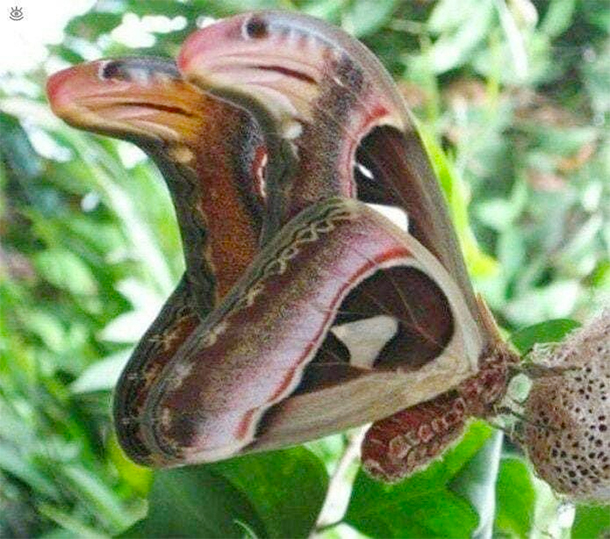 The Viral Image That Fooled the Internet
In 2021, Twitter user Rob Allam shared an image that left viewers astounded. At first glance, the picture appeared to depict three fierce-looking snakes lurking within the branches of a tree. Understandably, many social media users were alarmed. However, upon closer inspection, the truth behind the illusion emerged—the so-called "snakes" were nothing more than the wingtips of the Atlas moth.Meet the Atlas Moth: Nature’s Master of Disguise
Native to the tropical forests of Asia, the Atlas moth (Attacus atlas) is one of the largest lepidopterans on the planet. With a wingspan reaching up to 24 cm (9.4 in) and a wing surface area of approximately 160 cm² (≈25 in²), it is truly an impressive insect. The moth's name derives from Atlas, the mighty Titan of Greek mythology, in reference to its substantial size. First classified by Carl Linnaeus in 1758, the Atlas moth is famous not only for its size but also for its astonishing ability to mimic the appearance of a snake.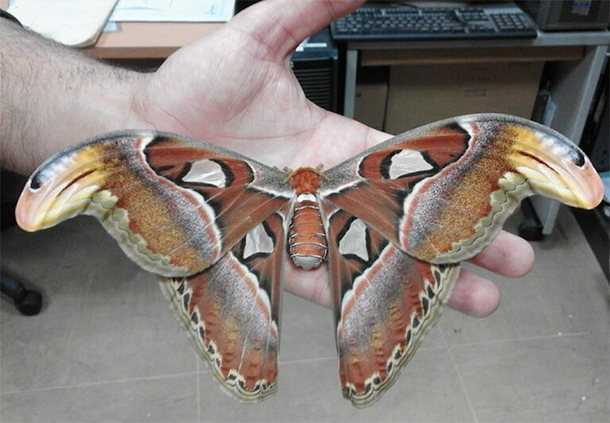 The Art of Survival: How the Atlas Moth Mimics a Snake
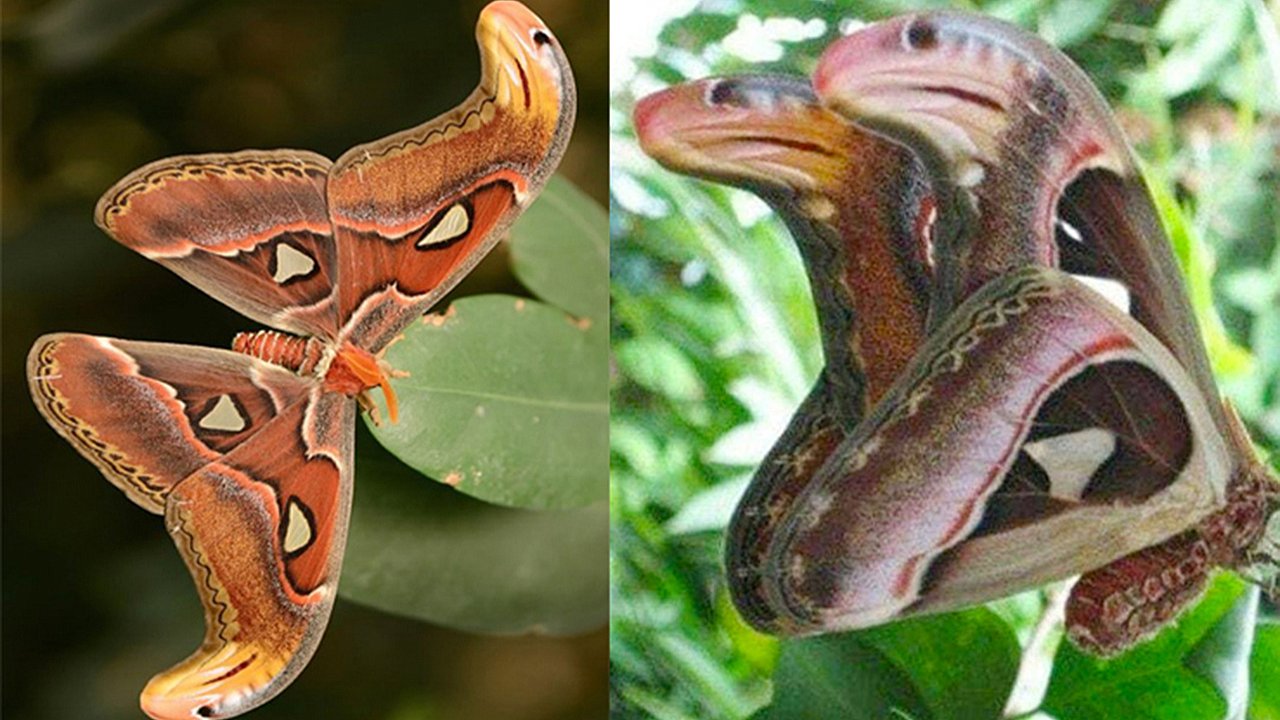
The Atlas moth has evolved a defense mechanism that enhances its chances of survival in the wild. When threatened, it drops to the ground and writhes its body while flapping its wings in a controlled motion. This movement, combined with the unique patterns on its wingtips, creates a striking resemblance to a snake's head. This visual deception discourages potential predators from attacking, giving the moth a chance to escape unharmed.Social Media Reactions: Awe and Disbelief When the viral image surfaced, social media users struggled to believe that the "snakes" were actually part of a moth. Comments ranged from admiration to disbelief. "That disguise is incredibly convincing," one user remarked, while another joked, "How is that top one not an actual snake? This moth would live longer if it didn’t make me want to grab a broom!" Despite its massive size, the Atlas moth is not an agile flier. It prefers to conserve energy by resting during the day and flying at night. Unlike many other insects, its adult stage is short-lived, lasting only about two weeks. During this time, its primary goal is to reproduce, ensuring the continuation of its species.Rare Sightings Beyond Asia
Although primarily found in Asia’s tropical forests, the Atlas moth has occasionally been spotted in other parts of the world. In 2012, a family in Ramsbottom, Greater Manchester, mistook an Atlas moth for a bat when they found it resting on their windowsill. The moth, which likely escaped from a private collection, unfortunately did not survive for long. More recently, in July 2022, an Atlas moth was documented for the first time in the United States, spotted in Bellevue, Washington. This extraordinary sighting was described as a "gee-whiz" moment by entomologist Sven Spichiger, who remarked that even people uninterested in insects couldn’t resist taking photos of such a striking creature.Awe-Inspiring Encounters in the Wild
If you ever find yourself face-to-face with an Atlas moth in its natural habitat, the experience is sure to be unforgettable. Its massive wingspan and intricate camouflage make it one of nature’s most incredible creations. However, if it starts mimicking a snake, keeping a respectful distance is advisable.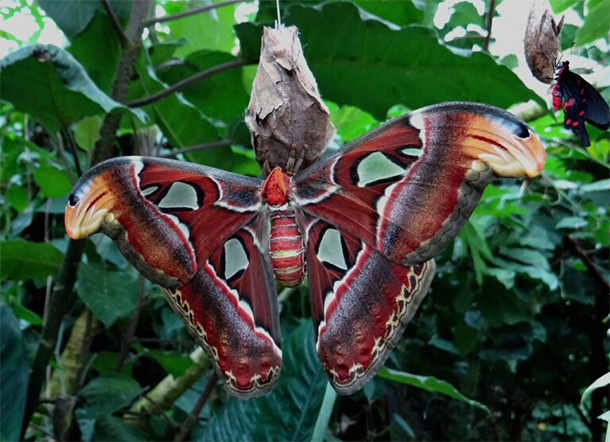
The Atlas moth is a perfect example of nature’s ingenuity. By sharing this article, more people can appreciate this incredible species and its fascinating survival tactics. The more we learn about such creatures, the deeper our appreciation grows for the wonders of the natural world.
Planet Earth is home to an astounding diversity of species, each possessing unique survival strategies. From camouflage to chemical defenses, organisms have evolved extraordinary adaptations to thrive within their ecosystems. One such remarkable deception captivated the internet when an image of three "angry snakes" perched in a tree went viral. But appearances can be deceiving—these supposed serpents were, in fact, something else entirely.
The Viral Image That Fooled the InternetIn 2021, Twitter user Rob Allam shared an image that left viewers astounded. At first glance, the picture appeared to depict three fierce-looking snakes lurking within the branches of a tree. Understandably, many social media users were alarmed. However, upon closer inspection, the truth behind the illusion emerged—the so-called "snakes" were nothing more than the wingtips of the Atlas moth.Meet the Atlas Moth: Nature’s Master of Disguise
Native to the tropical forests of Asia, the Atlas moth (Attacus atlas) is one of the largest lepidopterans on the planet. With a wingspan reaching up to 24 cm (9.4 in) and a wing surface area of approximately 160 cm² (≈25 in²), it is truly an impressive insect. The moth's name derives from Atlas, the mighty Titan of Greek mythology, in reference to its substantial size. First classified by Carl Linnaeus in 1758, the Atlas moth is famous not only for its size but also for its astonishing ability to mimic the appearance of a snake.
The Art of Survival: How the Atlas Moth Mimics a SnakeThe Atlas moth has evolved a defense mechanism that enhances its chances of survival in the wild. When threatened, it drops to the ground and writhes its body while flapping its wings in a controlled motion. This movement, combined with the unique patterns on its wingtips, creates a striking resemblance to a snake's head. This visual deception discourages potential predators from attacking, giving the moth a chance to escape unharmed.Social Media Reactions: Awe and Disbelief When the viral image surfaced, social media users struggled to believe that the "snakes" were actually part of a moth. Comments ranged from admiration to disbelief. "That disguise is incredibly convincing," one user remarked, while another joked, "How is that top one not an actual snake? This moth would live longer if it didn’t make me want to grab a broom!" Despite its massive size, the Atlas moth is not an agile flier. It prefers to conserve energy by resting during the day and flying at night. Unlike many other insects, its adult stage is short-lived, lasting only about two weeks. During this time, its primary goal is to reproduce, ensuring the continuation of its species.Rare Sightings Beyond Asia
Although primarily found in Asia’s tropical forests, the Atlas moth has occasionally been spotted in other parts of the world. In 2012, a family in Ramsbottom, Greater Manchester, mistook an Atlas moth for a bat when they found it resting on their windowsill. The moth, which likely escaped from a private collection, unfortunately did not survive for long. More recently, in July 2022, an Atlas moth was documented for the first time in the United States, spotted in Bellevue, Washington. This extraordinary sighting was described as a "gee-whiz" moment by entomologist Sven Spichiger, who remarked that even people uninterested in insects couldn’t resist taking photos of such a striking creature.Awe-Inspiring Encounters in the Wild
If you ever find yourself face-to-face with an Atlas moth in its natural habitat, the experience is sure to be unforgettable. Its massive wingspan and intricate camouflage make it one of nature’s most incredible creations. However, if it starts mimicking a snake, keeping a respectful distance is advisable.
The Atlas moth is a perfect example of nature’s ingenuity. By sharing this article, more people can appreciate this incredible species and its fascinating survival tactics. The more we learn about such creatures, the deeper our appreciation grows for the wonders of the natural world.