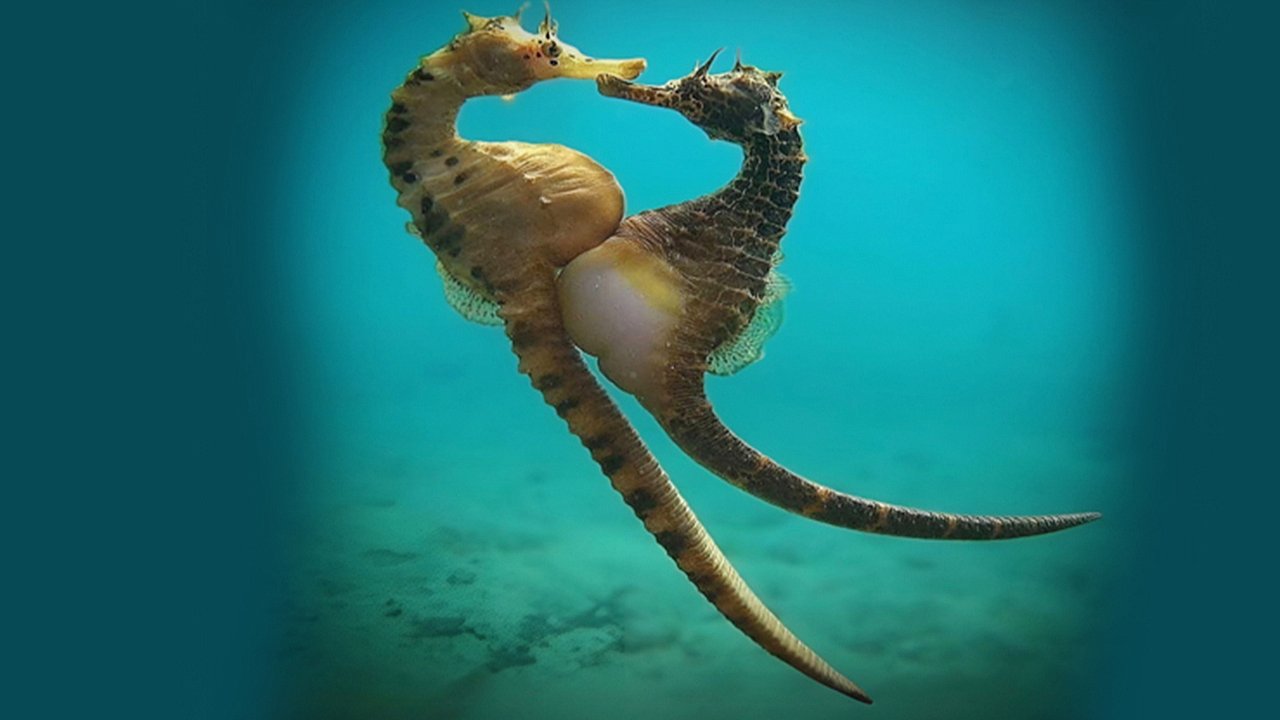
Seahorses are among the most captivating creatures in the ocean, not only for their unusual appearance but also for their extraordinary approach to partnership and parenting. While many marine animals lead solitary or competitive lives, Seahorses stand out with behaviors that seem almost tender and emotional. One of the most remarkable of these behaviors is their daily greeting ritual—an elegant morning dance performed by bonded pairs.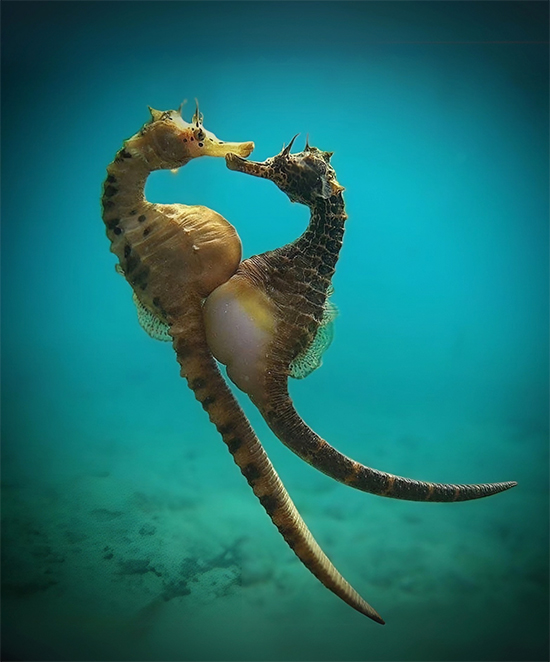 During this ritual, they intertwine their tails, shift their colors, and move in graceful synchrony, appearing to “hug” one another. This beautiful display is more than a visual delight; it serves a scientific purpose. The ritual strengthens their monogamous bond, reinforces trust, and synchronizes their reproductive cycles. For readers fascinated by animal behavior, marine life, or surprising love stories in nature, seahorses offer a magical blend of biology and emotion. Their unique partnership, including the rare phenomenon of male pregnancy, makes them unforgettable creatures worth exploring in depth.How seahorse bonds form
Seahorse bonds begin with an elaborate courtship process that can last several days. During this time, a potential pair engages in synchronized swimming, slow circling motions, and gentle tail contact. These behaviors allow them to assess compatibility and establish trust—an essential foundation for their long-term monogamous connection. Many seahorse species remain loyal to a single partner throughout a breeding season, and some even stay bonded for life. This loyalty is particularly beneficial in environments where mates may be scarce and where coordinated reproduction increases survival rates. By forming such strong bonds early on, seahorses ensure that their partnership is both stable and mutually beneficial.Why morning greetings matter
One of the most fascinating aspects of seahorse relationships is their daily morning greeting ritual. Every sunrise, bonded pairs reconnect through a dance that involves intertwining tails, coordinated movements, and vibrant color changes. Although it looks like a romantic gesture, it serves several essential biological functions. First, it reinforces their pair bond, ensuring that both individuals remain committed and synchronized. Second, it helps them maintain reproductive alignment, increasing their chances of successful egg transfer during mating. Marine biologists believe this ritual also helps reduce stress and strengthen communication between partners. In an unpredictable ocean environment, consistency and connection give seahorses an evolutionary advantage.The role of male pregnancy
One of the most unique features of seahorse biology is male pregnancy—an extraordinary reproductive system found only in seahorses, pipefish, and sea dragons. After the female deposits her eggs into the male’s brood pouch during mating, the male fertilizes and carries them throughout the gestation period. Inside the pouch, the eggs receive oxygen, nutrients, and protection until they hatch. This arrangement allows females to produce more eggs quickly while males handle incubation, increasing reproductive efficiency. The morning greeting ritual plays a crucial role here: it helps coordinate the timing of egg transfers and ensures both partners are ready for the next stage of reproduction. Male pregnancy is not only a fascinating evolutionary adaptation but also a powerful symbol of partnership and shared responsibility in the animal kingdom.How their behavior benefits survival
Seahorses are relatively slow swimmers, making them vulnerable in the wild. Because of this, bonding and cooperation become essential survival strategies. Their daily ritual keeps pairs connected, reducing the time and energy needed to search for mates. Additionally, synchronized reproduction improves offspring success—an important advantage in habitats where threats such as predators, strong currents, and habitat loss are common. By maintaining a strong bond, seahorse pairs ensure that they can reproduce efficiently and care for their developing young in the safest way possible. Their cooperation demonstrates how behavioral adaptations can be just as crucial as physical features in ensuring survival.The science and symbolism of seahorse devotion
For many people, seahorses symbolize love, loyalty, and harmony—and their scientific behavior reflects these qualities surprisingly well. Their morning greetings show that even in the vast and unpredictable ocean, connection and consistency matter. By intertwining tails and moving in unison, they strengthen their relationship in a way that feels almost poetic. Their monogamous bonds, cooperative reproduction, and gentle interactions inspire curiosity and admiration, making seahorses a favorite subject for marine enthusiasts and researchers alike. Their behavior highlights how biology and emotion can appear intertwined, reminding us that nature often holds stories more magical than fiction.
During this ritual, they intertwine their tails, shift their colors, and move in graceful synchrony, appearing to “hug” one another. This beautiful display is more than a visual delight; it serves a scientific purpose. The ritual strengthens their monogamous bond, reinforces trust, and synchronizes their reproductive cycles. For readers fascinated by animal behavior, marine life, or surprising love stories in nature, seahorses offer a magical blend of biology and emotion. Their unique partnership, including the rare phenomenon of male pregnancy, makes them unforgettable creatures worth exploring in depth.How seahorse bonds formSeahorse bonds begin with an elaborate courtship process that can last several days. During this time, a potential pair engages in synchronized swimming, slow circling motions, and gentle tail contact. These behaviors allow them to assess compatibility and establish trust—an essential foundation for their long-term monogamous connection. Many seahorse species remain loyal to a single partner throughout a breeding season, and some even stay bonded for life. This loyalty is particularly beneficial in environments where mates may be scarce and where coordinated reproduction increases survival rates. By forming such strong bonds early on, seahorses ensure that their partnership is both stable and mutually beneficial.Why morning greetings matter
One of the most fascinating aspects of seahorse relationships is their daily morning greeting ritual. Every sunrise, bonded pairs reconnect through a dance that involves intertwining tails, coordinated movements, and vibrant color changes. Although it looks like a romantic gesture, it serves several essential biological functions. First, it reinforces their pair bond, ensuring that both individuals remain committed and synchronized. Second, it helps them maintain reproductive alignment, increasing their chances of successful egg transfer during mating. Marine biologists believe this ritual also helps reduce stress and strengthen communication between partners. In an unpredictable ocean environment, consistency and connection give seahorses an evolutionary advantage.The role of male pregnancy
One of the most unique features of seahorse biology is male pregnancy—an extraordinary reproductive system found only in seahorses, pipefish, and sea dragons. After the female deposits her eggs into the male’s brood pouch during mating, the male fertilizes and carries them throughout the gestation period. Inside the pouch, the eggs receive oxygen, nutrients, and protection until they hatch. This arrangement allows females to produce more eggs quickly while males handle incubation, increasing reproductive efficiency. The morning greeting ritual plays a crucial role here: it helps coordinate the timing of egg transfers and ensures both partners are ready for the next stage of reproduction. Male pregnancy is not only a fascinating evolutionary adaptation but also a powerful symbol of partnership and shared responsibility in the animal kingdom.How their behavior benefits survival
Seahorses are relatively slow swimmers, making them vulnerable in the wild. Because of this, bonding and cooperation become essential survival strategies. Their daily ritual keeps pairs connected, reducing the time and energy needed to search for mates. Additionally, synchronized reproduction improves offspring success—an important advantage in habitats where threats such as predators, strong currents, and habitat loss are common. By maintaining a strong bond, seahorse pairs ensure that they can reproduce efficiently and care for their developing young in the safest way possible. Their cooperation demonstrates how behavioral adaptations can be just as crucial as physical features in ensuring survival.The science and symbolism of seahorse devotion
For many people, seahorses symbolize love, loyalty, and harmony—and their scientific behavior reflects these qualities surprisingly well. Their morning greetings show that even in the vast and unpredictable ocean, connection and consistency matter. By intertwining tails and moving in unison, they strengthen their relationship in a way that feels almost poetic. Their monogamous bonds, cooperative reproduction, and gentle interactions inspire curiosity and admiration, making seahorses a favorite subject for marine enthusiasts and researchers alike. Their behavior highlights how biology and emotion can appear intertwined, reminding us that nature often holds stories more magical than fiction.