Elegant Hunters of the Open Skies
This hunting behavior closely resembles that of smaller kestrels, though the Black-winged Kite is larger and more robust. This species is commonly seen across Eurasia and Africa and was historically grouped with its close relatives—the Australian Black-shouldered Kite (Elanus axillaris) and the white-tailed kite (Elanus leucurus) from the Americas. Together, these kites form a superspecies, sharing many behavioral and physical traits.Distinctive Appearance
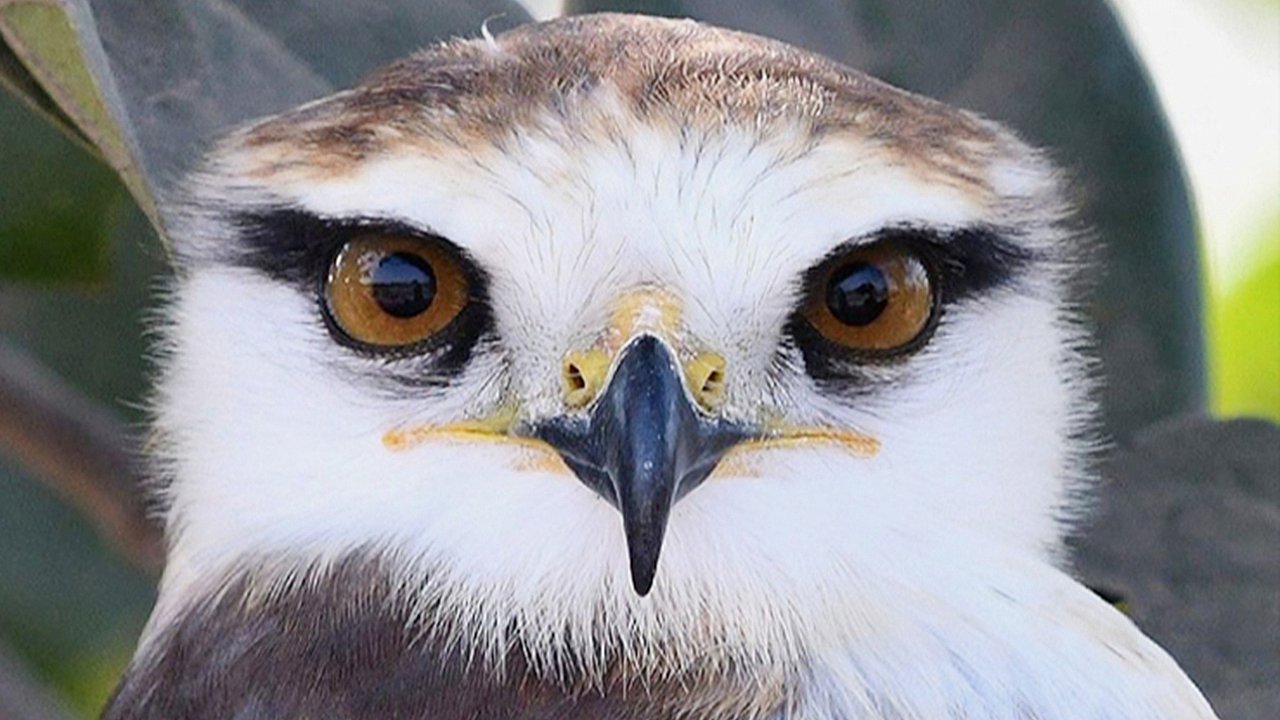
With its long, pointed wings and a mix of white, grey, and black plumage, the Black-winged Kite is unmistakable in flight. One of its most captivating features is its forward-facing, owl-like head with striking red irises, giving it an intense and unique gaze.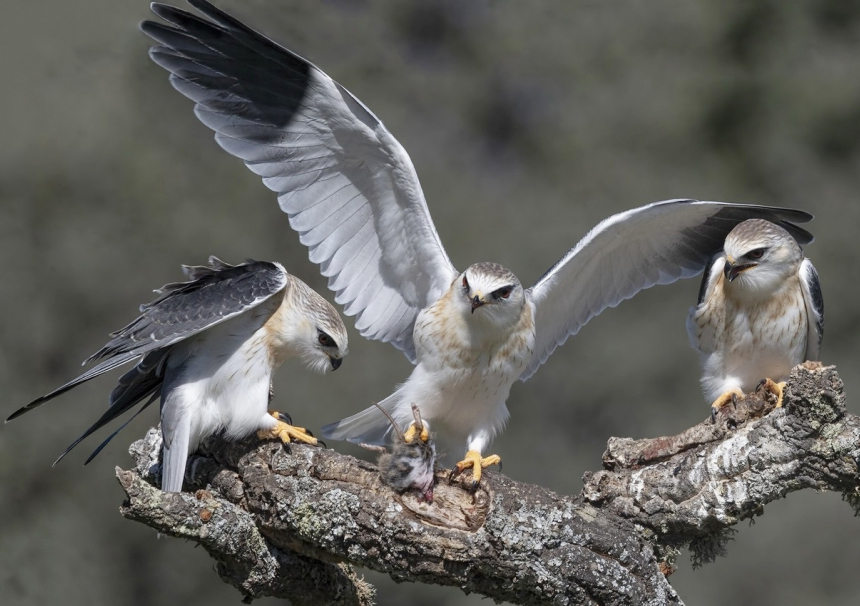 Although often spotted gliding over lowland plains, these birds also venture into grassy hill slopes at higher elevations in Asia. Unlike many migratory raptors, Black-winged Kites remain largely sedentary, though they make short-distance movements in response to seasonal weather changes.Physical Characteristics
This compact yet powerful raptor has pale grey feathers, broad wings, and a relatively short tail. Its head is rounded, giving it an owl-like appearance enhanced by black markings resembling mascara around the eyes. The upper wing coverts and wingtips are black, contrasting sharply with its otherwise light plumage.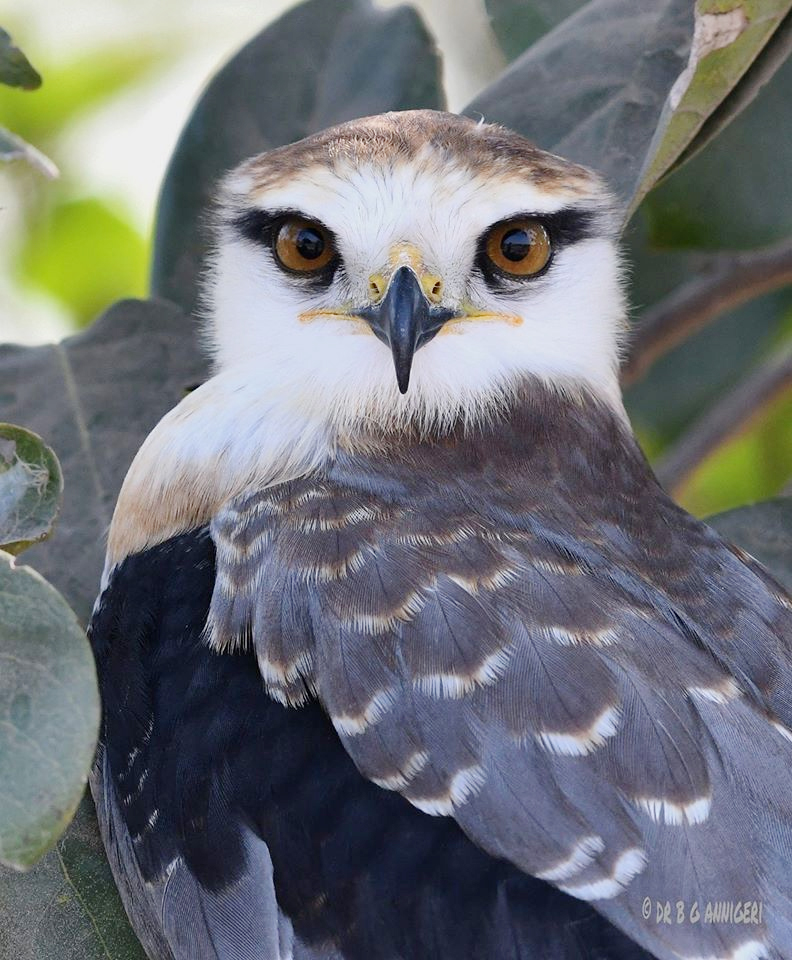 Immature birds often display rusty-colored underparts and faint white fringes along their flight feathers and scapulars. In flight, the kite’s high, raised-wing gliding posture resembles that of a harrier, while its hovering skills allow it to remain suspended midair before swooping down on prey.Subtle Yet Expressive Sounds
Despite its striking presence, the Black-winged Kite is not particularly vocal. Its most common call is a soft “Pjuu-harrr,” starting with a mellow, rising whistle that ends in a sharp screech. Sometimes, it emits only the whistle or a Barn Owl-like screech without the harsh ending.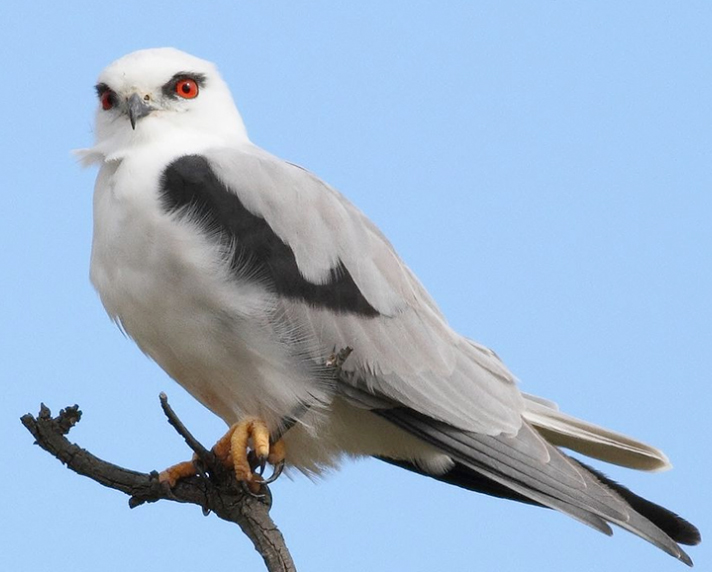 Other sounds include a rapid, soft “kekekekekeke” sequence and brief whistles. During breeding season, their calls become more frequent, featuring sharp “kyp” notes resembling the sounds of avocets, coots, or spur-winged lapwings. Another distinct call, a tern-like “kee-arr,” can also be heard.Young kites have a different contact call similar to that of a Wood Sandpiper, although they do not vocalize this in repeated series.Masters of Grace and Precision
With their long red legs, high-contrast plumage, and agile flight, Black-winged Kites are a marvel to watch in open habitats. Males often exhibit sooty black backs, while females and juveniles have a brownish hue. Their white tails and striking flight patterns make them easy to identify from a distance.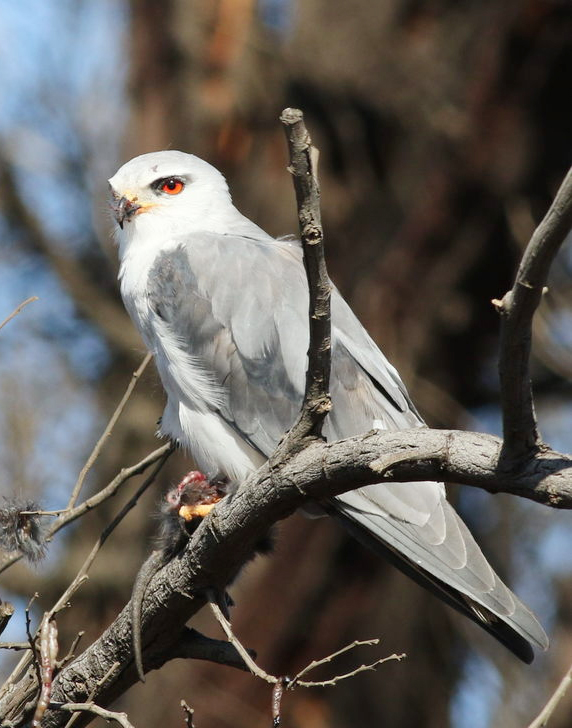 Through their elegance in flight, piercing red eyes, and unique calls, these birds embody the beauty and precision of small raptors, making them a favorite among birdwatchers and wildlife photographers alike.
This hunting behavior closely resembles that of smaller kestrels, though the Black-winged Kite is larger and more robust. This species is commonly seen across Eurasia and Africa and was historically grouped with its close relatives—the Australian Black-shouldered Kite (Elanus axillaris) and the white-tailed kite (Elanus leucurus) from the Americas. Together, these kites form a superspecies, sharing many behavioral and physical traits.Distinctive Appearance
With its long, pointed wings and a mix of white, grey, and black plumage, the Black-winged Kite is unmistakable in flight. One of its most captivating features is its forward-facing, owl-like head with striking red irises, giving it an intense and unique gaze.
Although often spotted gliding over lowland plains, these birds also venture into grassy hill slopes at higher elevations in Asia. Unlike many migratory raptors, Black-winged Kites remain largely sedentary, though they make short-distance movements in response to seasonal weather changes.Physical CharacteristicsThis compact yet powerful raptor has pale grey feathers, broad wings, and a relatively short tail. Its head is rounded, giving it an owl-like appearance enhanced by black markings resembling mascara around the eyes. The upper wing coverts and wingtips are black, contrasting sharply with its otherwise light plumage.
Immature birds often display rusty-colored underparts and faint white fringes along their flight feathers and scapulars. In flight, the kite’s high, raised-wing gliding posture resembles that of a harrier, while its hovering skills allow it to remain suspended midair before swooping down on prey.Subtle Yet Expressive SoundsDespite its striking presence, the Black-winged Kite is not particularly vocal. Its most common call is a soft “Pjuu-harrr,” starting with a mellow, rising whistle that ends in a sharp screech. Sometimes, it emits only the whistle or a Barn Owl-like screech without the harsh ending.
Other sounds include a rapid, soft “kekekekekeke” sequence and brief whistles. During breeding season, their calls become more frequent, featuring sharp “kyp” notes resembling the sounds of avocets, coots, or spur-winged lapwings. Another distinct call, a tern-like “kee-arr,” can also be heard.Young kites have a different contact call similar to that of a Wood Sandpiper, although they do not vocalize this in repeated series.Masters of Grace and PrecisionWith their long red legs, high-contrast plumage, and agile flight, Black-winged Kites are a marvel to watch in open habitats. Males often exhibit sooty black backs, while females and juveniles have a brownish hue. Their white tails and striking flight patterns make them easy to identify from a distance.
Through their elegance in flight, piercing red eyes, and unique calls, these birds embody the beauty and precision of small raptors, making them a favorite among birdwatchers and wildlife photographers alike.