A Jewel Among the Trees: Meet the Crimson Sunbird
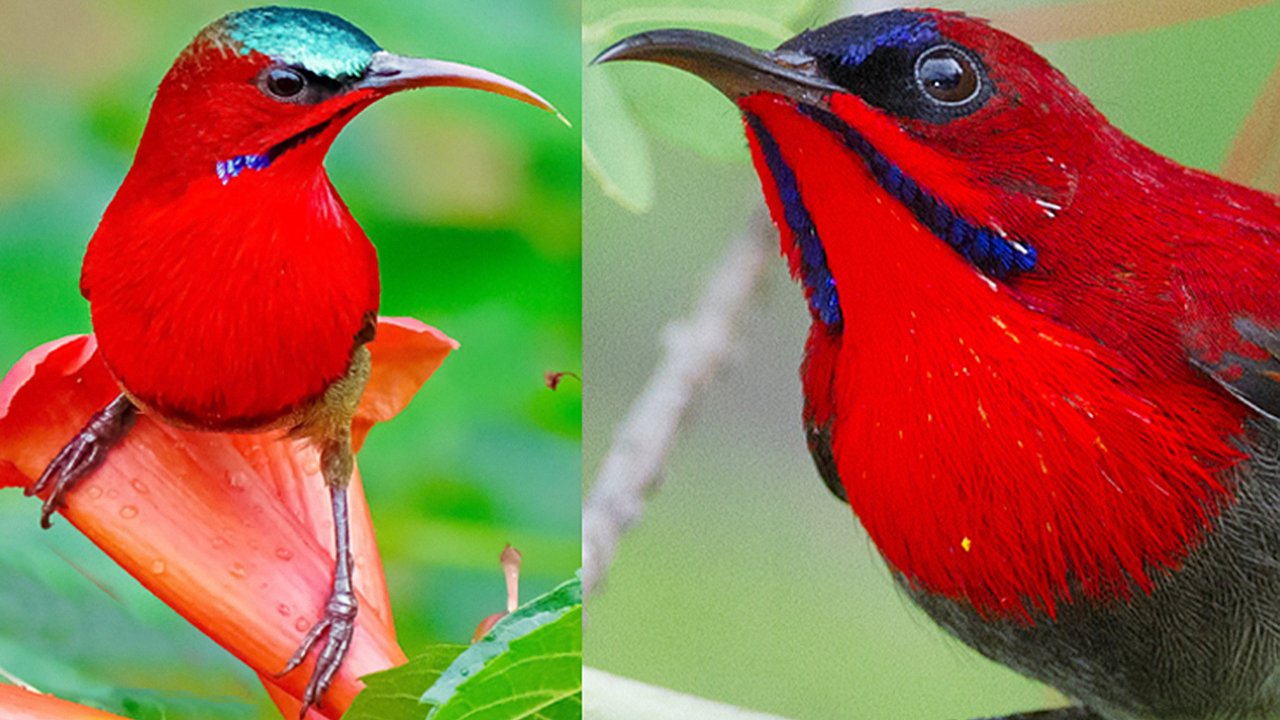
Among the many striking birds that color the tropical skies, the Crimson Sunbird (Aethopyga siparaja) shines brightly with its vivid crimson hues and enchanting voice. This petite but captivating creature brings a sense of serenity to those lucky enough to observe it, as if nature itself is inviting us into a moment of peaceful wonder.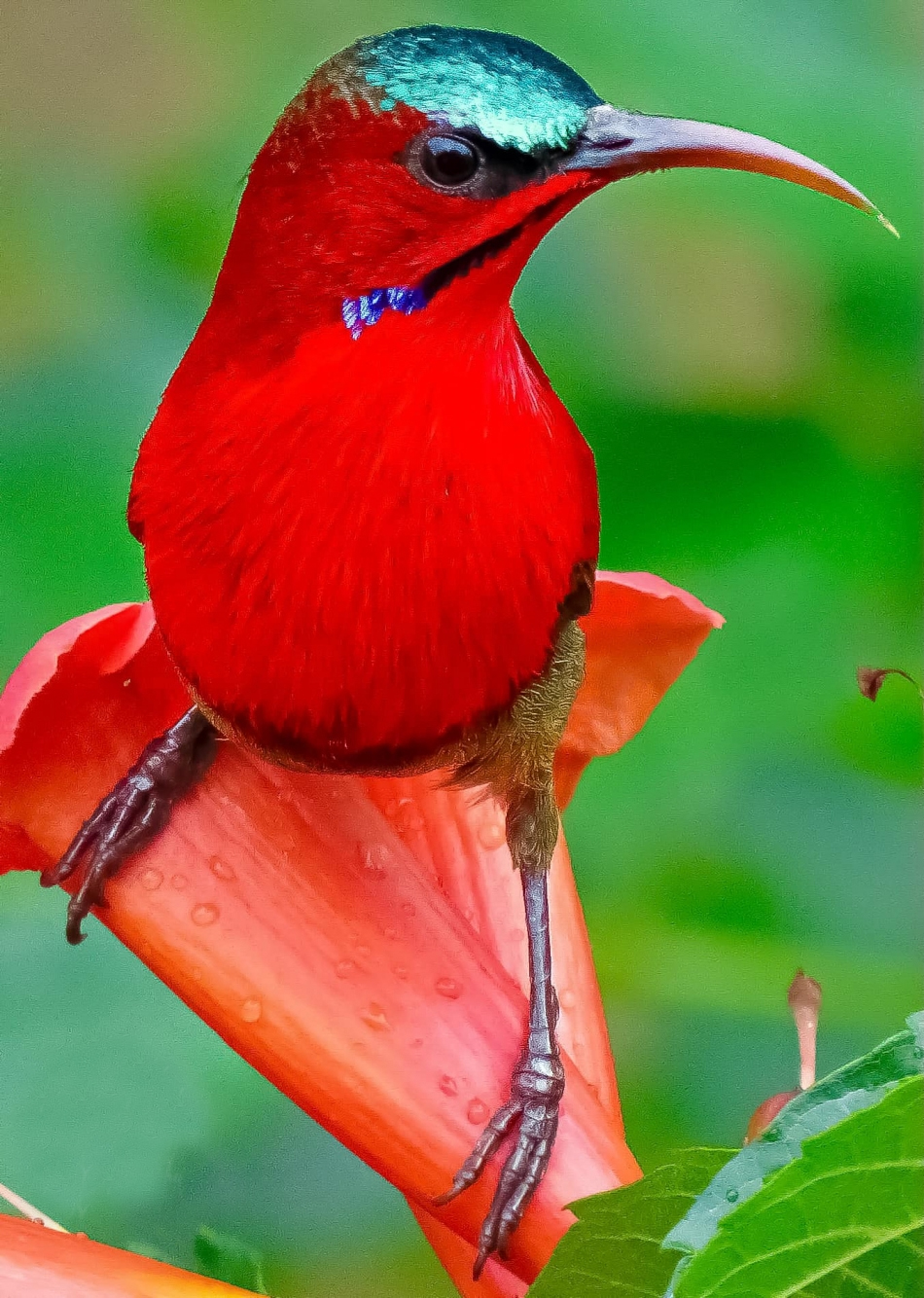 Native to the lush regions of southeastern Asia, from west-central India to the islands of Indonesia and the Philippines, the Crimson Sunbird thrives in both forests and cultivated plantations. It is celebrated as the national bird of Singapore, a fitting tribute to its radiant beauty and ecological importance.A Colorful Identity and Global Recognition
The Crimson Sunbird is known by many names across languages and cultures. In English alone, it carries titles like Eastern Crimson Sunbird, Yellow-backed Sunbird, Scarlet-throated Sunbird, and Goulpourah Sunbird. Other language translations include:
There are several recognized subspecies of Aethopyga siparaja, each adapted to different regions:Aethopyga siparaja siparaja (Nominate species): Found in the Malay Peninsula, Sumatra, Borneo, and surrounding islands.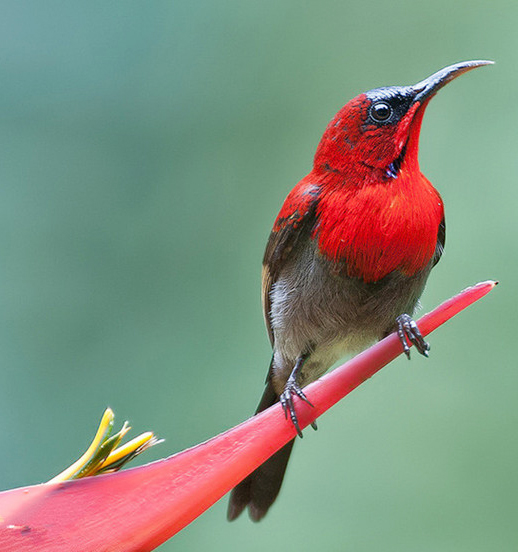
Measuring around 11 cm (4.3 inches) in length, Crimson Sunbirds are small but undeniably striking. They have slender, down-curved bills and brush-tipped tongues — both perfect for nectar extraction.
Crimson Sunbirds are primarily nectarivorous, feeding on the sweet fluids of high-sugar flowers. During breeding season, however, their diet shifts slightly to include insects, which provide vital protein for both adults and their chicks.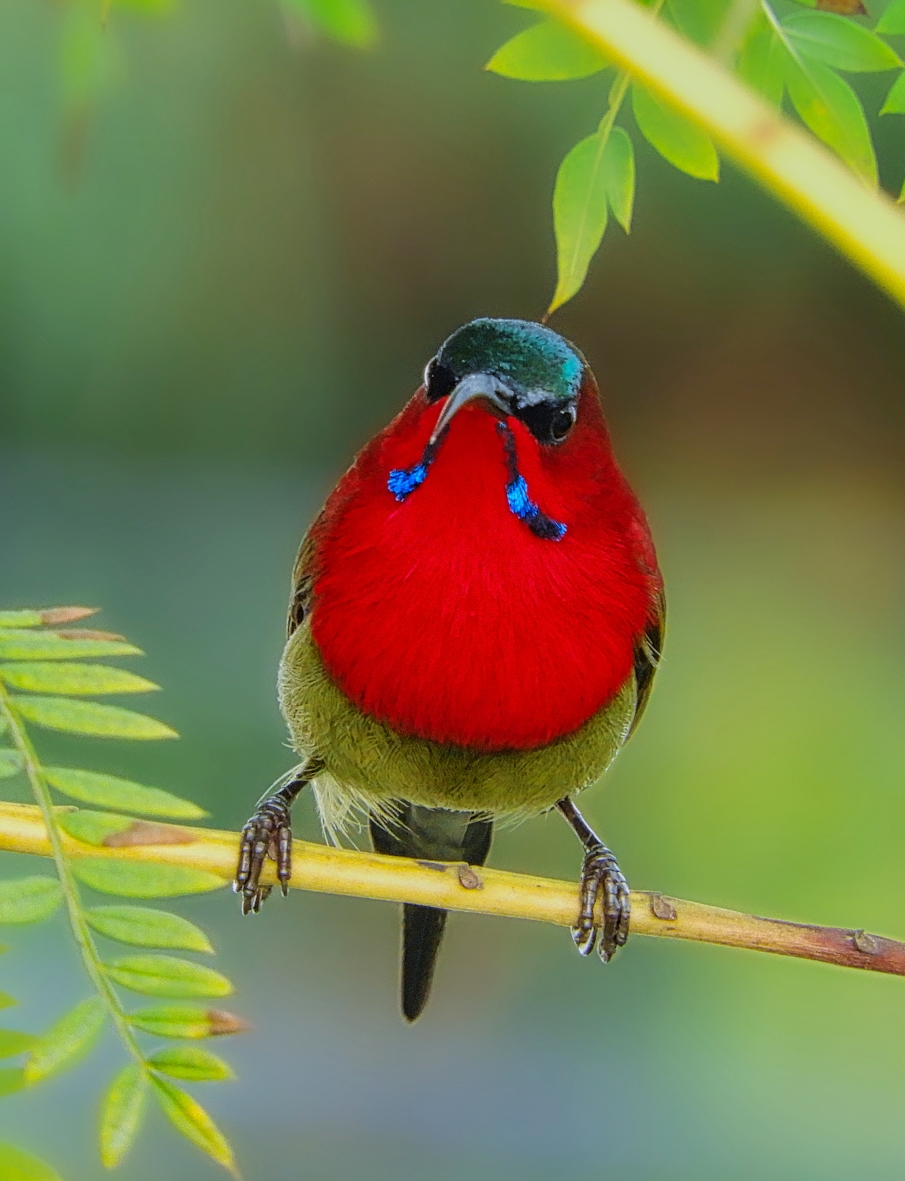 Unlike hummingbirds, which hover while feeding, Crimson Sunbirds typically perch while sipping nectar. Males often claim and defend feeding territories on flowering trees and shrubs.Their role in pollination is vital. Many tropical flowers, shaped to accommodate the sunbird’s beak and exclude other pollinators like bees and butterflies, rely heavily on these birds for reproduction.A Radiant Symbol of Biodiversity
Beyond their beauty, Crimson Sunbirds play a crucial role in maintaining tropical ecosystems. Their symbiotic relationship with flowering plants supports biodiversity and ecological balance. As they flit from bloom to bloom, they ensure not only their own survival but also that of countless plant species.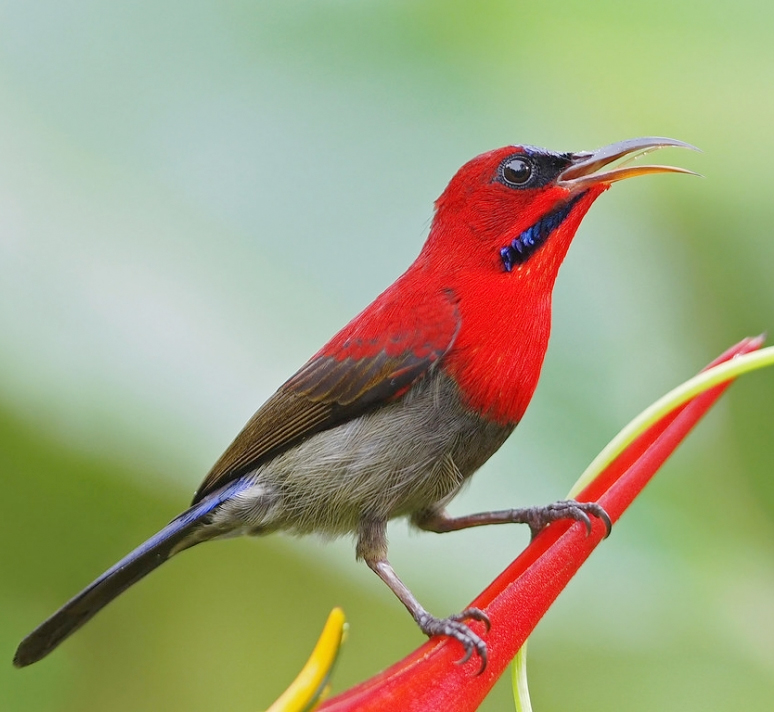 Whether glimpsed in the forests of Borneo or the gardens of Singapore, the Crimson Sunbird continues to enchant with its shimmering colors and sweet, soothing calls — a living jewel of the tropics.
Among the many striking birds that color the tropical skies, the Crimson Sunbird (Aethopyga siparaja) shines brightly with its vivid crimson hues and enchanting voice. This petite but captivating creature brings a sense of serenity to those lucky enough to observe it, as if nature itself is inviting us into a moment of peaceful wonder.
Native to the lush regions of southeastern Asia, from west-central India to the islands of Indonesia and the Philippines, the Crimson Sunbird thrives in both forests and cultivated plantations. It is celebrated as the national bird of Singapore, a fitting tribute to its radiant beauty and ecological importance.A Colorful Identity and Global RecognitionThe Crimson Sunbird is known by many names across languages and cultures. In English alone, it carries titles like Eastern Crimson Sunbird, Yellow-backed Sunbird, Scarlet-throated Sunbird, and Goulpourah Sunbird. Other language translations include:
- Spanish: Nectarina de Lomo Amarillo, Suimanga Siparaja
- Italian: Nettarinia dorsogiallo
- French: Souimanga siparaja
- German: Scharlachnektarvogel, Karmesinnektarvogel
- Japanese: Kigoshitaiyouchou
- Polish: Kwiatownik szkarlatny
- Swedish: Scharlakansolfågel
There are several recognized subspecies of Aethopyga siparaja, each adapted to different regions:Aethopyga siparaja siparaja (Nominate species): Found in the Malay Peninsula, Sumatra, Borneo, and surrounding islands.
- A. s. labecula: Spreads across northeastern India, Bhutan, Bangladesh, Myanmar, southern China, Laos, and Vietnam.
- A. s. nicobarica: Inhabits the South Nicobar Islands.
- A. s. cara: Present in southern Myanmar and Thailand.
- A. s. owstoni: Found on Naozhou Island, China.
- A. s. mangini: Resides in southeast Thailand and parts of Indochina.
- A. s. insularis: Limited to Phu Quoc Island near Cambodia.
- A. s. seheriae: Stretches along the Himalayan foothills in India and Bangladesh.
Measuring around 11 cm (4.3 inches) in length, Crimson Sunbirds are small but undeniably striking. They have slender, down-curved bills and brush-tipped tongues — both perfect for nectar extraction.
- Adult males flaunt a brilliant red throat, breast, and sides, offset by deep blue moustache-like stripes. Their back glows maroon, the rump flashes yellow, and the belly leans yellowish-olive. Their bluish-green tail often has elongated central feathers and white outer tail tips — except in some subspecies like nicobarica, which lack the elongated tail.
- Females, in contrast, are more subtly adorned with olive-green backs, yellowish chests, and white-tipped tails, allowing them better camouflage in dense foliage.
Crimson Sunbirds are primarily nectarivorous, feeding on the sweet fluids of high-sugar flowers. During breeding season, however, their diet shifts slightly to include insects, which provide vital protein for both adults and their chicks.
Unlike hummingbirds, which hover while feeding, Crimson Sunbirds typically perch while sipping nectar. Males often claim and defend feeding territories on flowering trees and shrubs.Their role in pollination is vital. Many tropical flowers, shaped to accommodate the sunbird’s beak and exclude other pollinators like bees and butterflies, rely heavily on these birds for reproduction.A Radiant Symbol of BiodiversityBeyond their beauty, Crimson Sunbirds play a crucial role in maintaining tropical ecosystems. Their symbiotic relationship with flowering plants supports biodiversity and ecological balance. As they flit from bloom to bloom, they ensure not only their own survival but also that of countless plant species.
Whether glimpsed in the forests of Borneo or the gardens of Singapore, the Crimson Sunbird continues to enchant with its shimmering colors and sweet, soothing calls — a living jewel of the tropics.