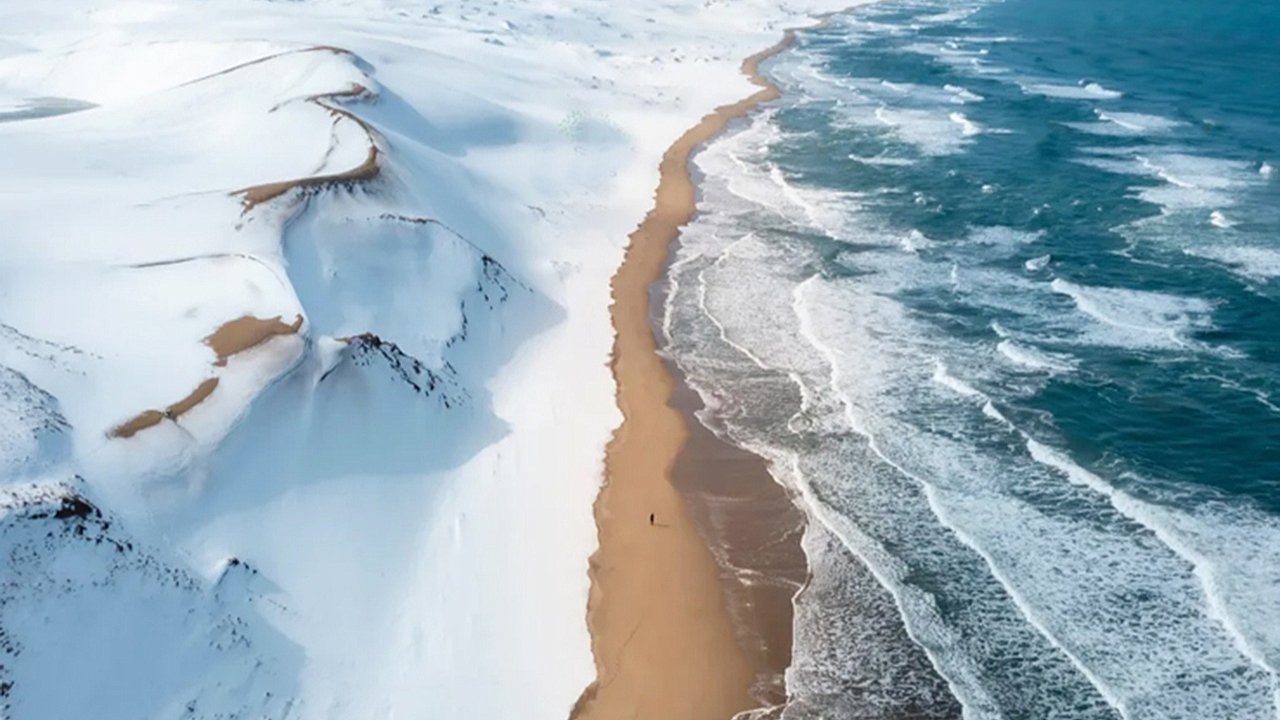
A breathtaking viral image from JapanWhat if you could experience the peaceful rhythm of ocean waves, the refreshing crunch of snow underfoot, and the warm softness of sand—all in a single place? A now-viral photograph from Japan proves that such a wonder truly exists. Captured by photographer Hisa and shared on Instagram, the image shows a dreamlike scene where the snow-covered land meets golden sand, bordered by the vast Sea of Japan. In the middle of this magical confluence, a lone figure strolls across the sandy stretch, adding to the surreal beauty of the landscape.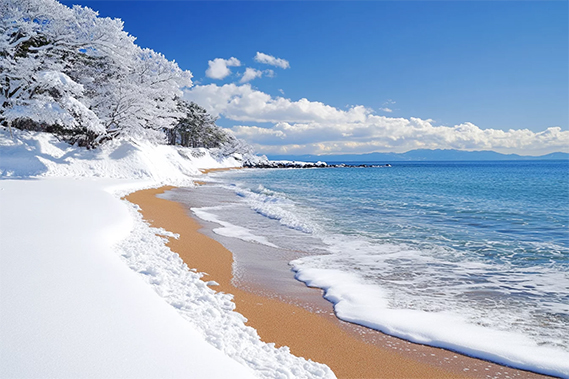 Social media users quickly showered the photo with admiration, calling it “heaven on earth” and “one of the most incredible images ever seen.” Travel enthusiasts, photographers, and nature lovers alike were captivated by the idea of snow, sand, and sea coexisting so perfectly. Some even described the picture as “absolutely insane,” highlighting its once-in-a-lifetime allure. But where exactly can this extraordinary sight be found? The answer lies in the San’in Kaigan Geopark, a UNESCO-designated site that stretches along the Sea of Japan.The natural wonder of San’in Kaigan GeoparkSan’in Kaigan Geopark is located in western Japan, extending from Kyogamisaki Cape in Kyoto to Hakuto Kaigan Coast in Tottori Prefecture. Declared a Japanese Geopark in 2008 and recognized as a UNESCO Global Geopark in 2010, it is one of Japan’s most remarkable natural treasures.The geopark covers a vast area that showcases diverse geological features, including sand dunes, sand bars, ria-type coasts, and volcanic formations. It is this diversity of landscapes that creates unique phenomena such as the seamless blend of snow, sand, and ocean, a view that has now captivated the world through social media. For visitors, the experience is nothing short of surreal: standing in one place, you can witness winter and summer elements merging into a single, breathtaking scene.A haven for biodiversity and rare speciesBeyond its striking scenery, San’in Kaigan Geopark is also home to a wide variety of flora and fauna. The unique geological conditions support rare plant species such as Pseudolysimachion ornatum and Ranunculus nipponicus, along with the Oriental White Stork (Ciconia boyciana), a bird species that has become a symbol of conservation in Japan.
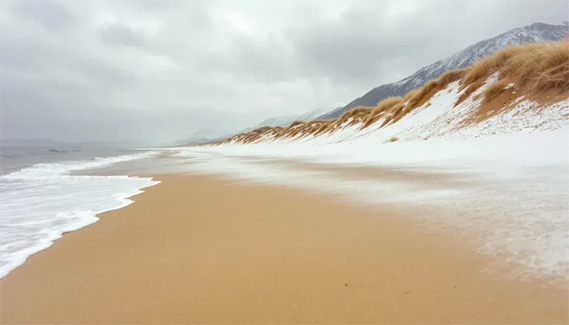 This biodiversity adds another layer of significance to the geopark, making it not only a visually stunning destination but also an important ecological zone. For nature lovers, bird watchers, and botanists, San’in Kaigan offers the chance to witness species that are seldom found elsewhere in the world.A region shaped by history and earthquakesSan’in Kaigan Geopark is not just about natural beauty—it also tells the story of human resilience and history. The region has experienced three major earthquakes, leaving behind fault lines, reconstruction sites, and heritage landmarks that now serve as valuable educational resources. These sites highlight the importance of disaster preparedness and the enduring spirit of local communities.Additionally, the geopark contains ancient ruins, burial mounds, and historical sites that reflect the prosperity of maritime trade along the Sea of Japan. Visitors can explore these cultural remnants to gain insight into how the region’s people lived, thrived, and adapted to their environment over centuries.Hot springs and local cultureOne of the added charms of the San’in Kaigan region is its abundance of hot springs, which have been enjoyed for centuries as places of healing and relaxation. These traditional Japanese onsens make the area an attractive year-round destination. After exploring snow-covered dunes or walking along sandy coastlines, visitors can unwind in mineral-rich waters while taking in panoramic views of the surrounding landscapes.
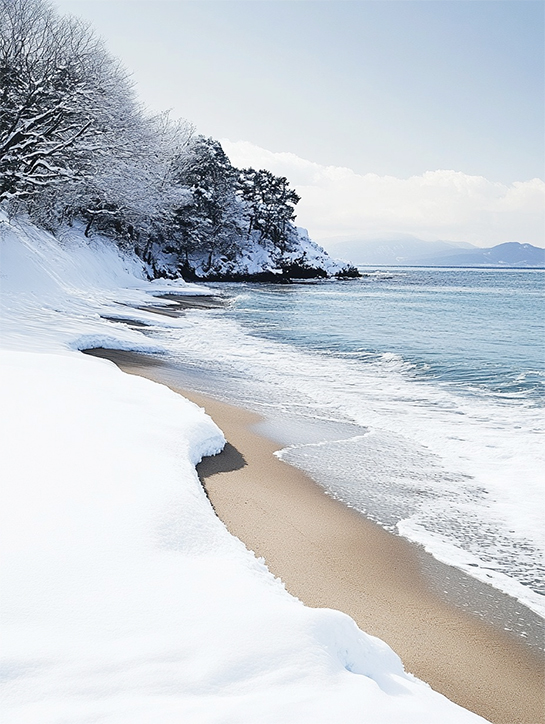 Local towns within the geopark also preserve cultural traditions, festivals, and regional cuisine, offering travelers a deeper connection with Japanese heritage. The combination of nature, history, and culture makes the geopark not just a sightseeing destination, but a holistic travel experience.Why the world is captivated by this phenomenonThe viral image of snow, sand, and sea meeting in harmony resonates so strongly because it defies ordinary expectations of what a landscape should look like. Typically, snow belongs to mountains, sand to beaches, and waves to the ocean. To witness all three elements in one frame is like stepping into a painting crafted by nature itself.For global travelers, this rare sight has placed San’in Kaigan Geopark firmly on the map as a bucket-list destination. It highlights Japan’s incredible geographical diversity, where contrasting elements coexist beautifully, offering experiences that are both visually stunning and deeply meaningful.San’in Kaigan Geopark is more than just a place where snow, sand, and sea meet—it is a living classroom of geology, a sanctuary for rare species, and a treasure trove of cultural history. The viral photograph has simply amplified what locals and seasoned travelers already knew: this UNESCO Global Geopark is a destination unlike any other. Whether you seek natural beauty, scientific curiosity, or cultural exploration, San’in Kaigan offers all three, making it one of Japan’s most extraordinary landscapes to visit.
Social media users quickly showered the photo with admiration, calling it “heaven on earth” and “one of the most incredible images ever seen.” Travel enthusiasts, photographers, and nature lovers alike were captivated by the idea of snow, sand, and sea coexisting so perfectly. Some even described the picture as “absolutely insane,” highlighting its once-in-a-lifetime allure. But where exactly can this extraordinary sight be found? The answer lies in the San’in Kaigan Geopark, a UNESCO-designated site that stretches along the Sea of Japan.The natural wonder of San’in Kaigan GeoparkSan’in Kaigan Geopark is located in western Japan, extending from Kyogamisaki Cape in Kyoto to Hakuto Kaigan Coast in Tottori Prefecture. Declared a Japanese Geopark in 2008 and recognized as a UNESCO Global Geopark in 2010, it is one of Japan’s most remarkable natural treasures.The geopark covers a vast area that showcases diverse geological features, including sand dunes, sand bars, ria-type coasts, and volcanic formations. It is this diversity of landscapes that creates unique phenomena such as the seamless blend of snow, sand, and ocean, a view that has now captivated the world through social media. For visitors, the experience is nothing short of surreal: standing in one place, you can witness winter and summer elements merging into a single, breathtaking scene.A haven for biodiversity and rare speciesBeyond its striking scenery, San’in Kaigan Geopark is also home to a wide variety of flora and fauna. The unique geological conditions support rare plant species such as Pseudolysimachion ornatum and Ranunculus nipponicus, along with the Oriental White Stork (Ciconia boyciana), a bird species that has become a symbol of conservation in Japan.This biodiversity adds another layer of significance to the geopark, making it not only a visually stunning destination but also an important ecological zone. For nature lovers, bird watchers, and botanists, San’in Kaigan offers the chance to witness species that are seldom found elsewhere in the world.A region shaped by history and earthquakesSan’in Kaigan Geopark is not just about natural beauty—it also tells the story of human resilience and history. The region has experienced three major earthquakes, leaving behind fault lines, reconstruction sites, and heritage landmarks that now serve as valuable educational resources. These sites highlight the importance of disaster preparedness and the enduring spirit of local communities.Additionally, the geopark contains ancient ruins, burial mounds, and historical sites that reflect the prosperity of maritime trade along the Sea of Japan. Visitors can explore these cultural remnants to gain insight into how the region’s people lived, thrived, and adapted to their environment over centuries.Hot springs and local cultureOne of the added charms of the San’in Kaigan region is its abundance of hot springs, which have been enjoyed for centuries as places of healing and relaxation. These traditional Japanese onsens make the area an attractive year-round destination. After exploring snow-covered dunes or walking along sandy coastlines, visitors can unwind in mineral-rich waters while taking in panoramic views of the surrounding landscapes.Local towns within the geopark also preserve cultural traditions, festivals, and regional cuisine, offering travelers a deeper connection with Japanese heritage. The combination of nature, history, and culture makes the geopark not just a sightseeing destination, but a holistic travel experience.Why the world is captivated by this phenomenonThe viral image of snow, sand, and sea meeting in harmony resonates so strongly because it defies ordinary expectations of what a landscape should look like. Typically, snow belongs to mountains, sand to beaches, and waves to the ocean. To witness all three elements in one frame is like stepping into a painting crafted by nature itself.For global travelers, this rare sight has placed San’in Kaigan Geopark firmly on the map as a bucket-list destination. It highlights Japan’s incredible geographical diversity, where contrasting elements coexist beautifully, offering experiences that are both visually stunning and deeply meaningful.San’in Kaigan Geopark is more than just a place where snow, sand, and sea meet—it is a living classroom of geology, a sanctuary for rare species, and a treasure trove of cultural history. The viral photograph has simply amplified what locals and seasoned travelers already knew: this UNESCO Global Geopark is a destination unlike any other. Whether you seek natural beauty, scientific curiosity, or cultural exploration, San’in Kaigan offers all three, making it one of Japan’s most extraordinary landscapes to visit.