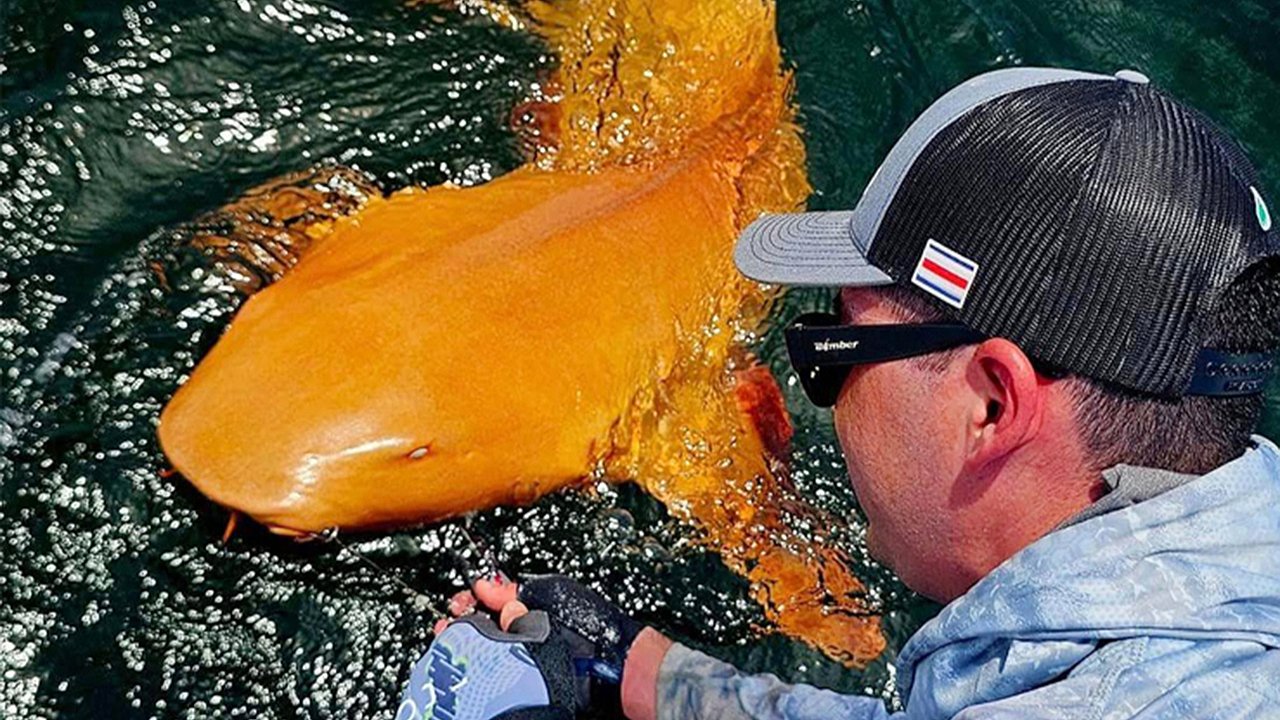
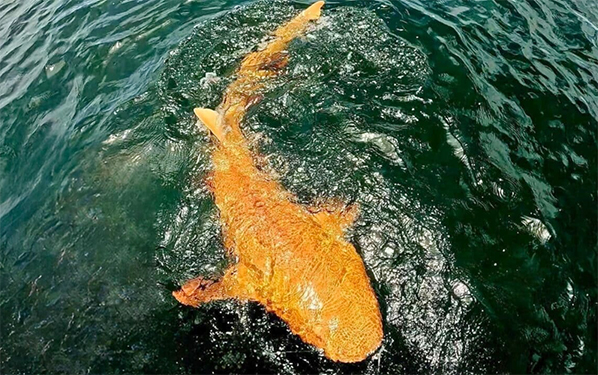
Have you ever imagined seeing a shark that glows in bright orange? During a routine fishing trip near Tortuguero National Park in Costa Rica, fishermen stumbled upon a truly extraordinary marine creature. This shark, unlike anything previously documented, is entirely bright orange due to a rare genetic condition called xanthism. Experts say that sharks with such pigmentation are incredibly uncommon, making this find historically significant. Even more striking, the shark has white eyes, suggesting it might also carry albinism traits. The discovery, published in the Marine Biology journal, marks the first time a shark of this vivid hue has been observed, captivating the attention of scientists and marine enthusiasts worldwide. This unique specimen not only challenges our understanding of shark coloration but also highlights the genetic diversity that exists beneath the ocean’s surface.Shark discovery in Costa RicaThe bright orange shark was found accidentally during a fishing expedition near Tortuguero National Park. Fishermen reported seeing a shark unlike any they had ever encountered, prompting immediate interest from local authorities and marine biologists. The shark was carefully examined and photographed before being released back into the wild. Researchers quickly realized that this individual represents a rare genetic anomaly, drawing attention from the international marine biology community.The finding is particularly remarkable because no similar sharks have been recorded anywhere else in the world. Costa Rica, known for its rich marine biodiversity, now adds this extraordinary example to its list of unique marine life discoveries.What is xanthism and why is it rare?Xanthism is a genetic condition that affects pigmentation in animals, resulting in unusually bright yellow or orange coloration. In sharks, darker pigments usually dominate, helping them blend into the ocean environment for hunting and protection. When these darker pigments are missing or reduced, the underlying yellow or orange tones become more visible.
 This condition is extremely rare in fish and even more so in predatory sharks, making sightings like this exceptionally valuable to science. Xanthism provides insights into how pigmentation genes operate and how mutations can influence the appearance of marine species.Albinism and the shark’s white eyesAdding to the shark’s uniqueness, researchers noted its completely white eyes. This feature could indicate albinism, a condition where melanin production is reduced or absent. Melanin is the pigment responsible for coloring skin, eyes, and hair in animals.The combination of xanthism and potential albinism in a single shark makes this discovery unprecedented. Scientists are now investigating whether these traits are linked or occur independently. Understanding such rare genetic combinations can shed light on the evolutionary and adaptive strategies of sharks.Scientific significance of the discoverySharks are apex predators, playing a crucial role in maintaining marine ecosystem balance. Discoveries like this orange shark are important because they reveal unexpected variations within species, helping researchers study genetic diversity, adaptation, and evolutionary biology.This finding raises several questions: How do pigment mutations affect survival in predatory sharks? Can individuals with such traits thrive in the wild? Are there other undocumented sharks with similar characteristics? These inquiries can guide future studies in marine genetics and conservation strategies.Costa Rica’s marine biodiversityCosta Rica is renowned for its extraordinary biodiversity, both on land and in the ocean. Tortuguero National Park, in particular, is a haven for turtles, rare fish species, and diverse marine life. The discovery of the bright orange shark underscores the ecological richness of this region and highlights the importance of preserving marine habitats.The shark’s unusual coloration has also generated interest in scientific tourism, encouraging local and international researchers to explore Costa Rica’s waters further. Such discoveries reinforce the need to study and protect fragile marine ecosystems around the world.Future research and conservation effortsMarine biologists are now conducting genetic analyses to understand the exact cause of the shark’s bright coloration and potential albinism. This research will help determine whether these traits are hereditary or spontaneous mutations.
 The discovery also emphasizes the importance of marine conservation. With millions of ocean species still undocumented, protecting habitats ensures that scientists can continue to observe and learn from rare and unique creatures like this orange shark.The bright orange shark discovered near Tortuguero National Park is a one-of-a-kind specimen, remarkable for its vivid coloration and possible albinism. This extraordinary find offers valuable insights into shark genetics and marine biodiversity. As researchers continue to study this unique shark, it serves as a reminder of the ocean’s untapped mysteries and the extraordinary variety of life beneath the waves.
Even more striking, the shark has white eyes, suggesting it might also carry albinism traits. The discovery, published in the Marine Biology journal, marks the first time a shark of this vivid hue has been observed, captivating the attention of scientists and marine enthusiasts worldwide. This unique specimen not only challenges our understanding of shark coloration but also highlights the genetic diversity that exists beneath the ocean’s surface.Shark discovery in Costa RicaThe bright orange shark was found accidentally during a fishing expedition near Tortuguero National Park. Fishermen reported seeing a shark unlike any they had ever encountered, prompting immediate interest from local authorities and marine biologists. The shark was carefully examined and photographed before being released back into the wild. Researchers quickly realized that this individual represents a rare genetic anomaly, drawing attention from the international marine biology community.The finding is particularly remarkable because no similar sharks have been recorded anywhere else in the world. Costa Rica, known for its rich marine biodiversity, now adds this extraordinary example to its list of unique marine life discoveries.What is xanthism and why is it rare?Xanthism is a genetic condition that affects pigmentation in animals, resulting in unusually bright yellow or orange coloration. In sharks, darker pigments usually dominate, helping them blend into the ocean environment for hunting and protection. When these darker pigments are missing or reduced, the underlying yellow or orange tones become more visible.This condition is extremely rare in fish and even more so in predatory sharks, making sightings like this exceptionally valuable to science. Xanthism provides insights into how pigmentation genes operate and how mutations can influence the appearance of marine species.Albinism and the shark’s white eyesAdding to the shark’s uniqueness, researchers noted its completely white eyes. This feature could indicate albinism, a condition where melanin production is reduced or absent. Melanin is the pigment responsible for coloring skin, eyes, and hair in animals.The combination of xanthism and potential albinism in a single shark makes this discovery unprecedented. Scientists are now investigating whether these traits are linked or occur independently. Understanding such rare genetic combinations can shed light on the evolutionary and adaptive strategies of sharks.Scientific significance of the discoverySharks are apex predators, playing a crucial role in maintaining marine ecosystem balance. Discoveries like this orange shark are important because they reveal unexpected variations within species, helping researchers study genetic diversity, adaptation, and evolutionary biology.This finding raises several questions: How do pigment mutations affect survival in predatory sharks? Can individuals with such traits thrive in the wild? Are there other undocumented sharks with similar characteristics? These inquiries can guide future studies in marine genetics and conservation strategies.Costa Rica’s marine biodiversityCosta Rica is renowned for its extraordinary biodiversity, both on land and in the ocean. Tortuguero National Park, in particular, is a haven for turtles, rare fish species, and diverse marine life. The discovery of the bright orange shark underscores the ecological richness of this region and highlights the importance of preserving marine habitats.The shark’s unusual coloration has also generated interest in scientific tourism, encouraging local and international researchers to explore Costa Rica’s waters further. Such discoveries reinforce the need to study and protect fragile marine ecosystems around the world.Future research and conservation effortsMarine biologists are now conducting genetic analyses to understand the exact cause of the shark’s bright coloration and potential albinism. This research will help determine whether these traits are hereditary or spontaneous mutations.The discovery also emphasizes the importance of marine conservation. With millions of ocean species still undocumented, protecting habitats ensures that scientists can continue to observe and learn from rare and unique creatures like this orange shark.The bright orange shark discovered near Tortuguero National Park is a one-of-a-kind specimen, remarkable for its vivid coloration and possible albinism. This extraordinary find offers valuable insights into shark genetics and marine biodiversity. As researchers continue to study this unique shark, it serves as a reminder of the ocean’s untapped mysteries and the extraordinary variety of life beneath the waves.