What Happens During a Solar Eclipse?
A solar eclipse occurs when the Moon passes between the Earth and the Sun. When all three celestial bodies align precisely, a total solar eclipse takes place. Despite the Sun being 400 times larger than the Moon, its much greater distance makes them appear nearly the same size from Earth—allowing the Moon to completely obscure the Sun under the right conditions.During the eclipse:
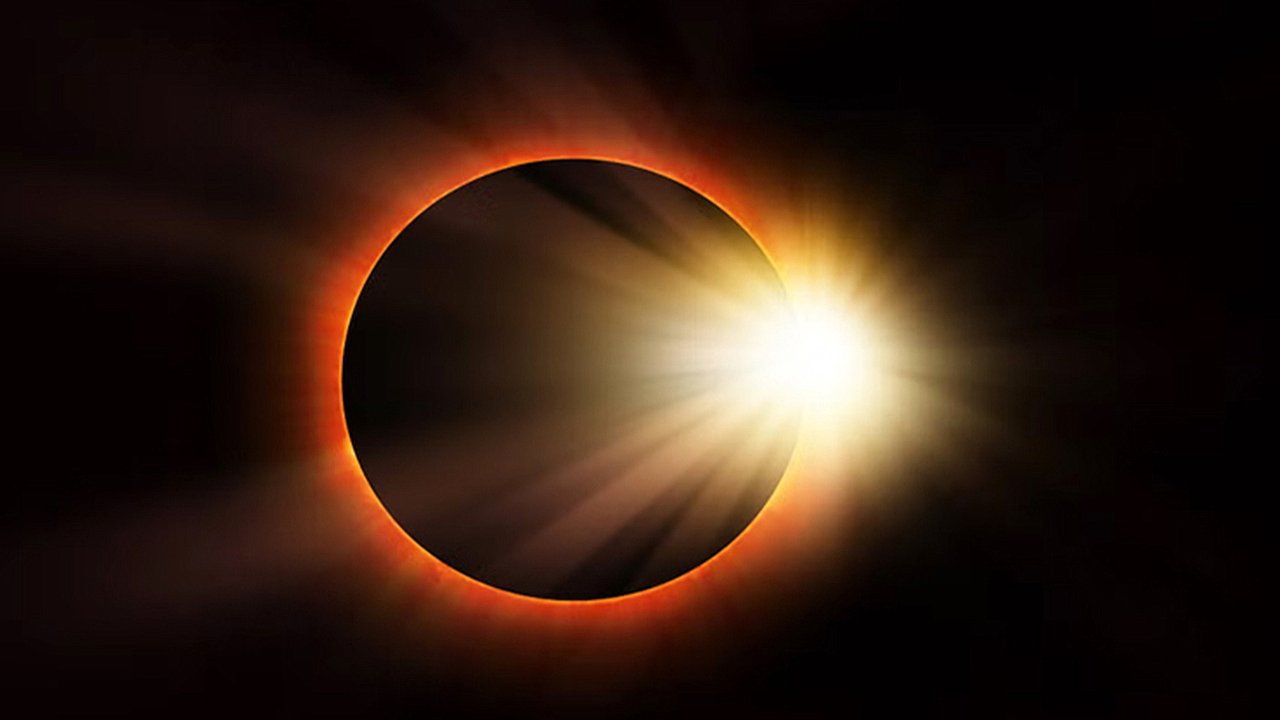
An annular solar eclipse occurs when the Moon’s apparent diameter is smaller than the Sun’s. This happens because the Moon’s orbit around Earth is elliptical, meaning it’s sometimes farther away and appears smaller.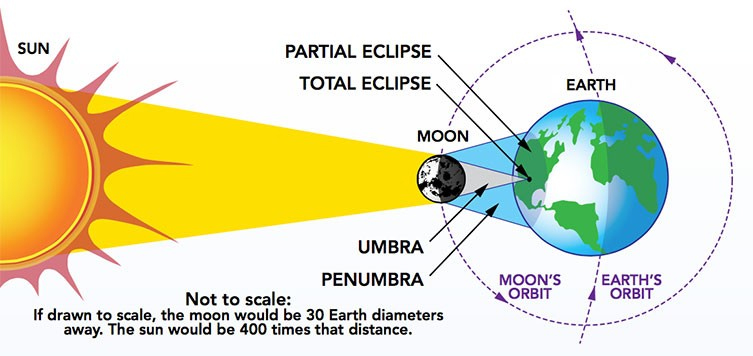 Unlike a total eclipse, the Moon doesn’t cover the Sun completely. Instead, a brilliant ring of sunlight—often called the “ring of fire”—surrounds the Moon, creating a breathtaking but distinct visual spectacle.Frequency of Solar Eclipses
Solar eclipses occur between two and five times per year, with total eclipses happening roughly every 18 months somewhere on Earth.
The next major solar eclipses include:
Solar eclipses only occur during a new Moon phase, when the Moon’s shadow can fall on Earth. However, not every new Moon results in an eclipse. This is because:
Because both Earth and the Moon are constantly moving, solar eclipses are fleeting events.
Astronomers and eclipse chasers often describe total eclipses as unforgettable. According to Scientific Associate Ken Phillips, who has observed four total eclipses:
Viewing a solar eclipse requires special safety precautions. Looking directly at the Sun—even during an eclipse—can cause permanent eye damage.
A solar eclipse occurs when the Moon passes between the Earth and the Sun. When all three celestial bodies align precisely, a total solar eclipse takes place. Despite the Sun being 400 times larger than the Moon, its much greater distance makes them appear nearly the same size from Earth—allowing the Moon to completely obscure the Sun under the right conditions.During the eclipse:
- The umbra, the darkest part of the Moon's shadow, causes a total eclipse for observers within this narrow path.
- The penumbra, a lighter outer shadow, results in a partial eclipse where only part of the Sun is obscured.
An annular solar eclipse occurs when the Moon’s apparent diameter is smaller than the Sun’s. This happens because the Moon’s orbit around Earth is elliptical, meaning it’s sometimes farther away and appears smaller.
Unlike a total eclipse, the Moon doesn’t cover the Sun completely. Instead, a brilliant ring of sunlight—often called the “ring of fire”—surrounds the Moon, creating a breathtaking but distinct visual spectacle.Frequency of Solar EclipsesSolar eclipses occur between two and five times per year, with total eclipses happening roughly every 18 months somewhere on Earth.
- The path of totality is the specific area where a total eclipse is fully visible.
- Observers outside this narrow path may only witness a partial eclipse or none at all.
- At any given location, a total solar eclipse is visible only about once every 400 years on average.
The next major solar eclipses include:
- 21 September 2025: A partial eclipse visible from New Zealand and parts of Antarctica.
- 17 February 2026: An annular “ring of fire” eclipse visible from Antarctica, with a partial eclipse observable from southeast Africa and southern parts of Argentina and Chile.
- 12 August 2026: A total solar eclipse visible from the Arctic, Greenland, Iceland, and northern Spain. The UK will experience a near-total eclipse, with up to 90% of the Sun obscured.
Solar eclipses only occur during a new Moon phase, when the Moon’s shadow can fall on Earth. However, not every new Moon results in an eclipse. This is because:
- The Moon’s orbit is slightly tilted compared to Earth’s orbit around the Sun.
- Only when these orbits align perfectly does the Moon fully block the Sun’s light.
Because both Earth and the Moon are constantly moving, solar eclipses are fleeting events.
- A total solar eclipse usually lasts only a few minutes, with the longest recorded totality lasting 6 minutes 53 seconds on 11 July 1991.
- The maximum possible duration of totality is 7 minutes 32 seconds.
- The entire process, from the Moon starting to cover the Sun to uncovering it fully, can take several hours.
Astronomers and eclipse chasers often describe total eclipses as unforgettable. According to Scientific Associate Ken Phillips, who has observed four total eclipses:
- As the eclipse progresses, the Sun gradually darkens, bathing the surroundings in an eerie twilight glow.
- During totality, the Sun transforms into a black disc surrounded by the ethereal white strands of the solar corona, with pink prominences sometimes visible along the edge.
- After a few magical minutes, daylight suddenly returns as the Sun re-emerges.
Viewing a solar eclipse requires special safety precautions. Looking directly at the Sun—even during an eclipse—can cause permanent eye damage.
- Never use: Regular sunglasses, dark materials like photo negatives, or unfiltered binoculars/telescopes.
- Safe options:
- Solar eclipse glasses certified for direct solar viewing.
- Telescope solar filters purchased from reputable astronomy suppliers.
- A pinhole camera, which projects a safe image of the Sun.
- Cut a small hole in a piece of sturdy card.
- Cover the hole with foil and pierce it with a pin.
- Hold this card above a second piece of card on the ground to project a miniature image of the Sun.