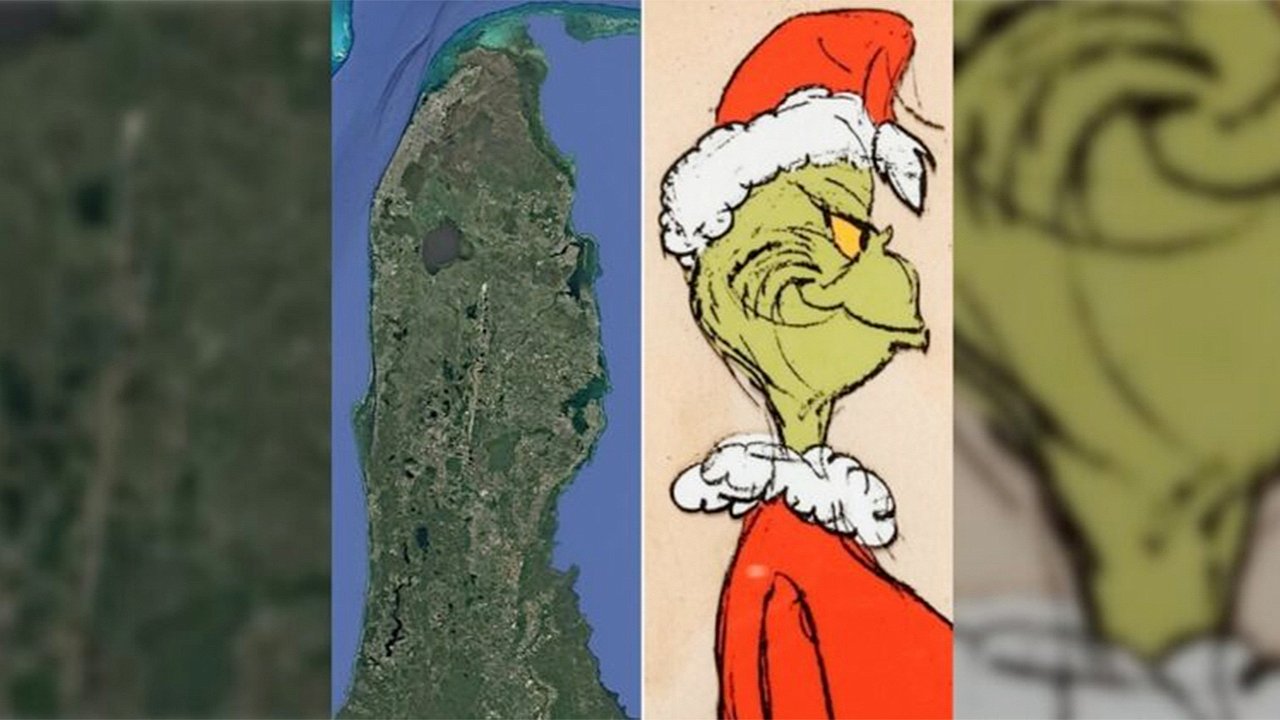
At first glance, Florida’s shape is one of the most recognizable in the United States. Its long peninsula, surrounded by water on nearly all sides, is etched into textbooks, weather forecasts, and popular culture. But when the familiar map of Florida is flipped upside down, something unexpected happens. Many people suddenly notice a face that looks remarkably like the Grinch, the famously grumpy holiday character. What starts as a simple visual trick quickly becomes a memorable and shareable moment, spreading across social media feeds and sparking laughter, debate, and curiosity.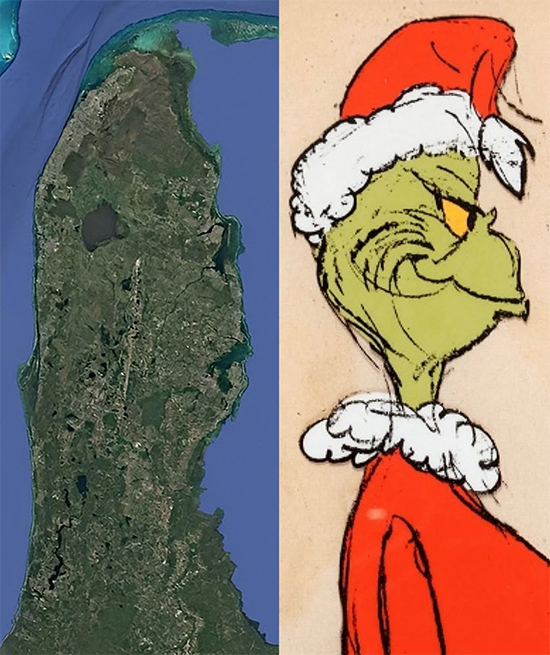 This phenomenon is more than just a joke. It highlights how the human brain constantly searches for patterns, even in places where none were intentionally designed. It also reinforces Florida’s reputation as a state that frequently finds itself at the center of internet humor. By looking at Florida from this unusual angle, people rediscover geography in a playful way while also reflecting on why visual curiosities go viral so easily.Florida’s iconic shape and global recognition
Florida stands out on the map unlike almost any other U.S. state. Its peninsula stretches southward between the Atlantic Ocean and the Gulf of Mexico, giving it hundreds of miles of coastline and a strong connection to water-based lifestyles. Beaches, ports, and barrier islands define much of its geography, making Florida instantly recognizable even to those who have never visited.This distinctive outline is one reason Florida’s map works so well as a visual illusion. Because people already know its shape, flipping it upside down feels surprising and slightly disorienting. The brain tries to make sense of the new orientation, and in doing so, it finds a familiar face. This combination of recognition and surprise is key to why the upside-down Florida Grinch comparison resonates so widely online.The Grinch resemblance and pareidolia
The phenomenon behind seeing the Grinch in Florida’s inverted shape is known as pareidolia. This is a psychological tendency where the human mind perceives recognizable images, such as faces or animals, in random or unrelated patterns. Clouds that look like dragons, electrical outlets that seem to have expressions, and the “man in the moon” are all classic examples.When Florida is turned upside down, parts of its coastline and panhandle align in a way that resembles the Grinch’s facial features. Once someone points it out, it becomes almost impossible to unsee. This is why the comparison spreads so quickly. Visual curiosities tied to pareidolia thrive online because they create a shared “aha” moment that people enjoy passing along to others.Florida’s role in internet culture and memes
Florida has long held a unique position in internet culture. From strange headlines to unexpected wildlife encounters, the state is often portrayed as unpredictable and entertaining. This reputation makes Florida especially fertile ground for memes and viral content.The upside-down Grinch resemblance fits neatly into this narrative. It is harmless, humorous, and visually engaging, which makes it ideal for sharing. People are drawn to content that feels lighthearted and clever, and Florida’s cultural image amplifies the effect. As a result, even a simple flipped map can gain traction and become part of a larger collection of Florida-related internet jokes.Geography, tourism, and visual storytelling
Beyond memes, Florida’s geography plays a major role in its global appeal. The state is known for world-famous destinations like Miami, Orlando, Tampa, and the Florida Keys. Theme parks, cruise ports, and beach resorts attract millions of visitors each year, while natural environments such as the Everglades showcase rare ecosystems and wildlife.Visual storytelling is central to how Florida is marketed and remembered. A quirky map illusion adds another layer to that story. It encourages people to look at geography not just as static information, but as something interactive and entertaining. This type of engagement can even spark interest in learning more about the state’s physical features and history.Why simple visual shifts go viral
One reason the upside-down Florida Grinch comparison spreads so easily is its simplicity. It requires no special tools, no complex explanation, and no prior knowledge beyond recognizing the Grinch. Anyone can rotate an image and instantly understand the joke.Social media thrives on this kind of content because it is accessible and quick to consume. Visual shifts also tap into curiosity, prompting people to pause, look again, and share their reaction. In a fast-moving digital environment, these small moments of surprise are powerful drivers of attention and engagement.How humor reconnects people with geography
Many people associate geography with memorization rather than creativity. Visual curiosities like this challenge that perception. They remind audiences that maps can be playful and that learning can happen through humor.By seeing Florida in a new way, people briefly reconnect with a familiar place and engage with it differently. This can spark conversations about locations, travel, and even history, all starting from a simple flipped image. Humor becomes a gateway to renewed interest and shared cultural understanding.The lasting appeal of playful perspectives
Once someone notices the Grinch in upside-down Florida, it tends to stick in their memory. This lasting impression is part of what makes visual illusions so effective. They transform ordinary objects into something memorable, giving people a story to tell or a detail to point out later.In the end, this quirky observation reflects both human psychology and modern digital culture. It shows how easily attention can be captured through creativity, how familiar places can feel new again, and how shared humor continues to shape the way people interact with geography online.
This phenomenon is more than just a joke. It highlights how the human brain constantly searches for patterns, even in places where none were intentionally designed. It also reinforces Florida’s reputation as a state that frequently finds itself at the center of internet humor. By looking at Florida from this unusual angle, people rediscover geography in a playful way while also reflecting on why visual curiosities go viral so easily.Florida’s iconic shape and global recognitionFlorida stands out on the map unlike almost any other U.S. state. Its peninsula stretches southward between the Atlantic Ocean and the Gulf of Mexico, giving it hundreds of miles of coastline and a strong connection to water-based lifestyles. Beaches, ports, and barrier islands define much of its geography, making Florida instantly recognizable even to those who have never visited.This distinctive outline is one reason Florida’s map works so well as a visual illusion. Because people already know its shape, flipping it upside down feels surprising and slightly disorienting. The brain tries to make sense of the new orientation, and in doing so, it finds a familiar face. This combination of recognition and surprise is key to why the upside-down Florida Grinch comparison resonates so widely online.The Grinch resemblance and pareidolia
The phenomenon behind seeing the Grinch in Florida’s inverted shape is known as pareidolia. This is a psychological tendency where the human mind perceives recognizable images, such as faces or animals, in random or unrelated patterns. Clouds that look like dragons, electrical outlets that seem to have expressions, and the “man in the moon” are all classic examples.When Florida is turned upside down, parts of its coastline and panhandle align in a way that resembles the Grinch’s facial features. Once someone points it out, it becomes almost impossible to unsee. This is why the comparison spreads so quickly. Visual curiosities tied to pareidolia thrive online because they create a shared “aha” moment that people enjoy passing along to others.Florida’s role in internet culture and memes
Florida has long held a unique position in internet culture. From strange headlines to unexpected wildlife encounters, the state is often portrayed as unpredictable and entertaining. This reputation makes Florida especially fertile ground for memes and viral content.The upside-down Grinch resemblance fits neatly into this narrative. It is harmless, humorous, and visually engaging, which makes it ideal for sharing. People are drawn to content that feels lighthearted and clever, and Florida’s cultural image amplifies the effect. As a result, even a simple flipped map can gain traction and become part of a larger collection of Florida-related internet jokes.Geography, tourism, and visual storytelling
Beyond memes, Florida’s geography plays a major role in its global appeal. The state is known for world-famous destinations like Miami, Orlando, Tampa, and the Florida Keys. Theme parks, cruise ports, and beach resorts attract millions of visitors each year, while natural environments such as the Everglades showcase rare ecosystems and wildlife.Visual storytelling is central to how Florida is marketed and remembered. A quirky map illusion adds another layer to that story. It encourages people to look at geography not just as static information, but as something interactive and entertaining. This type of engagement can even spark interest in learning more about the state’s physical features and history.Why simple visual shifts go viral
One reason the upside-down Florida Grinch comparison spreads so easily is its simplicity. It requires no special tools, no complex explanation, and no prior knowledge beyond recognizing the Grinch. Anyone can rotate an image and instantly understand the joke.Social media thrives on this kind of content because it is accessible and quick to consume. Visual shifts also tap into curiosity, prompting people to pause, look again, and share their reaction. In a fast-moving digital environment, these small moments of surprise are powerful drivers of attention and engagement.How humor reconnects people with geography
Many people associate geography with memorization rather than creativity. Visual curiosities like this challenge that perception. They remind audiences that maps can be playful and that learning can happen through humor.By seeing Florida in a new way, people briefly reconnect with a familiar place and engage with it differently. This can spark conversations about locations, travel, and even history, all starting from a simple flipped image. Humor becomes a gateway to renewed interest and shared cultural understanding.The lasting appeal of playful perspectives
Once someone notices the Grinch in upside-down Florida, it tends to stick in their memory. This lasting impression is part of what makes visual illusions so effective. They transform ordinary objects into something memorable, giving people a story to tell or a detail to point out later.In the end, this quirky observation reflects both human psychology and modern digital culture. It shows how easily attention can be captured through creativity, how familiar places can feel new again, and how shared humor continues to shape the way people interact with geography online.