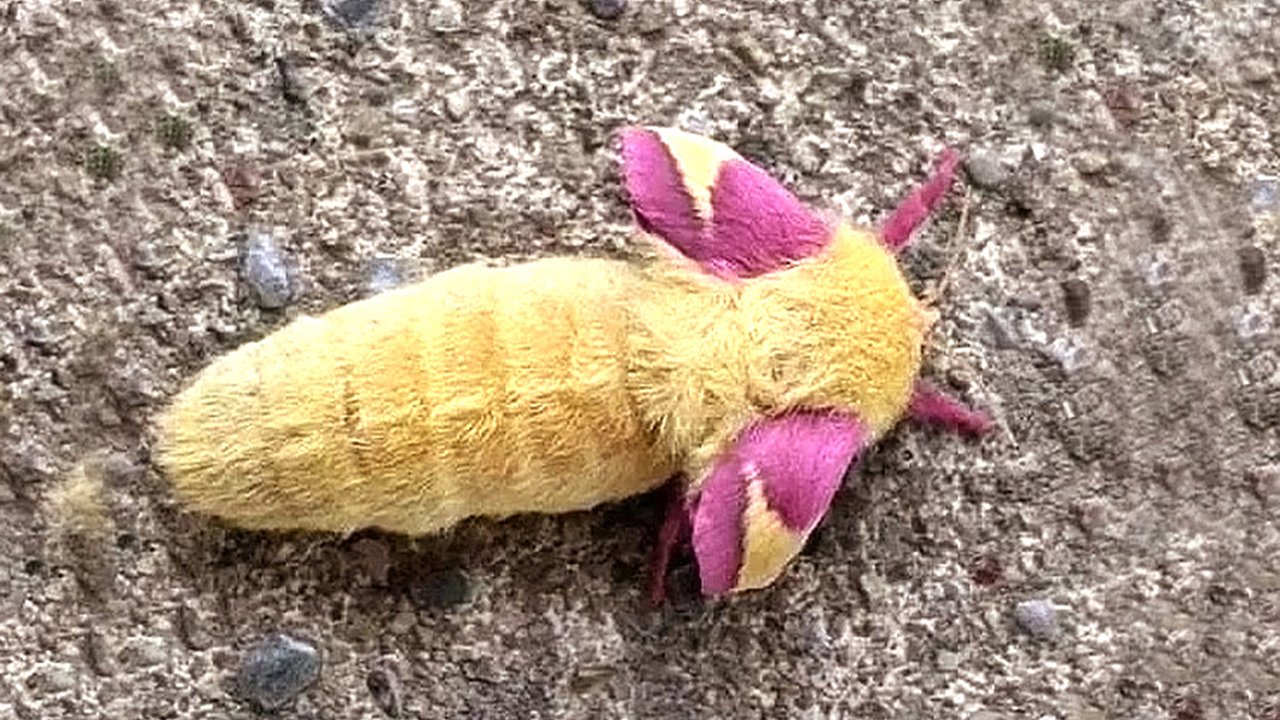
A nature lover named Lahiru was walking through his garden when he spotted something unusual on the grass—a small, fuzzy being with a striking blend of pink and yellow. Intrigued, he crouched down to take a closer look and soon realized he was witnessing something extraordinary. The tiny creature, a Rosy Maple Moth, was in the process of expanding its delicate wings for the first time.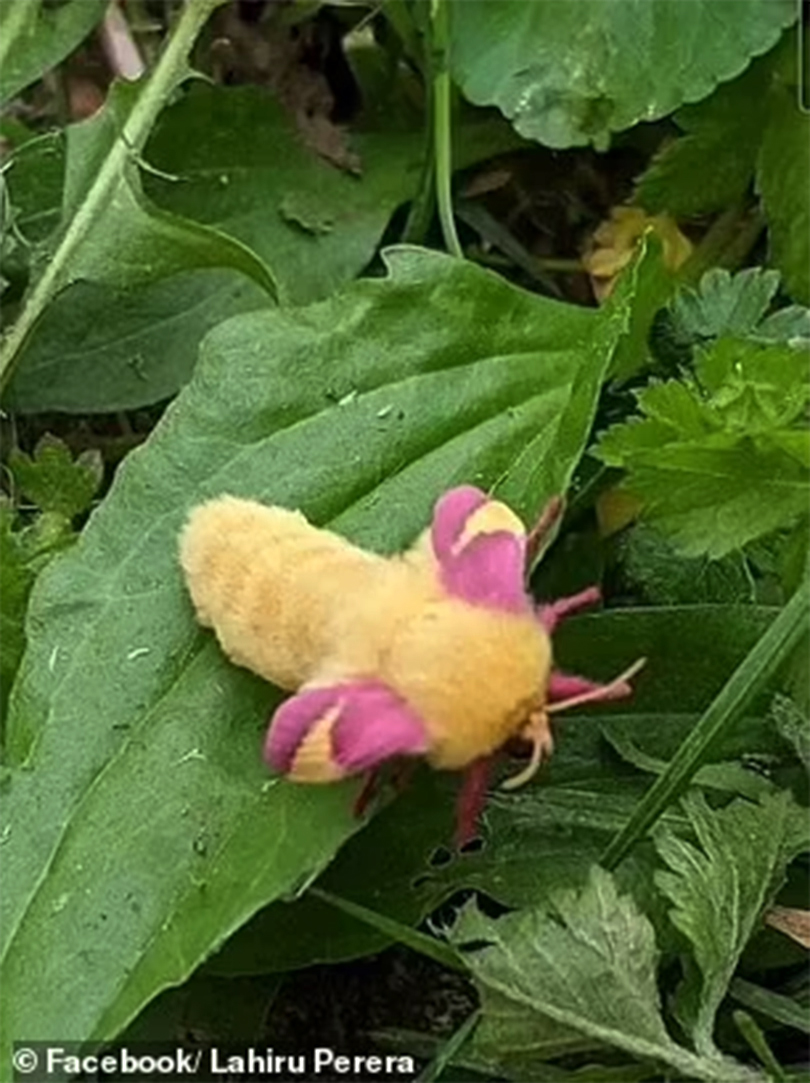
Native to North America, Rosy Maple Moths are famous for their distinctive coloration and the soft fuzz that covers their bodies. The tiny moth, appearing almost as if it had been dipped in cotton candy, stayed close to Lahiru as it completed its transformation. After a few moments, the moth spread its beautifully curved wings and took flight, leaving its observer in absolute awe.
Lahiru shared his magical experience with an online nature group, where thousands marveled at the moth’s beauty. "I got to witness something incredible," he posted. "At first, it was just a tiny, fuzzy thing with barely any wings, but then I saw it grow into something breathtaking."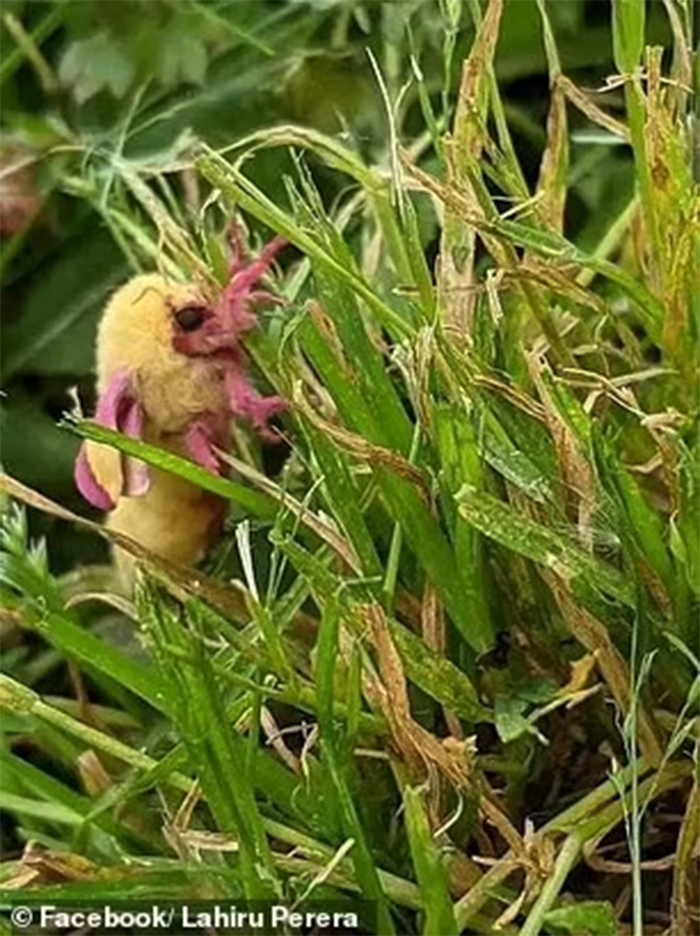
His post quickly gained traction, with many people expressing their amazement. "We have these where I live! My kids always call them ‘cotton candy moths,’" one commenter wrote. Another added, "I had no idea moths could look this beautiful. What an amazing experience!" One amused parent even shared that their child mistook it for a Pokémon.What Is a Rosy Maple Moth?
The Rosy Maple Moth (Dryocampa rubicunda) is a North American species commonly found in areas with maple trees, their primary habitat and food source. These nocturnal insects are relatively small, with a wingspan reaching up to 5.2 cm. Their striking colors vary from soft pastels to vivid yellows and pinks, making them one of the most eye-catching moth species in the world.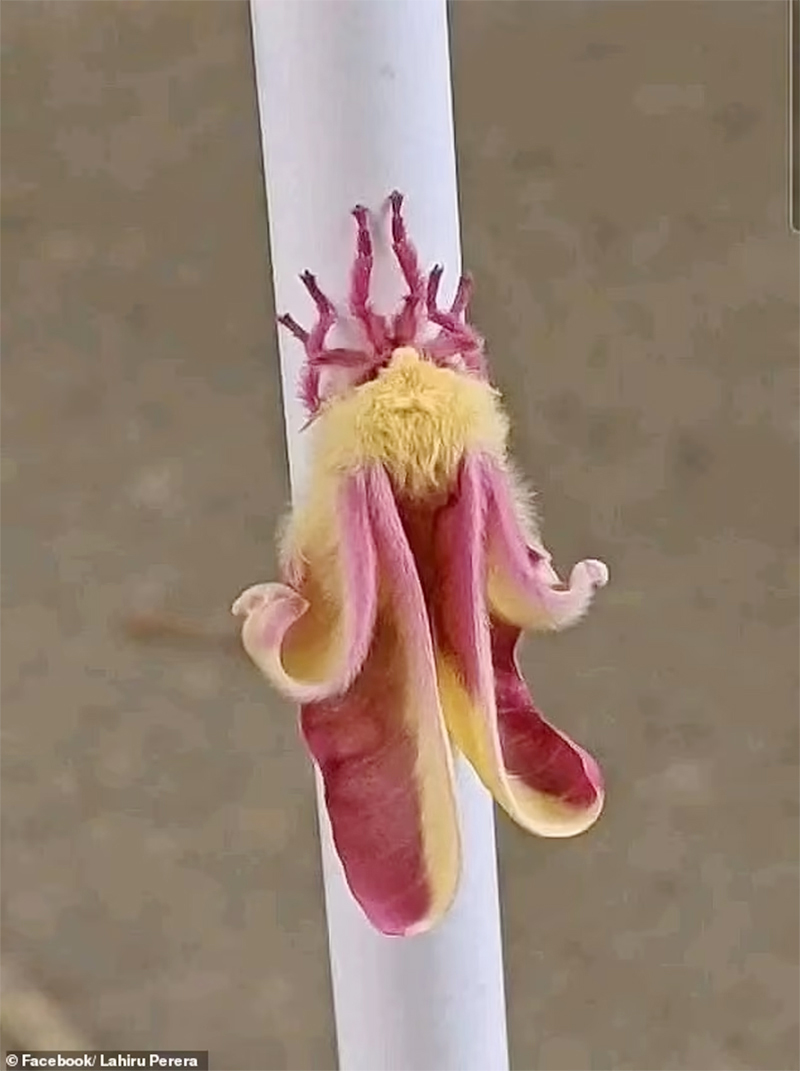
Like other members of the Saturniidae family, Rosy Maple Moths are covered in dense, velvety fuzz, which aids in pollination. While the exact reason for their unique coloring remains a mystery, some scientists believe the combination of pink and yellow may serve as camouflage, mimicking flower petals to help them blend into their surroundings.
Lahiru’s encounter with this charming moth serves as a reminder of the incredible wonders that exist in nature—sometimes right outside your door. Whether viewed as a scientific marvel or simply a beautiful creature, the Rosy Maple Moth continues to enchant anyone lucky enough to witness its transformation.
Native to North America, Rosy Maple Moths are famous for their distinctive coloration and the soft fuzz that covers their bodies. The tiny moth, appearing almost as if it had been dipped in cotton candy, stayed close to Lahiru as it completed its transformation. After a few moments, the moth spread its beautifully curved wings and took flight, leaving its observer in absolute awe.
Lahiru shared his magical experience with an online nature group, where thousands marveled at the moth’s beauty. "I got to witness something incredible," he posted. "At first, it was just a tiny, fuzzy thing with barely any wings, but then I saw it grow into something breathtaking."
His post quickly gained traction, with many people expressing their amazement. "We have these where I live! My kids always call them ‘cotton candy moths,’" one commenter wrote. Another added, "I had no idea moths could look this beautiful. What an amazing experience!" One amused parent even shared that their child mistook it for a Pokémon.What Is a Rosy Maple Moth?
The Rosy Maple Moth (Dryocampa rubicunda) is a North American species commonly found in areas with maple trees, their primary habitat and food source. These nocturnal insects are relatively small, with a wingspan reaching up to 5.2 cm. Their striking colors vary from soft pastels to vivid yellows and pinks, making them one of the most eye-catching moth species in the world.
Like other members of the Saturniidae family, Rosy Maple Moths are covered in dense, velvety fuzz, which aids in pollination. While the exact reason for their unique coloring remains a mystery, some scientists believe the combination of pink and yellow may serve as camouflage, mimicking flower petals to help them blend into their surroundings.
Lahiru’s encounter with this charming moth serves as a reminder of the incredible wonders that exist in nature—sometimes right outside your door. Whether viewed as a scientific marvel or simply a beautiful creature, the Rosy Maple Moth continues to enchant anyone lucky enough to witness its transformation.